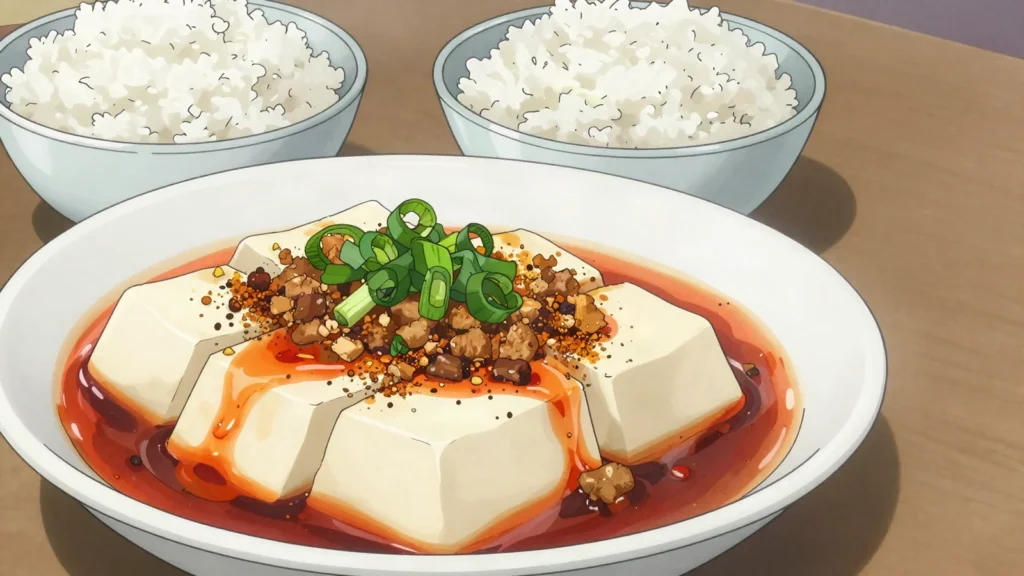

Ingredients
Tofu
- 600 gsoft or silken tofu
- 1 litrewater
- 1 tbspsalt
Meat
- 150 gminced beef, or minced pork
Sauce base
- 3 tbspoil
- 2 tbspdoubanjiang, Pixian chilli bean paste
- 1 tbspdouchi, fermented black beans, rinsed and chopped
- 1 tbspground dried chilli
- 1 tbspminced garlic
- 1 tbspminced ginger
Liquid
- 400 mlchicken or beef stock
- 1 tbsplight soy sauce
- 1 tspsugar
Thickening
- 2 tbsppotato or corn starch
- 4 tbspcold water
To finish
- 1 tbspSichuan peppercorns, toasted and ground
- 3spring onions, sliced
- 1 tspchilli oil
To serve
- steamed rice
Directions
- Cut the tofu into 2 cm cubes with a knife in the packet or on a plate, handling it as little as possible. Bring the water to a bare simmer with the salt and slide the tofu cubes in for 2 minutes. This salted blanch does two jobs: it firms the outside just enough to survive the pan, and it draws out the raw soy taste.
- Lift the cubes out with a slotted spoon and hold them in warm water. Toast the Sichuan peppercorns in a dry pan for a minute, then grind them to a powder and set them aside.
- Heat the oil and fry the mince over a high heat until it is dry, browned and slightly crisp. Cook the meat until it is genuinely dry rather than merely no longer pink. It should be crumbly, and this is what gives the sauce its savour.
- Turn the heat down and add the doubanjiang, frying it slowly for 2 to 3 minutes until the oil turns deep red. Add the douchi, ground chilli, garlic and ginger and fry another minute. Rinse the fermented black beans before chopping them, because they are packed in a great deal of salt.
- Pour in the stock, add the soy and sugar, and bring it to a simmer. Slide the drained tofu in and simmer very gently for 5 minutes.
- Mix the starch with the cold water and add it in three separate additions, letting the sauce return to a simmer between each. The sauce should be thick enough to hold the tofu but still flow.
- Turn off the heat and scatter the ground Sichuan peppercorn over the top. Add the peppercorn powder at the very end, off the heat. Finish with the spring onions and a spoonful of chilli oil, and serve at once with plenty of rice. Serve it fiercely hot in the bowl; a lukewarm mapo tofu loses most of its point.
Technique
- Pixian doubanjiang is the specific paste and other chilli bean pastes change the dish noticeably.
- The classic description lists seven qualities: numbing, hot, scalding, flaky, tender, fragrant and rich.
- Beef is the older choice in Chengdu; pork is the common home substitute.
Substitutions
- Any Sichuan chilli bean paste in place of Pixian.
- Finely chopped shiitake in place of the mince, for a vegetarian version.
Variations
- Vegetarian, with mushrooms and vegetable stock.
- Made milder, with less chilli but the peppercorn kept.
- The Japanese mābō dōfu, sweeter and much less numbing.
History
Created in Chengdu, the capital of Sichuan province, and traditionally credited to a pockmarked woman, the literal meaning of má pó, who ran a small restaurant near a bridge in the 1860s during the late Qing dynasty and served a spicy tofu dish, originally to porters and laborers looking for a cheap, filling meal, using tofu, fermented broad bean paste called doubanjiang, and both dried and fresh chilies. Whether the specific woman existed as described or is partly legend is not fully verifiable, but the dish’s Chengdu origin and its working-class, street-level beginnings are well documented. Its defining sensation, along with kung pao chicken, is the combination of Sichuan peppercorn’s numbing quality with chili heat, a pairing distinct to the region’s cooking.
Frequently asked questions
What is Mapo Tofu?
Mapo Tofu is a main from China: sichuan tofu in fiery chili-bean sauce with minced pork and numbing peppercorns. Created in Chengdu, the capital of Sichuan province, and traditionally credited to a pockmarked woman, the literal meaning of má pó, who ran a small restaurant near a bridge in the 1860s during the late Qing dynasty and served a spicy tofu dish, originally to porters and laborers looking for a cheap, filling meal, using tofu, fermented broad bean paste called doubanjiang, and both dried and fresh chilies. Whether the specific woman existed as described or is partly legend is not fully verifiable, but the dish’s Chengdu origin and its working-class, street-level beginnings are well documented. Its defining sensation, along with kung pao chicken, is the combination of Sichuan peppercorn’s numbing quality with chili heat, a pairing distinct to the region’s cooking.
How long does Mapo Tofu take to make?
Mapo Tofu takes 15 min of preparation and 20 min of cooking. The recipe makes 4 servings. It is rated medium to make.
What can I substitute in Mapo Tofu?
Yes, within limits. Any Sichuan chilli bean paste in place of Pixian. Finely chopped shiitake in place of the mince, for a vegetarian version.
What is the most important thing to get right in Mapo Tofu?
Heat the oil and fry the mince over a high heat until it is dry, browned and slightly crisp. Cook the meat until it is genuinely dry rather than merely no longer pink. It should be crumbly, and this is what gives the sauce its savour.