The fat that rises to the top of milk, skimmed off and sold by its richness — single, double, whipping, sour, clotted, crème fraîche — the enrichment of sauces, soups and puddings across Europe and the base of butter and ice cream.
Where it comes from
Cream separates from milk on standing, and every dairying culture has skimmed it since cattle were kept; the centrifugal separator of the 1870s turned it from a farm luxury into an industry. The names are national and confusing: British single cream is about 18% fat, double 48%; American light cream is 20%, heavy 36%; French crème fraîche is a cultured 30–40% cream; and Cornwall’s clotted cream, scalded and skimmed, is 55% or more and the richest of all.
Two things decide how cream behaves. Fat content: below about 30% it will not whip and will split if boiled hard; above it, it whips and thickens a sauce by reduction. And culture: soured or cultured creams — crème fraîche, sour cream, smetana, kaymak, the Turkish and Balkan kajmak — carry a lactic tang and, in the case of crème fraîche, can be boiled without curdling, which sour cream cannot. Eastern Europe cooks with soured cream where the West uses sweet.
Varieties
- Single / light cream — Around 18–20% fat. For pouring over fruit and enriching soups off the heat; will not whip and splits if boiled.
- Double / heavy cream — 36–48% fat. Whips, reduces, enriches sauces and takes a boil. The cooking cream.
- Whipping cream — Around 35%; whips to soft peaks and holds. For desserts and fillings.
- Crème fraîche — Cultured cream, 30–40% fat, nutty and slightly sour; boils without splitting. The French cooking cream.
- Sour cream / smetana — Cultured cream, around 20% fat, sharper; for garnishing borscht, goulash, blini and baked potatoes. Splits if boiled.
- Clotted cream — Cornish and Devon; scalded, thick, golden-crusted, 55% fat. For scones and nothing that involves cooking.
In the kitchen
To thicken a sauce, use double cream or crème fraîche and reduce it by simmering — it will not split. Single and sour cream go in at the end, off the heat, or they curdle. Whip cold cream in a cold bowl and stop as soon as it holds a peak; a few seconds more and it turns grainy on the way to butter.
Cream pairs with mushrooms, tarragon, mustard, brandy, peppercorns and chicken in French cooking; with dill, paprika and beetroot in the east; with vanilla, sugar and fruit everywhere. A spoonful of sour cream or smetana finishes a borscht, a goulash or a stroganoff and is meant to be stirred in at the table.
Choosing and keeping
Fresh cream keeps a week or so refrigerated; once opened, a few days. It sours naturally — soured fresh cream is not spoiled and is fine for baking — but cream that smells sharp and has separated into curds is past use. Ultra-heat-treated cream keeps for months unopened and whips less well.
Cream does not freeze well — it separates on thawing — except when already whipped, or as part of a cooked dish. Clotted cream keeps two weeks; crème fraîche three or four.
Dishes with cream
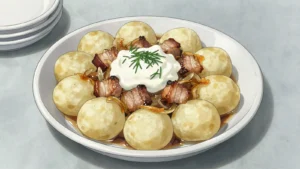 Kletskiflour or potato dumplings in broth or with smetana
 Lagidze waterSyrup soda made to order, including a famous chocolate and cream flavour.
 TunnbrödsrulleFlatbread roll of hot dog, mashed potato, shrimp salad.
 BizcochosAssorted small lard pastries taken with morning mate
 PanaSmall sweet lesser yam, boiled or roasted, prized above cassava in the villages
 SmörgåsbordCold buffet of herring, cheese, cured meats and small hot dishes.
 Ca Phe Cot DuaRobusta coffee blended with frozen coconut milk into an icy slush
 Butter ChickenTandoori chicken in silky tomato-butter-cream gravy, Delhi classic
Cream is tagged on 558 dishes from 134 countries in the atlas. These notes are written from general knowledge and carry no per-fact citation — see About.