
Ingredients
Potato
- 1 kgfloury potatoes, peeled and chunked
Vegetable
- 600 gof one vegetable: carrot, leek, savoy cabbage, Brussels sprouts, spinach, celeriac or endive
Also
- 2onions, chopped
- 80 gbutter
- 150 mlcream or milk
- 2bay leaves
- a good grating of nutmeg
- salt and plenty of black pepper
Sometimes
- 100 gbacon lardons
- a little cooking liquid from the vegetable
To serve
- boudin blanc or boudin noir
- Brussels sausage, saucisse
- fried egg
- or a slice of ham
- with strong mustard
Directions
- Use roughly equal weights of potato and vegetable, or lean toward more vegetable than seems right. A stoemp that tastes mainly of potato has too little of whatever it is named after. Use floury potatoes, which mash to a light fluffy texture, where waxy ones turn gluey when worked. Boil them in well salted water until completely tender.
- Drain them and let them steam dry in the pan for a couple of minutes. Letting them steam dry drives off surface water, and wet potato makes a sloppy mash that needs more butter to rescue. Cook the vegetable separately from the potatoes rather than together in the same pot. Different vegetables need very different times, and cooking them together gives either mushy vegetable or hard potato.
- Cook the onion slowly in butter until soft and sweet, which takes ten to fifteen minutes. Squeeze wet vegetables such as spinach or cooked cabbage genuinely dry before they go in. Carrot and celeriac should be cooked until tender and then drained well.
- Mash the potatoes roughly with a masher or a fork, not with a blender or a food processor. Never use a food processor on potato, which shears the starch cells and turns the mash into glue within seconds.
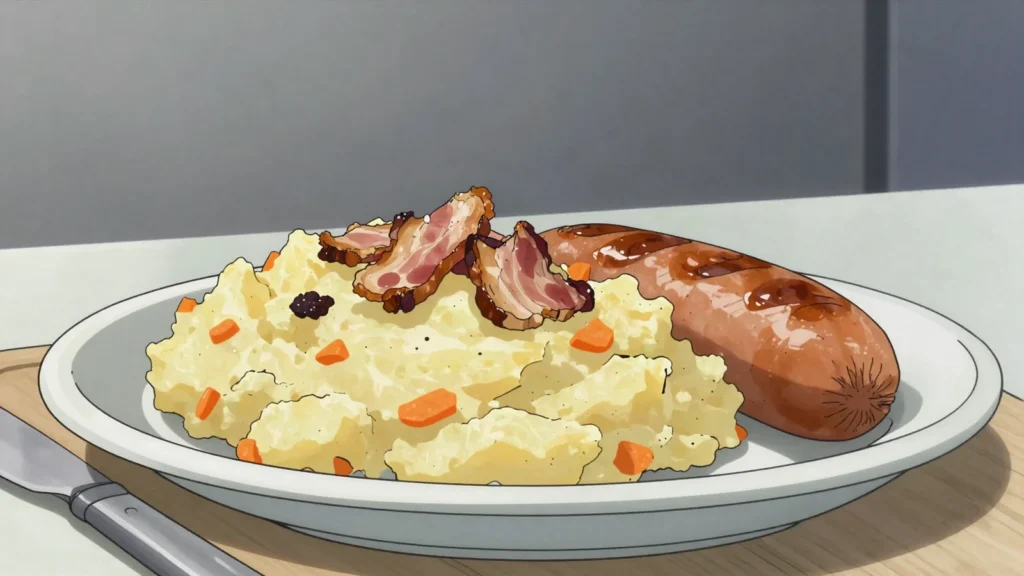
- Leave it deliberately lumpy rather than working it smooth. Fold rather than beat, and stop while pieces of vegetable are still clearly visible. The finished dish should look like mashed potato with something else obviously in it, not like a purée.
- Add the butter first and let it melt through, then the cream. Add the cream warm rather than cold, since cold liquid makes the mash stiff and stodgy. Grate nutmeg over generously, which is standard in Belgian and Dutch potato dishes. Season with plenty of black pepper and check the salt carefully. Now the consistency, which should be loose.
- Serve it with boudin blanc or boudin noir, the white and black puddings of Belgium, fried until browned. A Brussels sausage, a fried egg or a thick slice of ham are all standard. Serve strong mustard alongside, which cuts the richness. Leftover stoemp is fried in butter the next day until crusted, which is arguably better than the original.
Technique
- It is made with one vegetable at a time rather than a mixture.
- It stays deliberately lumpy, unlike a smooth stamppot.
- Wet vegetables must be squeezed dry or the dish turns sloppy.
Substitutions
- Milk in place of cream, though cream is more characteristic.
- Any sausage in place of boudin.
Variations
- Stoemp met wortelen, with carrot, which is the most common.
- Made with endive, witloof, which is distinctly bitter.
- With bacon lardons folded through.
Frequently asked questions
What is Stoemp?
Stoemp is a salad & side from Belgium: rustic mash of potatoes and vegetables, with sausage.
How long does Stoemp take to make?
Stoemp takes 20 min of preparation and 40 min of cooking. The recipe makes 6 servings. It is rated easy to make.
What can I substitute in Stoemp?
Yes, within limits. Milk in place of cream, though cream is more characteristic. Any sausage in place of boudin.
What is the most important thing to get right in Stoemp?
Drain them and let them steam dry in the pan for a couple of minutes. Letting them steam dry drives off surface water, and wet potato makes a sloppy mash that needs more butter to rescue. Cook the vegetable separately from the potatoes rather than together in the same pot. Different vegetables need very different times, and cooking them together gives either mushy vegetable or hard potato.