The mild, sweet, winter allium — a long white shank of tightly rolled leaves under a green fan — that cooks to silk in butter and stands in for onion where something gentler is wanted; the emblem of Wales and the base of a vichyssoise.
Where it comes from
The leek is a Mediterranean and Near Eastern allium that the Egyptians, Greeks and Romans grew — Nero reportedly ate them for his voice — and that became a staple of northern Europe because it stands in the ground through frost and is harvested all winter. Wales made it a national emblem, France made it the poor man’s asparagus and the base of potage and vichyssoise, and Scotland put it in cock-a-leekie. It is milder than onion because its sulphur compounds are weaker and its structure is leaf, not bulb.
The white and pale green part is the vegetable; the dark green tops are tough and are kept for stock. Grit works its way down between the layers as the plant grows, which is why leeks must be slit and washed thoroughly. Baby leeks, picked young and slim, can be grilled whole; the Catalan calçot is a leek-like onion grilled over vine cuttings.
Varieties
- Winter leek — Thick, long, hardy; the standard leek, sweetest after frost.
- Summer / early leek — Slimmer, more tender, milder; harvested before the frosts.
- Baby leek — Pencil-thin, cooked whole — steamed, grilled or dressed as a salad.
- Wild leek / ramps — A North American woodland allium with a strong garlic-onion flavour; a spring foraged delicacy.
In the kitchen
Slit lengthways to the root, fan under running water to wash out the grit, then slice. Cook slowly in butter with a lid on — sweating — until soft and sweet, never browned; leeks scorch easily and turn bitter. That soft leek base goes into soups, tarts, gratins and pies, or is finished with cream as a vegetable in itself.
Whole leeks braised in stock, or poached and dressed with vinaigrette while warm, are a French classic. Leeks pair with potato, cream, cheese, bacon, mustard and thyme, and with chicken and fish in stocks and pies. The dark tops flavour a stock and are strained out.
Choosing and keeping
Firm, straight, with a long white shank and crisp, dark green tops; avoid yellowing or slimy leaves and a woody, bulging base, which means the plant has gone to flower. They keep two weeks or more in the fridge, unwashed and untrimmed.
Cooked leeks keep a few days and freeze acceptably in a soup or sauce; raw leeks freeze poorly.
Dishes with leek
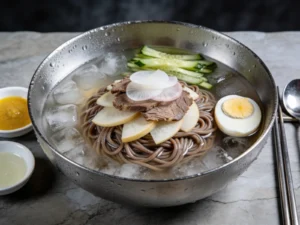 Pyongyang NaengmyeonChewy buckwheat noodles in icy beef-radish broth, the capital's signature dish
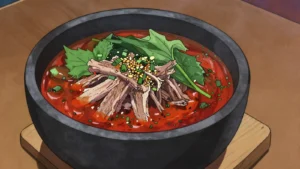 Tangogi GukDog-meat soup with perilla and greens, eaten as a summer stamina dish.
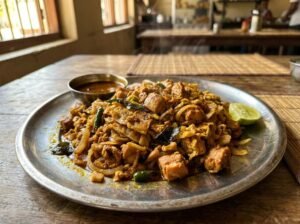 KottuChopped godhamba roti stir-fried noisily with vegetables, egg and curry
 Soupe au pistousummer vegetable and bean soup finished with basil and garlic
 Blanquette de veauVeal simmered in white cream sauce with mushrooms and rice.
 CaricolesSea snails simmered in celery broth, eaten hot from a cup
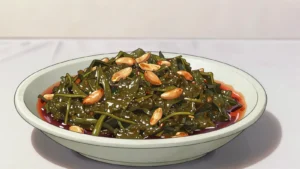 Isombecassava leaves pounded and simmered with palm oil and peanuts
 Shabu-shabuPaper-thin beef swished through kombu broth, dipped in ponzu or sesame
Leek is tagged on 53 dishes from 35 countries in the atlas. These notes are written from general knowledge and carry no per-fact citation — see About.