The hind leg of the pig, cured in salt — and then either dried for months into the jamón, prosciutto and country hams eaten raw in paper-thin slices, or brined and cooked into the pink ham of the sandwich and the Christmas table.
Where it comes from
The hind leg is the largest and most valuable piece of a pig and the one most worth preserving, and the Romans were already curing hams in the manner of Parma and Spain two thousand years ago. The dry-cured raw hams of the Mediterranean — Spanish jamón serrano and ibérico, Italian prosciutto di Parma and San Daniele, French Bayonne, Portuguese presunto — are simply leg, salt and time: salted for weeks, then hung to dry and age for a year, two or three, until the meat is deep red, translucent, sweet and nutty. Virginia and Kentucky country hams and Germany’s Westphalian and Black Forest hams are the smoked, drier northern versions.
Cooked ham is a different tradition: the leg brined or wet-cured, then boiled, baked or smoked, and served hot or cold in thick slices — the York ham, the gammon, the American city ham, the Prague ham, the jambon de Paris. Between the two sit the semi-cured hams boiled at home from a salt cure. Spain’s ibérico de bellota, from black-footed pigs fattened on acorns and aged for years, is the most prized ham in the world and eaten alone, sliced by hand from the bone.
Varieties
- Jamón ibérico and serrano — Spanish dry-cured raw ham; serrano from white pigs, ibérico from black-footed ones, bellota from acorn-fed ibérico. Sliced paper-thin, eaten raw.
- Prosciutto di Parma and San Daniele — Italian dry-cured raw ham, sweet and delicate; with melon, figs or on its own. Protected names.
- Bayonne, Speck, Westphalian, Black Forest — French, Tyrolean and German dry-cured hams, the latter two smoked.
- Cooked ham (York, gammon, city ham, jambon de Paris) — Brined and boiled or baked; sliced hot or cold. Gammon is the raw cured joint before cooking.
- Country ham (Virginia, Kentucky) — American dry-cured, smoked and aged; very salty, sliced thin and fried or simmered.
- Ham hock and bone — The knuckle and bone from a cured ham; simmered in soups, beans and greens for flavour.
In the kitchen
Raw dry-cured ham is not cooked: slice it as thin as possible, by hand or machine, bring it to room temperature so the fat softens and glistens, and eat it with bread, melon, figs, pears or nothing. A slice laid over a hot dish at the end — asparagus, a pizza from the oven — warms without cooking. The fat is the best part of an ibérico; do not trim it. Offcuts and the bone flavour soups and stocks.
A gammon joint is soaked if very salty, simmered in water or cider with onion, bay and cloves for about 20 minutes per 500 g, then skinned, scored, glazed with mustard and honey or marmalade, studded with cloves and baked hot to finish — the Christmas ham. Cooked ham off the bone goes into pies, omelettes, croque monsieur and jambon-beurre. A ham hock simmered with split peas or greens is the soul of a dozen soups.
Choosing and keeping
A whole dry-cured leg keeps for months hanging in a cool, dry room, cut side covered with its own fat or a cloth; sliced ham keeps a few days wrapped, and dries fast. Vacuum-packed slices keep for weeks unopened. Buy prosciutto and jamón sliced to order where possible; ask for it thin.
Cooked ham keeps a week refrigerated; a whole cooked joint longer. Ibérico is labelled by feed and breed — bellota, cebo de campo, cebo — and priced accordingly; 100% ibérico bellota is the summit. Country ham should be soaked before cooking.
Dishes with ham
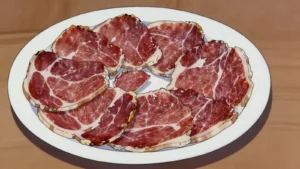 Jamón ibéricoacorn-fed cured ham hand-carved wafer thin
 Trout with hamPyrenean river trout pan-fried with cured mountain ham
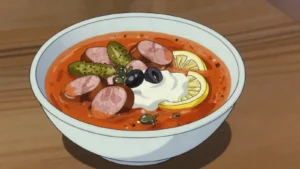 Solyankasour-salty soup of meats, pickles, olives, lemon
 ChilaquilesFried tortilla chips simmered in salsa with crema and egg
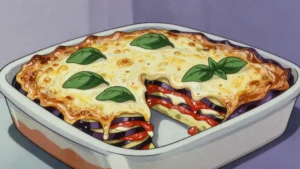 Parmigiana di melanzanefried aubergine baked with tomato, mozzarella, basil
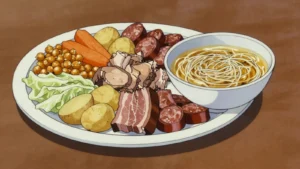 Cocido madrileñochickpea and meat boiled dinner served in courses
 CutterSalt-bread sandwich with ham, fish, or fishcakes
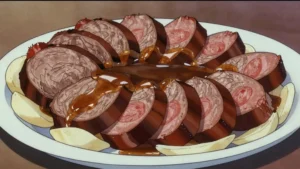 BolicheBeef eye-round stuffed with chorizo, pot-roasted
Ham is tagged on 85 dishes from 41 countries in the atlas. These notes are written from general knowledge and carry no per-fact citation — see About.