
Ingredients
Broth
- 700 gbeef brisket or shin
- 300 gbeef bones, blanched and rinsed
- 3 litrescold water
- 1onion, halved
- 1whole head garlic, halved crossways
- 30 gginger, sliced
- 1leek, white part
- 1 tspblack peppercorns
- 2 tspsalt
Dongchimi (radish water kimchi)
- 600 mldongchimi brine, or 600 ml water with 3 tbsp rice vinegar, 1 tsp sugar and 2 tsp salt
- 200 gwhite radish from the dongchimi, sliced thin
Noodles
- 500 gdried naengmyeon noodles, 60–80% buckwheat
- ice water
To serve
- 1Korean pear, sliced thin
- 1cucumber, sliced thin
- 2eggs, boiled 9 minutes and halved
- hot mustard (yeongyeoja) and rice vinegar, at the table
- crushed ice
Directions
- Soak the beef in cold water 1 hour, changing it twice, to draw out blood so the broth stays clear.
- Put the meat, bones and 3 litres of cold water in a pot, bring slowly to the boil and skim the grey scum off relentlessly for the first 15 minutes.
- Add onion, garlic, ginger, leek and peppercorns, drop to the barest simmer – a bubble every second or two, never a rolling boil – and cook 1.5–2 hours.
- Lift the brisket out at 1.5 hours, when a skewer meets no resistance, cool it, then press it under a weight and refrigerate; slice it paper-thin across the grain.
- Strain the broth through muslin, season lightly with salt, cool and refrigerate overnight. Lift off the solid fat cap; the broth should be pale, clean and almost bland – it is meant to be underseasoned.
- The next day, blend the cold broth with the dongchimi brine, roughly two parts broth to one part brine, and taste: it should be gently sour, faintly sweet, and salty enough to notice only just. Put it in the freezer 40 minutes until slushy ice crystals form.
- Boil a large pot of water hard and cook the noodles 2–3 minutes, until springy with no chalk in the middle. Buckwheat noodles overcook in seconds.
- Drain and rinse under cold running water, rubbing the strands hard between your palms to strip the starch, then plunge into ice water and drain in tight coils.
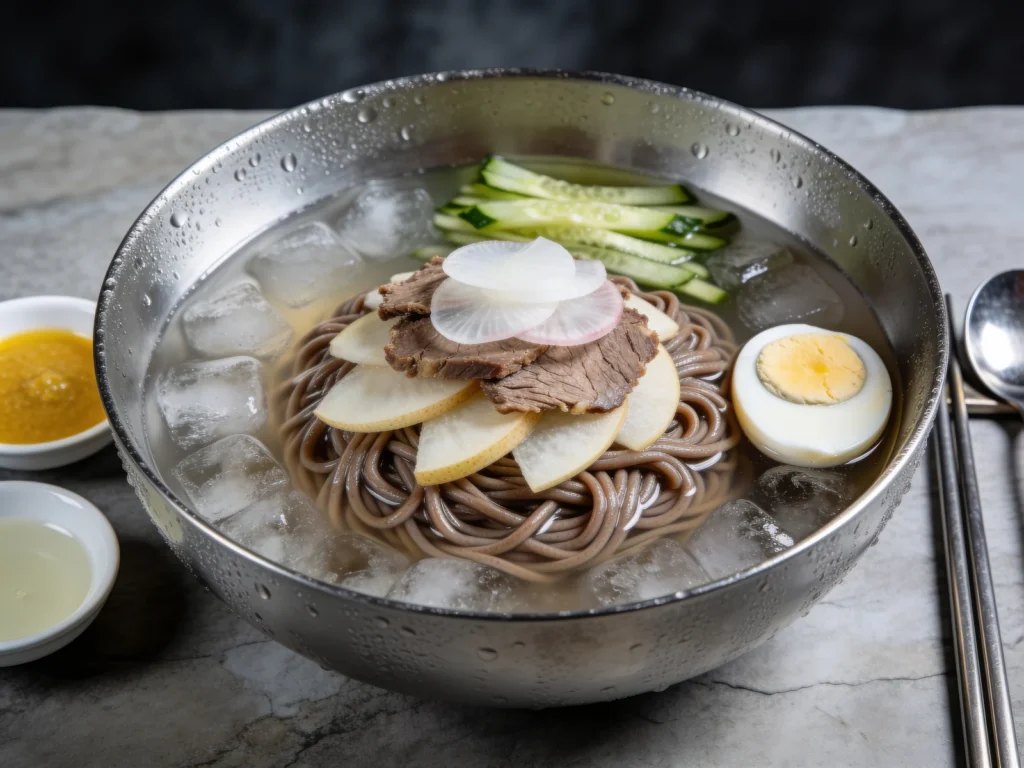
- Nest the noodles in chilled steel bowls, pour over the slushy broth to two-thirds up, and arrange the sliced brisket, radish, pear, cucumber and half an egg on top. Serve with mustard and vinegar for diners to add themselves, and a spoon for the broth.
Technique
- The broth is deliberately restrained. Pyongyang naengmyeon is judged on the clean, cold, slightly flat taste locals call seureongham – a rich, salty broth is considered a mistake.
- The dongchimi brine, not vinegar, is the authentic souring agent, and it also carries the faint fizz of a live ferment.
- High-buckwheat noodles are fragile and break easily; this is correct. In Pyongyang they are eaten without cutting, and slurped rather than bitten.
Substitutions
- No dongchimi? Make a quick radish brine three days ahead: 400 g radish batons in 1 litre water with 20 g salt, 1 tbsp sugar, garlic and ginger, left at room temperature until it fizzes.
- Fresh naengmyeon noodles from a Korean grocer need only 30–60 seconds; watch them like a hawk.
Variations
- Mul naengmyeon, the general southern term for the cold-broth version.
- Bibim naengmyeon, the same noodles dressed with chilli sauce instead of broth.
- Kong guksu style, a summer variant where the broth is chilled soy milk rather than beef and radish.
History
Recorded in the 1849 almanac Dongguk Sesigi as a winter dish; Okryu-gwan’s noodles were carried to the 2018 inter-Korean summit at Panmunjom.
Frequently asked questions
What is Pyongyang Naengmyeon?
Pyongyang Naengmyeon is a main from North Korea: chewy buckwheat noodles in icy beef-radish broth, the capital’s signature dish. Recorded in the 1849 almanac Dongguk Sesigi as a winter dish; Okryu-gwan’s noodles were carried to the 2018 inter-Korean summit at Panmunjom.
How long does Pyongyang Naengmyeon take to make?
Pyongyang Naengmyeon takes 45 min of preparation and 2 hr, plus overnight chilling of cooking. The recipe makes 4 servings. It is rated hard to make.
What can I substitute in Pyongyang Naengmyeon?
Yes, within limits. No dongchimi? Make a quick radish brine three days ahead: 400 g radish batons in 1 litre water with 20 g salt, 1 tbsp sugar, garlic and ginger, left at room temperature until it fizzes. Fresh naengmyeon noodles from a Korean grocer need only 30–60 seconds; watch them like a hawk.
What is the most important thing to get right in Pyongyang Naengmyeon?
Add onion, garlic, ginger, leek and peppercorns, drop to the barest simmer – a bubble every second or two, never a rolling boil – and cook 1.5–2 hours.