
Ingredients
The dough
- 500 gplain flour
- about 250 ml warm water
- 1 teaspoonsalt
The filling
- 400 gminced pork
- 300 gfirm tofu
- crumbled and squeezed dry
- 250 gkimchi
- squeezed and chopped
- 150 gbean sprouts
- blanched and chopped
- 4spring onions, chopped
- 4garlic cloves, crushed
- 2 tablespoonssoy sauce
- 1 tablespoonsesame oil
- salt and black pepper
To cook
- a steamer
- or a clear beef broth
- for the soup version
To serve
- soy sauce with vinegar
- chilli flakes
- or in the broth
Directions
- Wrap them in a cloth and squeeze hard. Keep squeezing until little more comes. They also need to be squeezed dry. Put the flour and salt in a bowl. Add the warm water in gradually. Bring it together into a firm dough. Warm water gives a more pliable dough.
- Add it gradually rather than at once. Knead it for about ten minutes. That is what lets it roll very thin. Wrap the dough up and let it rest. Give it at least thirty full minutes.
- Crumble the tofu into a cloth. Squeeze it as hard as you can. Squeeze it genuinely hard here. It should feel almost dry after. Squeeze the kimchi in the same way. Kimchi is very wet indeed inside. Squeeze it hard and keep the liquid.
- Chop the squeezed kimchi quite finely. Large pieces tear the thin skin. Chop all of it genuinely small. Twenty seconds is quite enough. Put the pork into a large bowl. Add the squeezed tofu and kimchi. Add the chopped sprouts and spring onion.
- Add the garlic and seasonings. Work it together thoroughly by hand. Work it in one direction as you mix. Fry a small spoonful in a pan. Taste it and adjust the seasoning. It takes two minutes and is worth it. Season it mildly rather than strongly. Taste before adding much more. Divide the dough up into pieces.
- Roll every one of them out very thin. Aim for about one whole millimetre. Roll the wrappers about twelve centimetres. Keep the unused wrappers covered. Dry dough will not seal at all.
- Work with only a few at a time. Put a generous spoonful in each wrapper. Fill them generously rather than sparingly. Fold the wrapper over into a half-moon. Press the curved edge firmly closed. Press out any air as you seal. Work from the middle right outward.
- Press the whole curved edge firmly. Wet the edge with water if it will not stick. Check the seal all the way round. Bring the two corners together. Pinch them firmly to each other. Line a steamer basket with a cloth. A cloth or leaf stops that entirely. Oil the cloth as well for certainty. Set them in the basket with gaps.
- Leave a good gap between each. Cooking them takes about fifteen minutes. Steam them for about fifteen minutes. The pork must cook right through. Steam them longer if there is. It should not be doughy or white.
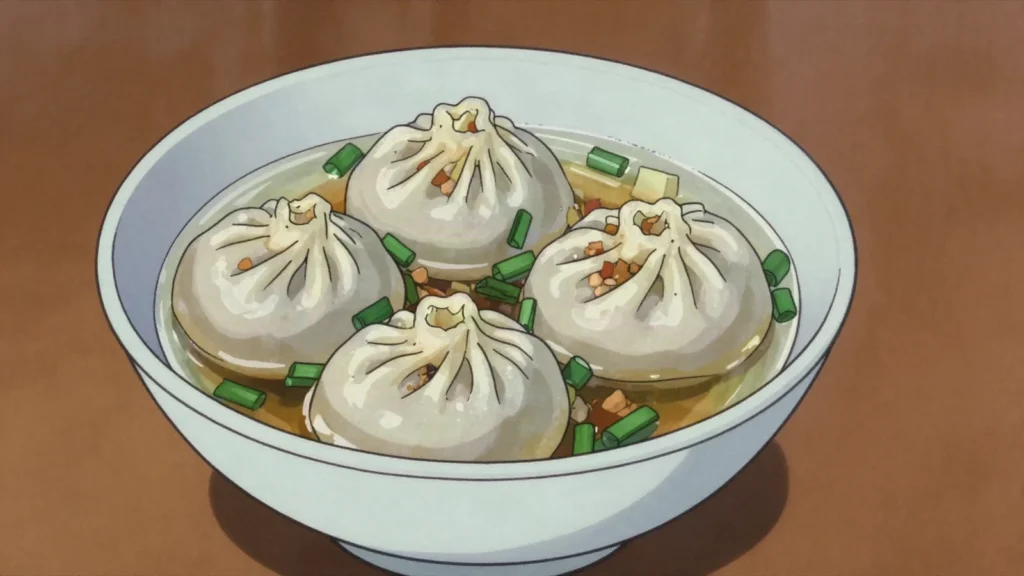
- Bring a clear beef broth to a simmer. It should be clear rather than cloudy. Keep it at a gentle simmer only. Judging them takes a careful look. Serve steamed ones with a dipping sauce. Serving the soup is straightforward enough.
- Ladle the broth and dumplings into bowls. Scatter spring onion over the top. They are eaten hot with chopsticks. Freeze them separated on a tray first. Cook them straight from frozen.
Technique
- Both the tofu and the kimchi must be squeezed genuinely dry in a cloth, and far more water comes out than expected. Wet filling cannot be sealed and bursts the dumpling as it cooks, so keep squeezing until little more comes — this is not the place to be gentle. The blanched bean sprouts need the same treatment.
- Roll the wrappers about one millimetre thick with the centre slightly thicker to support the filling and thin edges that seal easily. These are large dumplings, about twelve centimetres across, which is what makes them Pyongyang mandu — far bigger than southern ones, with two or three making a meal.
- Press the air out as you seal the curved edge, working from the middle outward, since trapped air expands and bursts them. Keep unused wrappers covered, since dry dough will not seal at all.
Substitutions
- The broth version, manduguk, uses a clear mildly seasoned beef broth rather than a spicy one; keep it at a gentle simmer, since a rolling boil breaks the dumplings apart.
- Some are shaped by bringing the two corners together into a ring and others left as plain half-moons; both are genuinely done.
Variations
- Season the filling mildly rather than strongly, which is characteristic of the Pyongyang version compared with southern mandu, and taste a fried spoonful before shaping since raw pork mixture cannot be tasted.
- The wrapper turns slightly translucent when cooked, which is a useful visual sign; doughy and white means it needs longer.
- The atlas carries several North Korean dishes — okssusu guksu and tteok from corn, onban, ojingeo sundae — and northern cooking used wheat, corn and millet where rice was harder to grow, which shaped the whole regional cuisine.
History
Northern wheat-growing regions made dumplings a winter staple; Pyongyang’s version is notably large and mildly seasoned compared with southern mandu.
Frequently asked questions
What is Pyongyang Mandu?
Pyongyang Mandu is a main from North Korea: big thin-skinned dumplings of pork, tofu and kimchi, steamed or in clear broth. Northern wheat-growing regions made dumplings a winter staple; Pyongyang’s version is notably large and mildly seasoned compared with southern mandu.
How long does Pyongyang Mandu take to make?
Pyongyang Mandu takes 1 hour 30 minutes of preparation and 20 minutes of cooking. The recipe makes about 30 dumplings. It is rated hard to make.
What can I substitute in Pyongyang Mandu?
Yes, within limits. The broth version, manduguk, uses a clear mildly seasoned beef broth rather than a spicy one; keep it at a gentle simmer, since a rolling boil breaks the dumplings apart. Some are shaped by bringing the two corners together into a ring and others left as plain half-moons; both are genuinely done.
What is the most important thing to get right in Pyongyang Mandu?
Add it gradually rather than at once. Knead it for about ten minutes. That is what lets it roll very thin. Wrap the dough up and let it rest. Give it at least thirty full minutes.