
Ingredients
The fish
- 2whole reef fish
- about 700 g each
- scaled and gutted
- or 4 smaller fish
- read the safety note first
The seasoning
- 2 teaspoonssalt
- or coarse sea salt
- 1 teaspoonblack pepper
- 2limes, halved
- or lemons
- 2 tablespoonsoil
- or coconut oil
- 4 clovesgarlic, crushed
- optional
- a thumb of ginger, sliced
- optional
Sometimes stuffed with
- sliced onion
- lime slices
- fresh herbs, if you have them
- a whole chilli
For the fire
- coconut husks or hardwood
- or charcoal
- a grill rack, or a fish cage
- long tongs
To serve
- rice, or breadfruit
- or boiled taro
- grated fresh coconut
- lime wedges
- soy sauce and chilli, optional
Directions
- Brown or grey gills mean it is old. The flesh should spring back when pressed. Scale it if it has not been scaled. Gut it and rinse the cavity thoroughly.
- Remove the dark bloodline along the spine. Cut three or four deep slashes into each side. Cut down to the bone. It stops the outside overcooking while the centre is raw.
- Rub salt into the slashes and the cavity. Rub pepper over it. Squeeze lime over it. Rub oil over the whole surface. Add garlic and ginger if you have them. The fish is fresh enough to need nothing. Let the fire burn down to glowing embers. That takes twenty to thirty minutes.
- Grill outdoors in open air only. Get the grill genuinely hot before the fish goes on. Oil the bars with a cloth held in tongs. Oil the fish as well as the bars. Lay the fish over medium embers.
- Grill it for about eight minutes on the first side. Do not move it during that time. Turn it once with a wide spatula or a cage. Grill it for another seven or eight minutes.
- Baste it with lime and oil as it cooks. The flesh should be opaque all the way through. Pull at the dorsal fin. It should come away cleanly when cooked. Let it rest three or four minutes off the heat. That lets the flesh settle and firm.
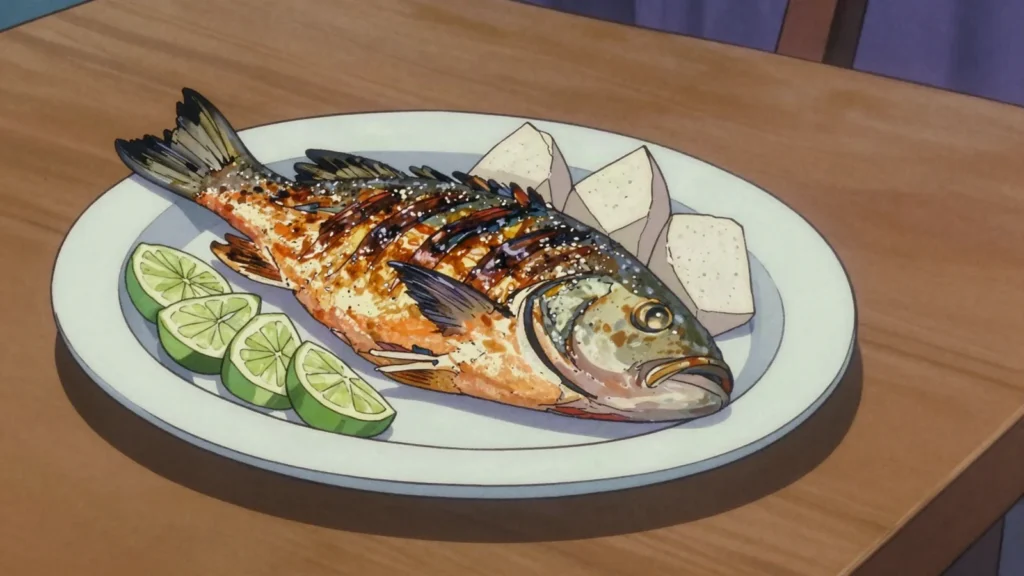
- Serve it whole on a platter. Serve lime wedges alongside. Serve rice, breadfruit or boiled taro. Bone the fish properly for small children. It keeps two days refrigerated. Keep it cold and cook it the same day if you can.
Technique
- Ciguatera is the commonest fish poisoning worldwide and a genuine concern with Pacific reef fish. The toxin concentrates up the food chain, so large predatory reef fish carry the most — barracuda, large grouper and moray eel are frequently implicated, and the liver, roe and head concentrate it further.
- Cooking, freezing, drying and salting all fail to destroy ciguatoxins. The fish looks, smells and tastes entirely normal, there is no test a cook can perform, and folk tests do not work. Local knowledge of which reefs and species are affected is the real protection, so follow local advice and do not eat reef fish from waters you do not know.
- Ciguatera causes vomiting and diarrhoea, numbness and tingling, and characteristically reverses hot and cold sensation so that cold objects feel burning. Symptoms can last weeks or months and there is no specific antidote. Seek medical help and say what was eaten.
- Fish from a regulated market is a different matter — commercial supply chains generally avoid known ciguatera areas. This recipe works with any firm whole fish: sea bass, bream, snapper or mackerel.
- Score three or four deep slashes to the bone on each side. It lets heat reach the middle so the outside does not overcook while the centre stays raw, and it lets the seasoning in.
- Get the grill hot, scrub it, oil the bars with a cloth held in tongs, oil the fish too — and then leave it alone. The skin releases from the bars when it is ready; if it sticks, it needs longer. A hinged fish cage removes the problem entirely and is worth having.
- Twenty minutes with lime is plenty. The juice cures the surface, turning it opaque and firm, and left longer it becomes ceviche.
- Pull at the dorsal fin: it comes away cleanly when the fish is cooked. That old test is genuinely reliable, alongside checking that the flesh near the spine is opaque throughout.
- Charcoal and wood produce carbon monoxide, which has no colour, smell or taste and kills in enclosed spaces. Grill outdoors only, never in a garage, tent or shed, and never bring a used grill inside. Coconut husks are the traditional fuel and burn hot with a distinctive smoke.
- Buy fish with clear bulging eyes, bright red gills and flesh that springs back, smelling of clean sea and nothing else. Sunken eyes, brown gills or any ammonia smell means discard it.
- The United States conducted extensive nuclear testing in the Marshall Islands between 1946 and 1958, including at Bikini and Enewetak. Communities were displaced, some have never returned, and contamination affected land and food sources. That history is documented and undisputed, and it is part of what the food of these islands sits within.
- Whole fish carries bones throughout. Warn anyone unused to it and bone the fish properly for small children.
Substitutions
- Sea bass, bream, snapper, mackerel or any firm whole fish replaces reef fish entirely.
- Fish fillets can be grilled instead, needing about four minutes a side.
- Coconut oil replaces vegetable oil and is what is used in the islands.
- Lemon replaces lime.
- A hot oven grill or a griddle pan replaces charcoal indoors, at the cost of the smoke.
- Banana or breadfruit leaves wrapped around the fish replace a grill cage.
Variations
- Fish baked whole in an earth oven is the festive Pacific preparation.
- Raw fish cured in lime and coconut cream is made across the Pacific under many names.
- Fish cooked in coconut cream and wrapped in leaves is another island standard.
- Grilled fish served with grated coconut and boiled breadfruit is the everyday Marshallese meal.
- Smoked and dried fish is preserved for the times when the catch is poor.
- Ika mata in the Cook Islands and poisson cru in Tahiti are the raw relatives.
Frequently asked questions
What is Grilled Reef Fish?
Grilled Reef Fish is a main from Marshall Islands: fresh lagoon fish grilled over coals, everyday protein.
How long does Grilled Reef Fish take to make?
Grilled Reef Fish takes 20 minutes of preparation and 20 minutes of cooking. The recipe makes serves 4. It is rated easy to make.
What can I substitute in Grilled Reef Fish?
Yes, within limits. Sea bass, bream, snapper, mackerel or any firm whole fish replaces reef fish entirely. Fish fillets can be grilled instead, needing about four minutes a side. Coconut oil replaces vegetable oil and is what is used in the islands. Lemon replaces lime. A hot oven grill or a griddle pan replaces charcoal indoors, at the cost of the smoke. Banana or breadfruit leaves wrapped around the fish replace a grill cage.
What is the most important thing to get right in Grilled Reef Fish?
Rub salt into the slashes and the cavity. Rub pepper over it. Squeeze lime over it. Rub oil over the whole surface. Add garlic and ginger if you have them. The fish is fresh enough to need nothing. Let the fire burn down to glowing embers. That takes twenty to thirty minutes.