
Ingredients
Dough
- 300 gglutinous rice flour
- 80 gplain wheat flour
- 2 tbspsugar
- ½ tspsalt
- about 180 ml boiling water
- 1 tbspmakgeolli or rice wine, optional
Syrup
- 250 mljocheong, Korean grain syrup
- or 200 g sugar with 100 ml water
- 2 tbspwater
- 1 sliceginger
To fry
- oil, for deep frying
To finish
- pine nuts, slivered
- jujube slices
To serve
- at holidays and ancestral rites
Directions
- Add boiling water to the flours gradually, mixing with a spoon at first. Use genuinely boiling water. Rice flour has no gluten, and hot water gelatinises the starch, which is the only thing that makes the dough workable at all.
- Knead it for 5 to 10 minutes as soon as you can bear the heat. Knead it while it is still warm, and keep going until it is smooth and elastic, like soft modelling clay.
- Keep the dough covered at all times. It dries and cracks within minutes of being exposed. Roll them smooth between your palms, with no cracks or seams. Any crack becomes a split in the oil, so roll them properly smooth.
- Heat the oil to only 150°C, which is lower than most deep frying. Glutinous rice balls need a slow fry so the inside cooks through, and hot oil browns the outside in a minute while the centre stays raw and pasty.
- Fry them for 8 to 10 minutes, moving them gently so they colour evenly. Increase the oil to about 180°C for the last minute to crisp and colour them. Drain them on a wire rack to cool. Warm the jocheong with the water and ginger until it is loose and pourable. Do not boil it hard, which makes it too thick to coat evenly.
- Toss the fried balls in the warm syrup until coated, or dip each one. Glaze them warm, since cold balls do not take the syrup and warm syrup runs straight off cold ones.
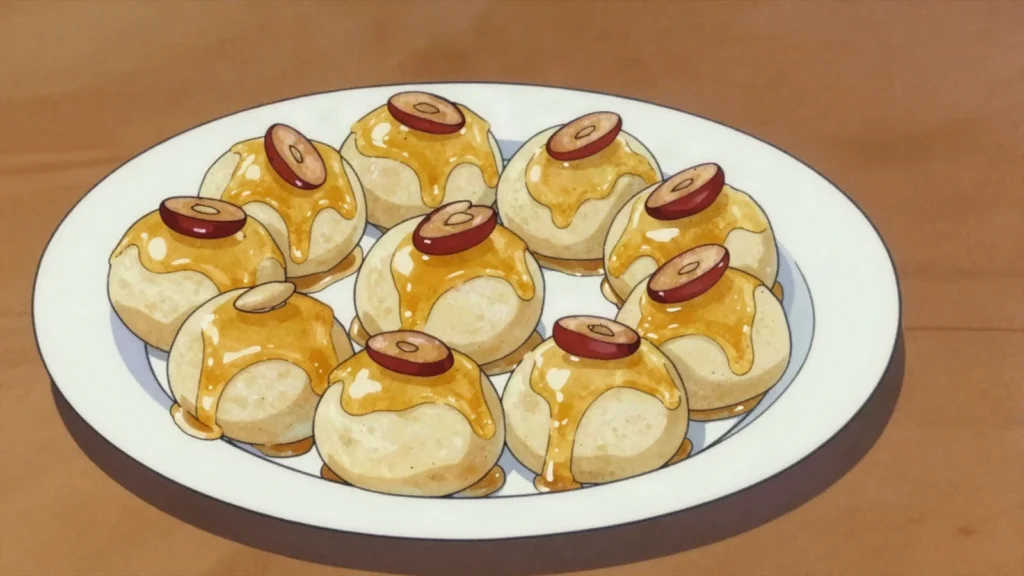
- Let the excess drip off and set them on a tray. Press a sliver of pine nut and a piece of jujube into the dent on top of each. Let them stand until the syrup has set to a tacky glaze. Serve them at room temperature.
Technique
- Kaesong has a distinct culinary reputation from its Goryeo capital days.
- Jocheong is malted grain syrup and is less sweet than sugar.
- They are set out at jesa, the ancestral memorial rites.
Substitutions
- Honey or a light sugar syrup in place of jocheong.
- Glutinous rice flour from a Korean or Chinese shop.
Variations
- Made with a red bean filling.
- Rolled in sesame seeds after glazing.
- Made smaller, as bite-sized pieces.
History
A Kaesong holiday sweet: fried glutinous rice-flour balls glazed in grain syrup, traditionally offered at ancestral rites.
Frequently asked questions
What is Umegi?
Umegi is a dessert from North Korea: kaesong fried rice-cake balls glazed with syrup, a holiday sweet. A Kaesong holiday sweet: fried glutinous rice-flour balls glazed in grain syrup, traditionally offered at ancestral rites.
How long does Umegi take to make?
Umegi takes 30 min of preparation and 30 min of cooking. The recipe makes about 24. It is rated medium to make.
What can I substitute in Umegi?
Yes, within limits. Honey or a light sugar syrup in place of jocheong. Glutinous rice flour from a Korean or Chinese shop.
What is the most important thing to get right in Umegi?
Add boiling water to the flours gradually, mixing with a spoon at first. Use genuinely boiling water. Rice flour has no gluten, and hot water gelatinises the starch, which is the only thing that makes the dough workable at all.