Dough of flour and water or egg, shaped and dried or cooked fresh — the pasta of Italy in its hundreds of forms and the noodles of China, Japan and Southeast Asia in wheat, rice, buckwheat and starch — the world’s most widespread way of turning grain into a meal.
Where it comes from
Noodles were being made in China four thousand years ago; the story that Marco Polo brought them to Italy is a twentieth-century invention, and Italy was eating pasta before he was born — dried pasta was being made in Sicily under Arab rule by the twelfth century, and Naples and Liguria built industries on it. Italy divides its pasta into the dried semolina-and-water pasta of the south, extruded into shapes and dried hard, and the fresh egg pasta of the north, rolled and cut by hand. Each shape has its sauces, and the pairing is a matter of how sauce clings to surface.
Asia’s noodles are wider in material: wheat noodles from northern China, Japan (udon, ramen) and Korea; rice noodles from southern China and Southeast Asia (pho, pad thai, vermicelli); buckwheat soba in Japan; mung bean and sweet potato starch noodles (glass noodles, Korean japchae); and the hand-pulled, knife-cut and hand-stretched noodles of the Chinese north-west and Central Asia, whose lagman and beshbarmak are noodles too. Couscous, though a pasta by composition, is treated as a grain and has its own page under semolina.
Varieties
- Dried semolina pasta (spaghetti, penne, rigatoni, orecchiette) — Durum wheat and water, extruded and dried; the southern Italian standard. Bronze-die pasta has a rough surface that holds sauce.
- Fresh egg pasta (tagliatelle, pappardelle, ravioli, lasagne) — Soft wheat flour and eggs, rolled thin; Emilia-Romagna’s tradition. Cooks in two or three minutes.
- Wheat noodles (udon, ramen, lo mein, lagman) — Chinese and Japanese wheat noodles, fresh or dried, some alkaline (ramen) for springiness.
- Rice noodles (bánh phở, sen lek, vermicelli) — Flat or round, fresh or dried; soaked, not boiled, before stir-frying or adding to soup.
- Soba and glass noodles — Japanese buckwheat noodles, served cold with dipping sauce or in broth; and starch noodles that turn translucent.
- Filled pasta and dumplings — Ravioli, tortellini, agnolotti; and the Asian equivalents — wontons, gyoza, mandu, momos.
In the kitchen
Boil pasta in a large pot of well-salted water — a tablespoon of salt per litre is not too much — until just tender with a bite (al dente), then drain but keep a cup of the starchy water. Finish the pasta in the pan with its sauce and a splash of that water, tossing over heat for a minute so the starch binds sauce to pasta. Never rinse, never oil the water. Fresh pasta takes a fraction of the time.
Dried rice noodles are soaked in warm water until pliable, then stir-fried or dropped into hot broth for seconds; boiling them turns them to paste. Ramen and udon are boiled, rinsed if served cold. Match shape to sauce: long thin pasta for oil- and cream-based sauces that coat, tubes and shells for chunky ragùs that need catching, fresh egg pasta for butter and delicate meat sauces.
Choosing and keeping
Dried pasta and noodles keep for years in a cupboard. Fresh egg pasta keeps two or three days refrigerated and freezes well; fresh rice noodles and fresh ramen should be used within a day or two. Bronze-die Italian pasta from Gragnano and similar towns is worth the small premium.
Good dried pasta is pale yellow and matte, not glossy, and smells of wheat; it should cook without going gluey. Rice noodles are sold in widths — pick the one the dish names.
Dishes with pasta
 YakisobaWheat noodles griddled with cabbage, pork and sweet-savoury sauce.
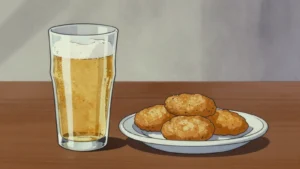 BanksPale lager drunk cold at rum shops and cricket grounds
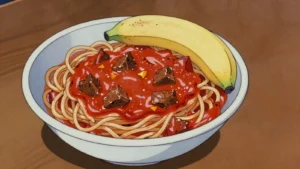 Suugo suqaarSpiced tomato sauce with diced meat, ladled over Somali spaghetti
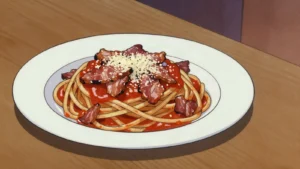 Spaghetti all’amatricianaguanciale, tomato and pecorino pasta, Roman staple
 Bajan pepper sauceMustard-scotch bonnet hot sauce spooned on everything
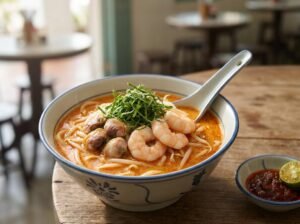 LaksaKatong-style thick rice noodles in rich coconut prawn gravy
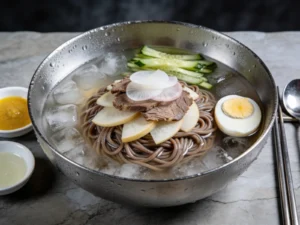 Pyongyang NaengmyeonChewy buckwheat noodles in icy beef-radish broth, the capital's signature dish
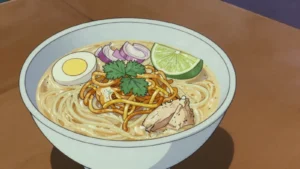 Ohn No Khao SweCoconut chicken soup with wheat noodles and crisp toppings
Pasta and noodles is tagged on 180 dishes from 80 countries in the atlas. These notes are written from general knowledge and carry no per-fact citation — see About.