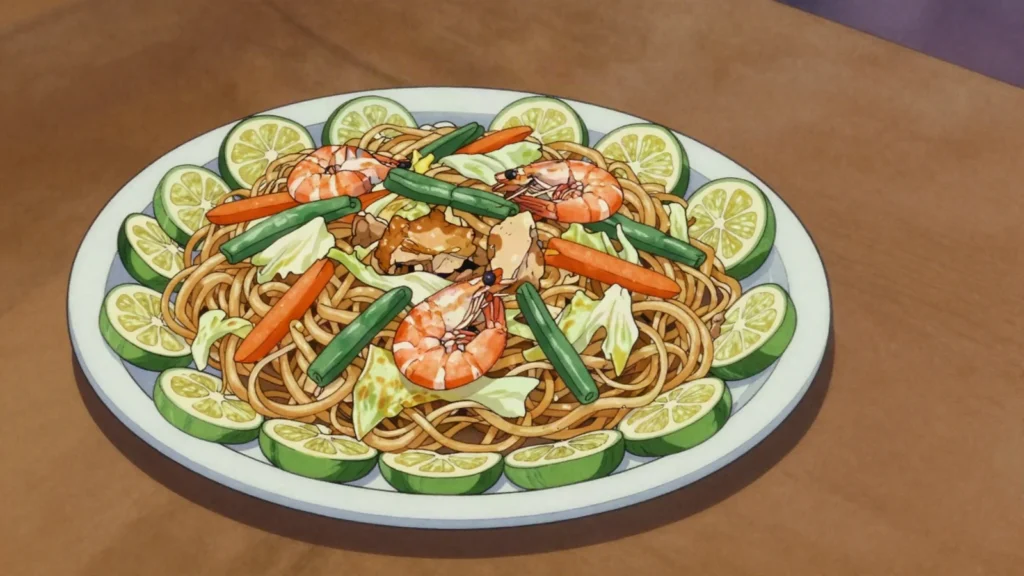

Ingredients
Noodles
- 300 gbihon, thin rice vermicelli
- 200 gpancit canton, flour noodles, optional
Protein
- 300 gchicken thigh, sliced thin
- 200 gpork belly, sliced
- 200 gprawns, shelled
Vegetables
- 1carrot, julienned
- 150 ggreen beans, sliced diagonally
- 200 gcabbage, shredded
- 1onion, sliced
- 4 clovesgarlic
- 2celery sticks, sliced
Sauce
- 800 mlchicken stock
- 4 tbspsoy sauce
- 2 tbspoyster sauce
- 1 tspground black pepper
- 1 tspsugar
To serve
- calamansi or lemon wedges
- chicharon, crushed
- spring onions
- fish sauce
Directions
- Soak the rice vermicelli in cold water for 15 to 20 minutes until pliable, then drain them well. Soak them in cold water and never boiling. Boiled bihon turns soft and breaks apart in the wok.
- Cut all the vegetables into similar thin strips. Even julienne matters here, because everything cooks fast and mixed sizes leave some raw and some collapsed.
- Heat oil in a large wok and fry the garlic and onion until fragrant. Add the pork and cook until browned, then the chicken, then the prawns for a minute only. Lift the prawns out and set them aside once they curl, because they will overcook otherwise.
- Add the carrot and green beans and stir fry 2 minutes, then the cabbage and celery for 1 minute. Cook the vegetables briefly so they keep some bite, then lift them all out with the meat.
- Add the drained noodles and let them cook in the liquid, tossing constantly. The noodles absorb the stock rather than being boiled and drained, and this is how they take on flavour.
- Keep tossing and lifting with tongs so they cook evenly and do not clump. Cook until almost all the liquid has been absorbed, about 5 to 8 minutes. Too little and the noodles stay hard; too much and you end up with soup.
- Add a splash more hot stock if the noodles are still firm when the pan goes dry. Taste and adjust with more soy or fish sauce. Serve on a large platter, topped with spring onions and crushed chicharon, with calamansi wedges on the side. Do not cut the noodles when serving, which is the one superstition observed at birthdays.
Technique
- Pancit canton uses thicker flour noodles and the two are often cooked together as pancit bam-i.
- Every region has its own: palabok with shrimp sauce, malabon, habhab, molo.
- It is served at almost every celebration, not only birthdays.
Substitutions
- Any thin rice vermicelli.
- Lemon or lime in place of calamansi.
Variations
- Pancit canton, with thick flour noodles.
- Pancit palabok, with a thick shrimp and annatto sauce.
- Vegetarian, with tofu and mushroom stock.
History
A broad category of Filipino noodle dishes, its name derived from the Hokkien Chinese phrase pian e sit, meaning convenient food, directly reflecting the dish’s introduction to the Philippines through Chinese immigration and trade contact over several centuries rather than an Indigenous Filipino noodle tradition. Different noodle types, rice noodles, wheat noodles or glass noodles among them, produced distinct named pancit varieties across Filipino regions, each incorporating local Filipino ingredients and flavours, including soy sauce, calamansi lime and various vegetables and proteins, onto the imported Chinese noodle base. Pancit carries a specific superstitious significance in Filipino culture tied to birthdays, where the noodles’ length is symbolically associated with long life, making cutting the noodles before serving considered inauspicious by many households.
Frequently asked questions
What is Pancit?
Pancit is a main from Philippines: stir-fried noodles for birthdays, symbolizing long life. A broad category of Filipino noodle dishes, its name derived from the Hokkien Chinese phrase pian e sit, meaning convenient food, directly reflecting the dish’s introduction to the Philippines through Chinese immigration and trade contact over several centuries rather than an Indigenous Filipino noodle tradition. Different noodle types, rice noodles, wheat noodles or glass noodles among them, produced distinct named pancit varieties across Filipino regions, each incorporating local Filipino ingredients and flavours, including soy sauce, calamansi lime and various vegetables and proteins, onto the imported Chinese noodle base. Pancit carries a specific superstitious significance in Filipino culture tied to birthdays, where the noodles’ length is symbolically associated with long life, making cutting the noodles before serving considered inauspicious by many households.
How long does Pancit take to make?
Pancit takes 30 min of preparation and 25 min of cooking. The recipe makes 6 servings. It is rated medium to make.
What can I substitute in Pancit?
Yes, within limits. Any thin rice vermicelli. Lemon or lime in place of calamansi.
What is the most important thing to get right in Pancit?
Soak the rice vermicelli in cold water for 15 to 20 minutes until pliable, then drain them well. Soak them in cold water and never boiling. Boiled bihon turns soft and breaks apart in the wok.