A bean that is barely eaten as a bean — almost all of it is fermented, curdled, pressed or extracted into something else first.
Where it comes from
Soybeans were domesticated in northern China and are the backbone of East Asian cooking, but almost never as a simple boiled bean: they are hard to digest and unpleasant raw, and the entire tradition around them is one of transformation. Tofu curdles the milk, soy sauce and miso ferment the bean with a mould, tempeh ferments it whole, and edamame is the exception — the immature pod eaten as a vegetable.
Soy sauce is made by fermenting soybeans and usually wheat with Aspergillus mould, then brining and ageing the mash for months. Chemically hydrolysed ‘soy sauce’ is a different product made in days and tastes it.
Varieties
- Soy sauce — Japanese shoyu is lighter and wheat-heavy; Chinese light soy is saltier and thinner; dark soy is thicker, sweeter and used for colour; tamari is wheat-free.
- Miso — Fermented soybean paste. White is young, sweet and mild; red is aged, dark and strongly savoury.
- Tofu — Curdled soy milk pressed to varying firmness. Silken for soups and desserts, firm for frying.
- Tempeh — Whole beans bound by a mould into a firm cake. Nutty, and it holds together in a way tofu does not.
- Edamame — Immature green pods, boiled in salted water.
- Fermented black beans — Salted and fermented soybeans, used as a pungent seasoning in Chinese cooking.
- Soy milk and yuba — The strained liquid, and the skin that forms on it when heated.
In the kitchen
Miso and soy sauce lose their aroma to prolonged boiling. Miso especially goes in off the heat, which is why miso soup is finished rather than cooked.
Tofu is mostly water. Pressing it out is what lets it brown and take up marinade instead of steaming in its own liquid.
Freezing and thawing tofu makes it spongy and chewy — a deliberate technique, not damage.
Dishes with soy
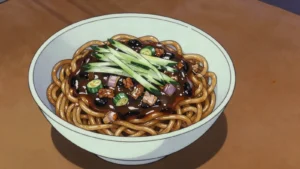 JjajangmyeonKorean-Chinese noodles in glossy black-bean sauce with pork and onion
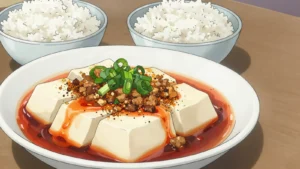 Mapo TofuSichuan tofu in fiery chili-bean sauce with minced pork and numbing peppercorns
 FuruCubes of tofu fermented in brine and rice wine, pungent and cheese-like on congee
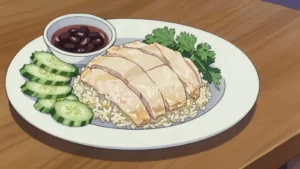 Khao Man GaiPoached chicken on garlic rice with fermented-bean ginger sauce
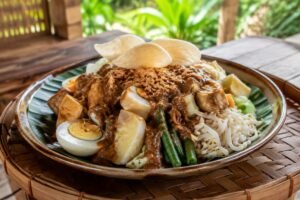 Gado-GadoBlanched vegetables, tofu, tempeh and egg under peanut dressing
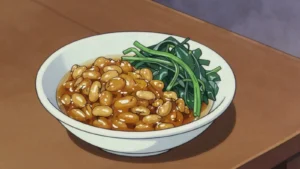 Tuong BanThick fermented soybean and glutinous rice sauce, salty and faintly sweet
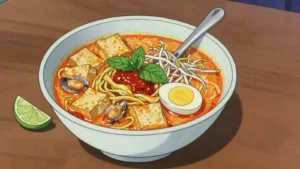 Curry LaksaCoconut curry noodle soup with tofu puffs and cockles
 SatayGrilled skewers with peanut sauce and lontong; countless regional versions
Soy is tagged on 94 dishes from 23 countries in the atlas. These notes are written from general knowledge and carry no per-fact citation — see About.