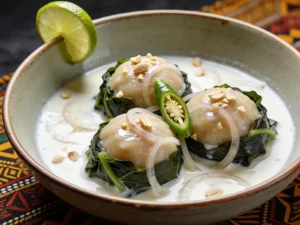
Ingredients
Casing
- 1sheep stomach and about 1 m of large intestine, or 6 pieces of tripe cut into 15 cm squares
- 3 tbspcoarse salt and 3 tbsp flour, for scrubbing
- juice of 2 lemons
- kitchen string or a large needle and cotton thread
Stuffing
- 300 glamb liver, finely chopped
- 200 glamb lung or heart, finely chopped
- 150 glamb fat, finely chopped
- 120 gmedium rice, rinsed
- 1large bunch chard, leaves only, blanched and chopped
- 1 bunchflat-leaf parsley, chopped
- 1 bunchcoriander leaf, chopped
- 2onions, finely chopped
- 6garlic cloves, crushed
- 1 tbspsweet paprika
- 1 tbspground cumin
- 1 tspground caraway
- 1 tspblack pepper
- ½ tspcayenne
- 2 tspsalt
- 3 tbspolive oil
Cooking broth
- 2 tbspolive oil
- 1onion, grated
- 1 tbsptomato puree
- 1 tbsppaprika
- 1 tspcumin
- 150 gcooked chickpeas
- 1.5 litreswater
- salt
Directions
- Mix the chopped liver, lung, fat, rice, chard, herbs, onions, garlic, spices, salt and olive oil in a large bowl; use only half the rice you think you need, because it swells to three times its volume inside the parcel.
- Fry a spoonful of the stuffing to taste it for salt and spice, then adjust, since you cannot correct it once the parcels are sewn shut.
- Fill each square of stomach only two-thirds full, fold it into a parcel and sew it closed with cotton thread, or tie tightly with string; a full parcel will burst as the rice expands.
- Prick each parcel three or four times with a fine needle so steam escapes gently during cooking. For the broth, soften the grated onion in the olive oil in a wide pot for 6 minutes, add the paprika, cumin and tomato puree and fry 2 minutes, then add the water, chickpeas and salt.
- Rest 10 minutes, snip out the threads, slice each parcel thickly and serve with the broth and chickpeas spooned over, or alongside couscous or chakhchoukha.
Technique
- The two rules that decide success are cleaning the casing obsessively and underfilling it. Rice that has nowhere to swell will split the parcel and empty it into the pot.
- Pricking the parcels vents steam without letting the stuffing escape, exactly as with a haggis, to which osbane is closely related in construction.
- Offal must be scrupulously fresh and kept below 4°C (40°F) until it goes in the pot; it spoils considerably faster than muscle meat.
- Osbane is Aid el-Kebir cooking, made from the sacrificed sheep so that nothing is wasted, and is also sliced into chorba and couscous through the following week.
Substitutions
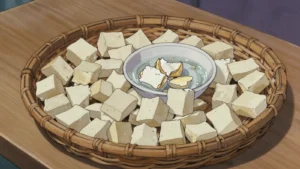
- No stomach: large squares of cleaned tripe, or even sturdy blanched chard leaves tied with string, hold the stuffing, though the chard version cooks in half the time.
- Lung can be replaced with extra heart or with minced lamb shoulder if it is unavailable.
Variations
- Bakbouka is the Constantine name for the same preparation, often with more chard and less rice.
- A Kabyle version uses plenty of wild herbs and no tomato in the broth.
- Some households add a handful of soaked dried broad beans to the stuffing.
History
An Eid al-Adha and Ramadan dish that uses the offal and stomach of the sacrificed sheep, sewn shut and cooked in the soup pot.
Frequently asked questions
What is Osbane?
Osbane is a main from Algeria: sheep tripe stuffed with liver, rice, chard and herbs, then simmered. An Eid al-Adha and Ramadan dish that uses the offal and stomach of the sacrificed sheep, sewn shut and cooked in the soup pot.
How long does Osbane take to make?
Osbane takes 1 hr 15 min including cleaning of preparation and 2 hr of cooking. The recipe makes 6 servings, about 6 stuffed parcels. It is rated hard to make.
What can I substitute in Osbane?
Yes, within limits. No stomach: large squares of cleaned tripe, or even sturdy blanched chard leaves tied with string, hold the stuffing, though the chard version cooks in half the time. Lung can be replaced with extra heart or with minced lamb shoulder if it is unavailable.
What is the most important thing to get right in Osbane?
Offal must be scrupulously fresh and kept below 4°C (40°F) until it goes in the pot; it spoils considerably faster than muscle meat.