
Ingredients
To make the soured milk
- 3 litreswhole milk, ideally raw or unhomogenised
- 3 tbsplive plain yoghurt or 200 ml lben, as the starter
To make the curd
- the soured milk from above
- 1 tspfine salt, plus more for the surface
Equipment
- a clean muslin cloth or fine cotton bag
- a wide shallow basket or tray for drying
- clean cheesecloth to cover against insects
Directions
- Warm the milk to 30°C (85°F), stir in the yoghurt or lben, cover and leave at warm room temperature, about 22°C (70°F) to 25°C (75°F), for 24 to 36 hours until it has set to a firm, tangy clabber that smells clean and sharp.
- Churn or whisk the soured milk hard for 10 minutes, then skim off the butter that gathers, if any; what remains is lben, the buttermilk Algerians drink.
- Pour the lben into a heavy pot and heat very slowly to about 60°C (140°F), stirring gently, until the curd separates from the greenish whey; do not let it boil or the curd toughens into rubber.
- Hold it at that temperature for 10 minutes, then take it off the heat and let it settle for 20 minutes.
- Ladle the curd into a muslin-lined sieve, tie the cloth into a bag and hang it over a bowl to drain for 6 to 8 hours, until it stops dripping.
- Turn the drained curd into a bowl, work in the teaspoon of salt, then crumble it between your fingers into pieces the size of a hazelnut.
- Spread the crumbs in a single layer on a tray or basket, salt the surface lightly, and dry in full sun with a cloth over the top against insects, bringing them in at night.
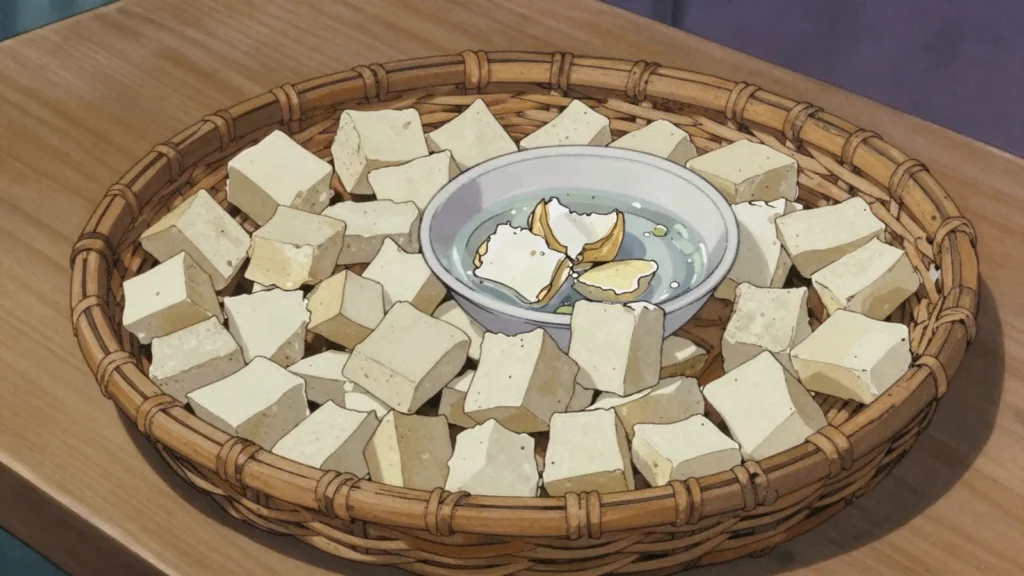
- Turn the crumbs twice a day and dry for 3 to 10 days, depending on heat, until they are rock hard, pale ivory and rattle on the tray. In an oven or dehydrator this takes 8 to 12 hours at 50°C (120°F).
- Store in a sealed jar or cloth bag in a dry cupboard, and soak the crumbs in warm water for 20 minutes before crumbling them into stews, couscous or bourek filling.
Technique
- This is an acid-set curd made only by souring and heat, with no rennet at all, which is why klila is naturally suitable for vegetarians.
- The curd must be dried right through. Any piece that is still soft in the middle will mould and spoil the jar, so err on the side of over-drying.
- Use pasteurised milk with a live yoghurt starter if you cannot be sure of your raw milk supply. The souring stage relies on friendly bacteria winning quickly, and a clean strong starter is what guarantees that.
- Klila is a pastoral preserving technique of the high plateaux, made in spring when milk is plentiful, and eaten through the year.
Substitutions
- No raw milk: whole pasteurised milk plus a generous live yoghurt starter works, though the flavour is milder.
- Shop buttermilk can replace the souring stage entirely; heat it straight to 60°C (140°F) and continue from step three.
Variations
- Aoulou or takammart are related dried curds from other Amazigh regions, sometimes flavoured with dried herbs.
- Some households press the salted curd into small cones or discs instead of crumbs before drying.
- A fresh, undried version, jben, is eaten straight away with olive oil and bread.
History
A pastoral preservation method of the high plains, where surplus milk is soured, drained and sun-dried into hard curd.
Frequently asked questions
What is Klila?
Klila is a fermented & pickled from Algeria: dried crumbly curd made from soured milk, kept for months and cooked into stews. A pastoral preservation method of the high plains, where surplus milk is soured, drained and sun-dried into hard curd.
How long does Klila take to make?
Klila takes 30 min spread over three days of preparation and 1 hr, then 3 to 10 days drying of cooking. The recipe makes about 250 g dried curd from 3 litres of milk. It is rated medium to make.
What can I substitute in Klila?
Yes, within limits. No raw milk: whole pasteurised milk plus a generous live yoghurt starter works, though the flavour is milder. Shop buttermilk can replace the souring stage entirely; heat it straight to 60°C (140°F) and continue from step three.
What is the most important thing to get right in Klila?
Pour the lben into a heavy pot and heat very slowly to about 60°C (140°F), stirring gently, until the curd separates from the greenish whey; do not let it boil or the curd toughens into rubber.