
Ingredients
Dumplings
- 1 kgfresh cassava, peeled, cored and finely grated
- 1 tspsalt
- 100 ggrated fresh coconut
- 2 tbspcoconut cream, to bind
Wrapping
- 24large slippery cabbage leaves (aibika or island cabbage), thick stalks stripped out
- banana leaf strips, for tying, or wooden cocktail sticks
Coconut broth
- 700 mlcoconut milk, from the second pressing
- 300 mlthick coconut cream, from the first pressing
- 1onion, thinly sliced
- 1 tspsalt
- 1green chilli, split (optional)
- 50 gngali nuts or almonds, roughly crushed (optional)
To serve
- 1lime, in wedges
- boiled taro or rice
Directions
- Grate the cassava finely into a bowl and squeeze out most of the free liquid, keeping the white starch that settles at the bottom of the bowl and stirring it back in.
- Mix the cassava with the salt, grated coconut and enough coconut cream to bring it together into a heavy, sticky paste that holds its shape when squeezed.
- Wilt the slippery cabbage leaves for 10 seconds in boiling water so they turn dark green and go floppy without tearing. Drain and pat dry.
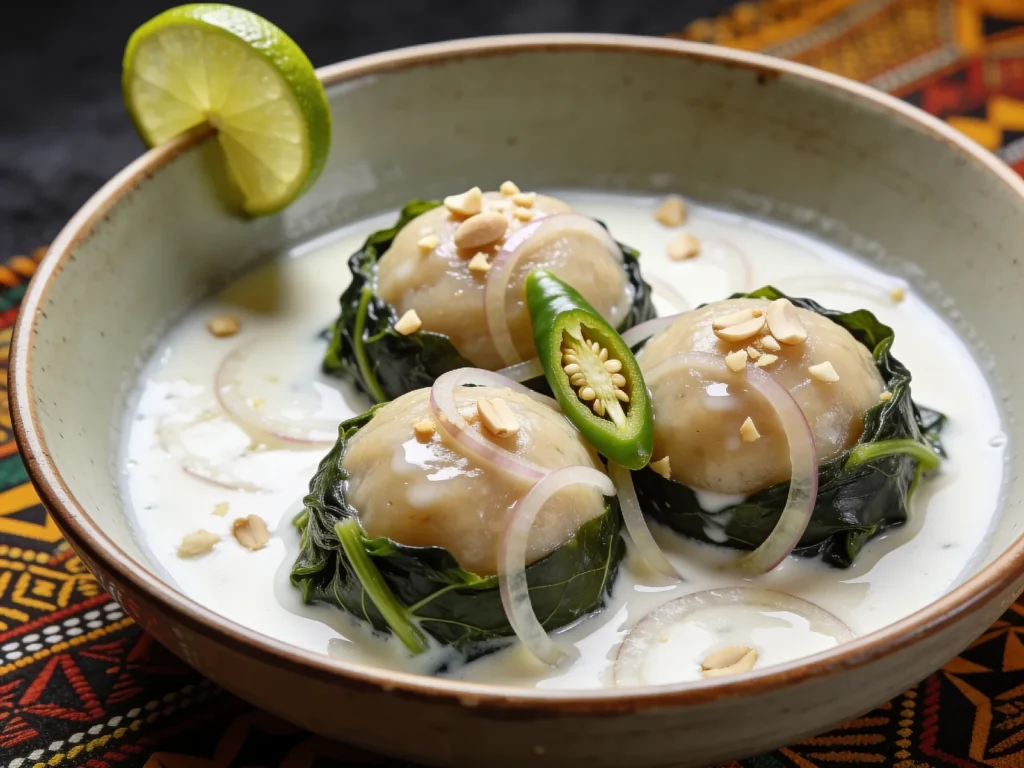
- Place a heaped tablespoon of the cassava mixture near the stalk end of two overlapped leaves, fold the sides in and roll into a firm parcel about the size of an egg. Tie with a leaf strip or pin closed.
- Bring the thin coconut milk to a bare simmer in a wide pan with the onion, salt and chilli. Do not boil it hard at any point or the milk will split.
- Lower the parcels in seam-side down in a single layer, cover and poach gently for 25–30 minutes, turning once, until the cassava inside is translucent and firm rather than chalky.
- Stir in the thick coconut cream and the crushed ngali nuts and cook a further 5 minutes uncovered, until the broth thickens and glosses over the parcels.
- Rest 5 minutes off the heat, then serve two or three parcels per person in a shallow bowl with plenty of the sauce spooned over and a lime wedge alongside.
Technique
- Slippery cabbage is Abelmoschus manihot, the everyday green of Melanesia. Its natural mucilage is what thickens the sauce and gives the dish its name and its texture.
- Food safety: grate, drain and fully cook the cassava. Undercooked cassava is bitter and unsafe, and the dumplings must be poached through until glassy.
- The thick first-press cream always goes in at the end. Boiled from the start it separates into oil and curds and the sauce turns greasy.
Substitutions
- No slippery cabbage: use large spinach or chard leaves, blanched and doubled up. You lose the slipperiness but the parcels hold together.
- Two 400 ml tins of coconut milk stand in for fresh: use the watery part for poaching and the thick top for the finish.
- Ngali nuts are Solomon Islands canarium nuts; almonds or cashews are the closest supermarket match.
Variations
- Made with grated taro instead of cassava, which gives a firmer, nuttier dumpling.
- A version with grated sweet potato mixed into the cassava for a sweeter parcel.
History
A dish made from grated cassava or sweet potato mixed with coconut cream, wrapped in leaves and baked or steamed, developed in Solomon Islands cooking reflecting the country’s reliance on root crops and coconut, both long established as significant staples across the Solomon Islands’ varied tropical agricultural land. Its preparation, wrapping the starchy, coconut-enriched mixture in leaves before cooking, reflects a broader Pacific Islander technique of using large local leaves as a natural, biodegradable cooking vessel, similar in principle to related leaf-wrapped dishes found across other parts of Melanesia and the wider Pacific. Simboro remains a traditional dish across the Solomon Islands, valued as a filling, energy-dense food built from locally abundant staple crops.
Frequently asked questions
What is Simboro?
Simboro is a main from Solomon Islands: grated cassava dumplings wrapped in slippery cabbage leaves, poached in coconut milk. A dish made from grated cassava or sweet potato mixed with coconut cream, wrapped in leaves and baked or steamed, developed in Solomon Islands cooking reflecting the country’s reliance on root crops and coconut, both long established as significant staples across the Solomon Islands’ varied tropical agricultural land. Its preparation, wrapping the starchy, coconut-enriched mixture in leaves before cooking, reflects a broader Pacific Islander technique of using large local leaves as a natural, biodegradable cooking vessel, similar in principle to related leaf-wrapped dishes found across other parts of Melanesia and the wider Pacific. Simboro remains a traditional dish across the Solomon Islands, valued as a filling, energy-dense food built from locally abundant staple crops.
How long does Simboro take to make?
Simboro takes 40 min of preparation and 35 min of cooking. The recipe makes 4 servings. It is rated medium to make.
What can I substitute in Simboro?
Yes, within limits. No slippery cabbage: use large spinach or chard leaves, blanched and doubled up. You lose the slipperiness but the parcels hold together. Two 400 ml tins of coconut milk stand in for fresh: use the watery part for poaching and the thick top for the finish. Ngali nuts are Solomon Islands canarium nuts; almonds or cashews are the closest supermarket match.
What is the most important thing to get right in Simboro?
Bring the thin coconut milk to a bare simmer in a wide pan with the onion, salt and chilli. Do not boil it hard at any point or the milk will split.