
Ingredients
Filling
- 4whole tilapia, about 300 g each, gutted and scaled, or 800 g Nile perch (capitaine) in thick steaks
- 2onions, finely sliced
- 4tomatoes, sliced
- 6garlic cloves, crushed
- 3cm ginger, grated
- 3pili-pili chillies, finely chopped, or 2 tsp chilli paste
- 4spring onions, chopped
- 3 tbspred palm oil
- juice of 2 limes
- 2 tspsalt
- 1 tspground white pepper
- 1 tbspground crayfish or dried shrimp powder (optional)
Wrapping
- 8large banana leaves, plus extra strips or kitchen string for tying
- boiling water, for softening the leaves
Directions
- Pass the banana leaves quickly over a gas flame or dip them in boiling water for 10 seconds until they turn glossy and darken. This wilts the fibres so they fold instead of splitting.
- Score the fish two or three times on each side, then rub it inside and out with lime juice and salt and leave 15 minutes.
- Pound or blend the garlic, ginger, chilli and spring onion into a rough paste with the palm oil, white pepper and crayfish powder if using.
- Rub the paste into the slashes and the belly cavity of each fish, pushing it deep into the cuts.
- Lay two leaves in a cross on the work surface, shiny side up. Build a bed of sliced onion and tomato, sit the fish on it, then cover with more onion and tomato and any remaining paste.
- Fold the leaves over the fish, tucking the ends under to make a sealed rectangular parcel, and tie with strips of leaf or string. The seal matters: the parcel steams in the fish’s own juices and palm oil, and a leak means dry fish.
- Cook the parcels over glowing charcoal embers, 15–20 minutes a side, turning once, so the leaves char black and perfume the contents. Alternatively steam in a covered pot for 40–45 minutes.
- Open a parcel at the table: the flesh should flake at the thickest part, the leaves should smell smoky and sweet, and there should be a pool of orange-red sauce in the bottom. Serve with fufu, rice or chikwangue.
Technique
- Liboke, plural maboke, simply means a leaf parcel in Lingala. It is a cooking method as much as a dish, and the same wrapping is used for goat, chicken, mushrooms or beans.
- Red palm oil is the defining fat: unrefined, orange, with a distinct savoury aroma. Refined palm oil or vegetable oil will not give the colour or the taste.
- The leaf is not just a wrapper. Banana leaf gives a grassy, tea-like fragrance to whatever steams inside it, which is why foil parcels taste flat by comparison.
Substitutions
- No banana leaves: use large chard or cabbage leaves lined with baking parchment, or double-wrapped foil, and add 1 tsp of green tea leaves to hint at the missing aroma.
Variations
- Liboke ya ntaba, with goat cubes, which needs 1 hour 30 minutes over gentler embers.
- Liboke ya makayabu, made with salted cod soaked overnight, a Kinshasa street favourite.
History
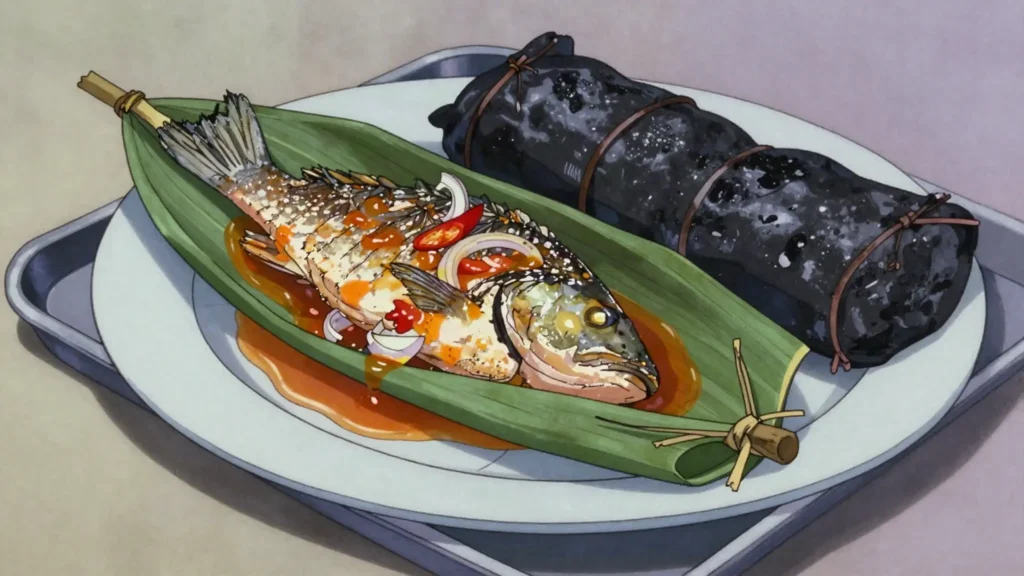
Fish or meat sealed in marantaceae leaves and steamed over coals, a river technique whose name means parcel in Lingala.
Frequently asked questions
What is Liboke?
Liboke is a main from DR Congo: fish or meat in chili-spiced banana-leaf parcels, grilled or steamed. Fish or meat sealed in marantaceae leaves and steamed over coals, a river technique whose name means parcel in Lingala.
How long does Liboke take to make?
Liboke takes 30 min of preparation and 50 min of cooking. The recipe makes 4 parcels. It is rated medium to make.
What can I substitute in Liboke?
Yes, within limits. No banana leaves: use large chard or cabbage leaves lined with baking parchment, or double-wrapped foil, and add 1 tsp of green tea leaves to hint at the missing aroma.
What is the most important thing to get right in Liboke?
Pass the banana leaves quickly over a gas flame or dip them in boiling water for 10 seconds until they turn glossy and darken. This wilts the fibres so they fold instead of splitting.