
Ingredients
Leaves
- 1 kgfresh cassava leaves, or 500 g frozen pounded cassava leaves
Base
- 150 mlred palm oil
- 3onions, chopped
- 6 clovesgarlic
- 3spring onions
Enrichment
- 150 ggroundnut paste, unsweetened peanut butter
- 300 gsmoked fish, boned and flaked
- or 300 g beef, in pieces
Seasoning
- 2chillies
- 1stock cube
- salt
- 1aubergine or a few okra, optional
- 500 mlwater
To serve
- ugali or fufu
- boiled plantain
- rice
Equipment
- a mortar and pestle, or a strong blender
Directions
- Cook them for at least an hour after pounding, and traditionally they are cooked for two. Leave the pot uncovered for the first part of the cooking so the gas escapes rather than condensing back in. This is why cassava leaves are always cooked to a soft dark purée across Africa and never treated like spinach.
- Strip the leaves from the stalks and discard the stems. Wash the leaves thoroughly in several changes of water. Pound them in a large mortar until they are broken down into a fine dark green pulp with no whole leaves left.
- Pound them properly and thoroughly. Frozen ready-pounded cassava leaves are sold in African shops and are what most people outside the region use, and they still need the long cooking. Boil them uncovered for 30 minutes before anything else is added. That first uncovered boil is the critical stage and it should not be shortened.
- Use genuine unrefined red palm oil, which gives the colour and a savoury depth nothing else provides. Do not overheat it, since taken too hot it bleaches pale and loses its flavour, and it can catch fire.
- Add the fried onions to the pot along with the chilli and stock cube. Rinse smoked fish first, check it carefully for bones, and flake it. If using beef, brown it and simmer it until tender before it joins the pot.
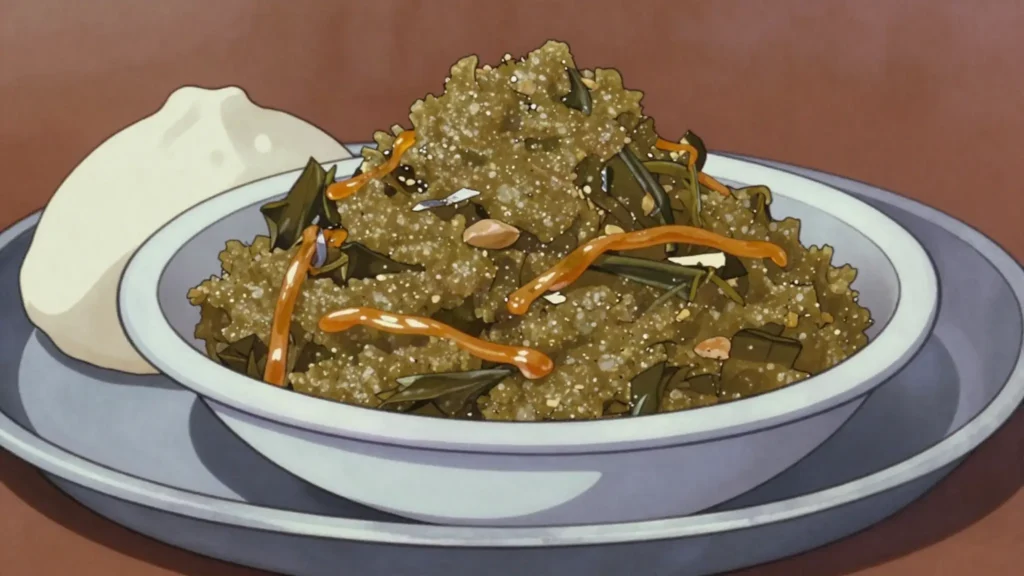
- Simmer everything together, partly covered, for a further hour. The leaves should collapse into a thick, dark, almost silky mass, and the colour should be deep olive green rather than bright.
- Add it toward the end, since long cooking makes it separate and go oily. Simmer another 20 minutes, stirring, until it thickens. Taste and season, and expect it to be rich, nutty and slightly bitter. Serve it with ugali, fufu, boiled plantain or rice, eaten with the hands.
Technique
- Frozen pounded cassava leaves are widely sold and are a genuine convenience.
- The same dish is pondu or saka saka in Kinshasa and western Congo.
- Cassava leaves are a significant source of protein and vitamins in the region.
Substitutions
- Frozen pounded cassava leaves in place of fresh.
- There is no substitute in flavour, though sweet potato leaves are cooked similarly.
Variations
- With aubergine or okra cooked into it.
- Made with beef rather than fish.
- Without groundnut, which is common in some areas.
History
The eastern Congolese name for the cassava-leaf stew eaten daily across the Kivus and Maniema with ugali or plantain.
Frequently asked questions
What is Sombe?
Sombe is a soup & stew from DR Congo: pounded cassava leaves cooked long with palm oil, groundnut and smoked fish. The eastern Congolese name for the cassava-leaf stew eaten daily across the Kivus and Maniema with ugali or plantain.
How long does Sombe take to make?
Sombe takes 40 min of preparation and 2 hr of cooking. The recipe makes 6 servings. It is rated medium to make.
What can I substitute in Sombe?
Yes, within limits. Frozen pounded cassava leaves in place of fresh. There is no substitute in flavour, though sweet potato leaves are cooked similarly.
What is the most important thing to get right in Sombe?
Cook them for at least an hour after pounding, and traditionally they are cooked for two. Leave the pot uncovered for the first part of the cooking so the gas escapes rather than condensing back in. This is why cassava leaves are always cooked to a soft dark purée across Africa and never treated like spinach.