
Ingredients
Cassava
- 4 kgcassava, peeled
- water, for soaking and fermenting
To season
- 2 teaspoonssalt
- water, as needed
To wrap
- banana leaves or marantacea leaves
- string or strips of leaf rib
- boiling water, to soften the leaves
Equipment
- a large bucket
- a mortar and pestle
- a cloth for pressing
- a large pot with a lid
Directions
- Use sweet cassava if you have any choice. It softens and takes on a sour smell. Peel the cassava thickly with a knife. Remove the whole pink layer beneath the bark. A vegetable peeler is not strong enough. Cut it into large even chunks. Rinse all the pieces thoroughly. Fermenting it takes four days.
- Put the chunks in a large bucket. Cover them completely with cold water. The pieces must stay under the water. Cover the container over loosely. Leave it at room temperature for four days. Judging the fermentation takes a look and a smell.
- Discard the whole batch if it smells rotten. Warm weather ferments it faster than cool. Drain the fermented cassava thoroughly. Put it in a cloth over a bowl. Twist the cloth and press hard. Squeeze out as much water as you can. Some cooks hang it with a weight for hours. Put the pressed cassava in a large mortar. Pound it with a heavy wooden pestle.
- Keep pounding until it becomes a smooth paste. That takes real effort and considerable time. Add the salt and work it through. Preparing the leaves takes a few minutes.
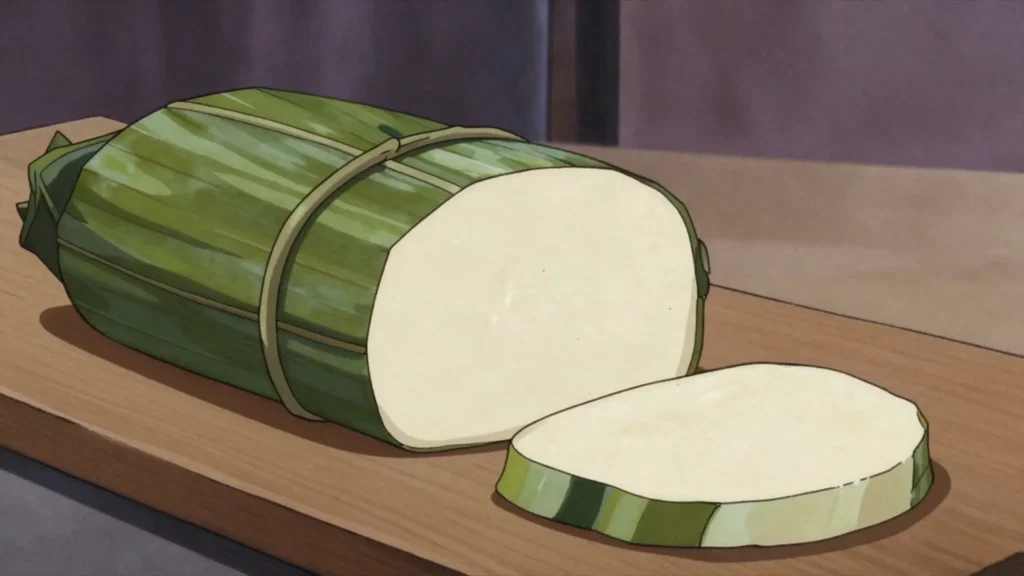
- Pour boiling water over the leaves. Wipe them clean and cut out the thick rib. Cut them into large rectangles. Wrapping them takes a little practice. Lay a leaf rectangle flat on the board. Spoon the cassava paste along the middle. Shape it into a thick log or a block. Roll the leaf tightly around it.
- Fold the ends over and tuck them under. Tie it with string or a strip of leaf rib. Wrap it in a second leaf for strength. The parcel must be watertight. Stand the parcels in a large pot. Add water to come halfway up them. Cover the pot with a tight lid. Bring it to a boil and lower the heat. Let them cook for a full two hours. Turn them once halfway through.
- Top up the water if it boils away. Judging when they are done takes a test. Let them cool completely in their wrappers. They firm up considerably as they cool. Serve it alongside a stew or grilled fish. It keeps four days at room temperature.
Technique
- The days of fermentation are the safety process rather than a flavouring step, since they break down the cyanogenic compounds in the root.
- The same fermentation principle produces gari and attieke, and is one of the great African food technologies.
- A clean sour smell is correct, while a rotten smell means the batch must be discarded.
Substitutions
- Banana leaves stand in for the marantacea leaves traditionally used.
- A food processor replaces the traditional mortar and pestle and is far faster.
Variations
- Baton de manioc in Gabon and mintumba in Cameroon are closely related.
- Sizes vary from small batons to large blocks.
- Some cooks work a little palm oil into the paste.
History
Cassava steeped for days so fermentation strips its cyanogenic compounds, then pounded and steamed in leaves into a loaf that keeps.
Frequently asked questions
What is Chikwanga?
Chikwanga is a salad & side from DR Congo: fermented cassava bread steamed in leaves, travel-friendly. Cassava steeped for days so fermentation strips its cyanogenic compounds, then pounded and steamed in leaves into a loaf that keeps.
How long does Chikwanga take to make?
Chikwanga takes 1 hour plus 4 days fermenting of preparation and 2 hours of cooking. The recipe makes about 8 loaves. It is rated hard to make.
What can I substitute in Chikwanga?
Yes, within limits. Banana leaves stand in for the marantacea leaves traditionally used. A food processor replaces the traditional mortar and pestle and is far faster.
What is the most important thing to get right in Chikwanga?
Use sweet cassava if you have any choice. It softens and takes on a sour smell. Peel the cassava thickly with a knife. Remove the whole pink layer beneath the bark. A vegetable peeler is not strong enough. Cut it into large even chunks. Rinse all the pieces thoroughly. Fermenting it takes four days.