Ingredients
Greens
- 800 gamaranth leaves, bitekuteku
- or 800 g spinach or chard
- water, for washing
To cook
- 3 tablespoonsred palm oil
- or 3 tablespoons neutral oil
- 2onions, sliced
- 3garlic cloves, chopped
- 3tomatoes, chopped
- 1 tablespoontomato paste
- 1chilli, chopped, optional
- 1stock cube
- salt and black pepper
Sometimes added
- 2 tablespoonsground dried shrimp
- smoked fish, flaked
- 2 tablespoonsgroundnut paste
To serve
- fufu or chikwangue
- rice
- grilled fish or chicken
Directions
- Pick the leaves off their stems. Discard any thick or woody stalks. Wash the leaves in several changes of cold water. Lift them out of the water rather than pouring it off. Repeat until the water runs completely clear.
- Shake them dry well in a colander. Whole leaves keep more texture in the dish. Boil them for three minutes and drain them well. That keeps more flavour but takes longer. Heat the palm oil in a wide heavy pan. Warm it gently rather than fiercely. Add the sliced onions to the pan.
- Fry them for about eight minutes. They should soften and turn golden. Add the garlic and cook for one minute. Stir in all of the tomato paste. Fry it for two minutes to cook out the raw taste. Add the chopped tomatoes and the chilli.
- Let them cook down for six minutes. The oil should separate at the edges. Add the washed leaves to the pan in handfuls. They will look like far too much at first. Add the next handful as the last one wilts. Keep going until they are all in. Stir them through the tomato base. Cooking them takes only a few minutes.
- Cook them for about eight minutes in total. They should be tender but still bright green. Add a splash of water only if it looks dry. Loosen the groundnut paste with hot water first.
- Stir it in near the end of cooking. Seasoning it is done at the end. Crumble in the stock cube as well. Season with salt and black pepper.
- Taste it and adjust the seasoning. The greens should taste of themselves. Spoon it into a bowl or onto the plate. Serve fufu or chikwangue alongside. It keeps two days refrigerated.
Technique
- Amaranth leaves are grown widely across Africa and are among the fastest-cropping garden greens available.
- The same plant is eaten as callaloo in parts of the Caribbean and under many other names elsewhere.
Substitutions
- Spinach or chard both work well, though neither has quite the same flavour.
- Any neutral oil replaces palm oil, though the colour and depth change considerably.
Variations
- Some households add smoked fish for a fuller dish.
- A version enriched with groundnut paste is thicker and richer.
- Similar quick-cooked greens are eaten across Central Africa under many names.
History
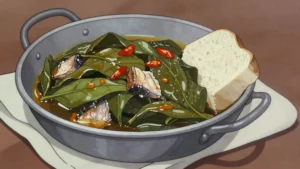
Amaranth leaves cooked quickly with onion and palm oil, a fast-growing garden green of the Kinshasa river plain.
Frequently asked questions
What is Bitekuteku?
Bitekuteku is a salad & side from DR Congo: sautéed amaranth greens with tomato and onion. Amaranth leaves cooked quickly with onion and palm oil, a fast-growing garden green of the Kinshasa river plain.
How long does Bitekuteku take to make?
Bitekuteku takes 20 minutes of preparation and 20 minutes of cooking. The recipe makes serves 4. It is rated easy to make.
What can I substitute in Bitekuteku?
Yes, within limits. Spinach or chard both work well, though neither has quite the same flavour. Any neutral oil replaces palm oil, though the colour and depth change considerably.
What is the most important thing to get right in Bitekuteku?
Pick the leaves off their stems. Discard any thick or woody stalks. Wash the leaves in several changes of cold water. Lift them out of the water rather than pouring it off. Repeat until the water runs completely clear.