
Ingredients
Meat and fat
- 800 glamb shoulder or shank, cut in large 5 cm pieces, bone in
- 150 gdumba, lamb tail fat, diced, or 150 ml cottonseed or sunflower oil
Zirvak
- 3large onions, sliced in half moons
- 1 kgcarrots, half yellow if you can get them, cut into thick matchsticks by hand
- 1 tbspwhole cumin seed (zira), rubbed between the palms
- 1 tspground coriander
- 1 tspblack pepper
- 2 tbspbarberries (zirk), rinsed
- 150 gchickpeas, soaked overnight
- 2whole heads of garlic, unpeeled, roots trimmed
- 1quince, quartered and cored, in season
- 2 tspsalt
- 600 mlboiling water
Rice
- 700 gdevzira or another short, hard rice, rinsed until the water runs clear and soaked 1 hr in warm salted water
- boiling water, to cover
To serve
- 1large lyagan, a communal platter
- achik chuchuk salad: 3 tomatoes and 1 onion sliced paper-thin with black pepper
- green tea, drunk throughout
Directions
- Render the tail fat in a dry kazan or a heavy deep pot over medium heat until the pieces shrink to golden crisps, 10 minutes, then lift them out and reserve. If using oil, heat it until it just begins to haze.
- Brown the lamb hard in the hot fat, 8 minutes, turning until crusted on all sides, then push it aside.
- Add the onions and fry 10 minutes until deep golden brown. The colour of the finished pilaf comes almost entirely from this step, so do not stop while they are pale.
- Add the carrots and cook 10 minutes without stirring much, letting them soften and sweeten, then add the cumin, coriander, pepper, barberries, chickpeas and salt.
- Pour in the boiling water to just cover, bury the whole garlic heads and the quince in it, and simmer this zirvak uncovered for 40 minutes, until the broth is deep amber and tastes strongly seasoned. This broth flavours the rice, so it should be slightly too salty on its own.
- Drain the soaked rice and spread it over the zirvak in an even layer. Do not stir; from this point the two layers must stay separate.
- Pour boiling water gently over a slotted spoon onto the rice until it stands 2 cm above the grain, raise the heat and boil hard, uncovered, until the water has dropped to the level of the rice, about 15 minutes.
- Gather the rice into a dome with a spoon, poke five or six holes down to the base with a chopstick so steam can rise, cover with a cloth-wrapped lid, drop the heat to its lowest and steam 25 minutes.
- Rest off the heat 10 minutes, then lift out the garlic and quince and set them aside.
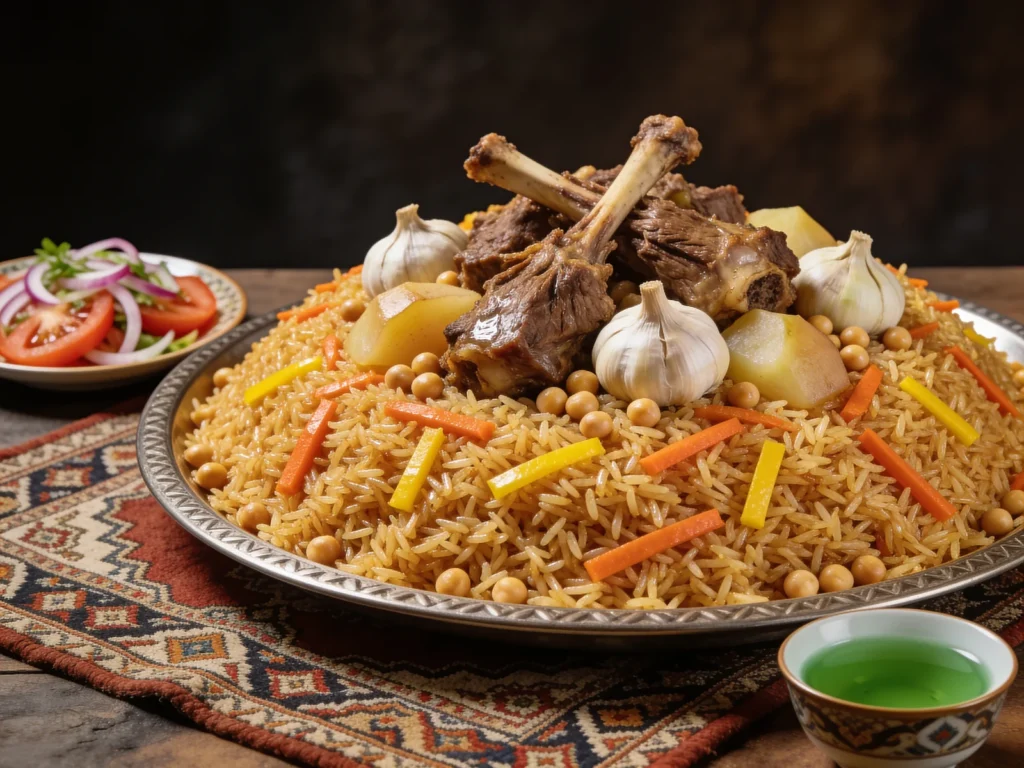
- Turn the whole kazan out onto the lyagan, or mound the rice and carrots on the platter and arrange the meat, garlic heads, quince and reserved crisp fat on top. Everyone eats from the same dish, traditionally with the right hand.
Technique
- Tajik oshi palav was inscribed on the UNESCO intangible heritage list in 2016, together with Uzbek palov, and it is cooked for weddings, funerals and guests as an act of hospitality rather than as everyday food.
- Never stir once the rice goes in. Palav is built in strata: fat and meat at the bottom, zirvak in the middle, steamed rice on top, and stirring makes porridge.
- Devzira rice from the Ferghana valley absorbs far more broth than basmati without breaking. If you use basmati, cut the water by a fifth and shorten the steaming.
Substitutions
- No lamb tail fat: 150 ml sunflower or cottonseed oil is the standard urban substitute, though the pilaf will taste lighter and less rich.
- No barberries: dried sour cherries or a squeeze of lemon at the end give some of the same acidity.
- Beef or chicken can replace lamb, and both are cooked in Dushanbe, but lamb with tail fat is the celebratory version.
Variations
- Ugro palav, where thin homemade noodles replace some of the rice, a Tajik speciality.
- Palav with raisins and quince, cooked for weddings.
- Kabuli palav-style versions in the south, sweeter and heavier on carrots.
History
Tajikistan’s version of the wider Central Asian plov tradition, combining rice with meat, carrot and onion cooked together in a single pot, generally understood as one of the most significant and widely prepared dishes across the whole Central Asian region, with each country maintaining its own particular technique and preferred additions within that shared broader plov tradition tracing back through Persian pilaf influence carried across the region over many centuries. Tajik oshi palav often incorporates chickpeas, raisins or barberries as regional variations distinguishing it from neighboring countries’ versions, and the dish carries deep social and ceremonial significance across Tajikistan, traditionally prepared for weddings and major celebrations by cooks specifically skilled and respected for their particular plov-making expertise.
Frequently asked questions
What is Oshi palav?
Oshi palav is a main from Tajikistan: uNESCO-listed pilaf of rice, carrots and meat eaten from one dish. Tajikistan’s version of the wider Central Asian plov tradition, combining rice with meat, carrot and onion cooked together in a single pot, generally understood as one of the most significant and widely prepared dishes across the whole Central Asian region, with each country maintaining its own particular technique and preferred additions within that shared broader plov tradition tracing back through Persian pilaf influence carried across the region over many centuries. Tajik oshi palav often incorporates chickpeas, raisins or barberries as regional variations distinguishing it from neighboring countries’ versions, and the dish carries deep social and ceremonial significance across Tajikistan, traditionally prepared for weddings and major celebrations by cooks specifically skilled and respected for their particular plov-making expertise.
How long does Oshi palav take to make?
Oshi palav takes 40 min of preparation and 1 hr 30 min of cooking. The recipe makes 6 servings. It is rated medium to make.
What can I substitute in Oshi palav?
Yes, within limits. No lamb tail fat: 150 ml sunflower or cottonseed oil is the standard urban substitute, though the pilaf will taste lighter and less rich. No barberries: dried sour cherries or a squeeze of lemon at the end give some of the same acidity. Beef or chicken can replace lamb, and both are cooked in Dushanbe, but lamb with tail fat is the celebratory version.
What is the most important thing to get right in Oshi palav?
Add the onions and fry 10 minutes until deep golden brown. The colour of the finished pilaf comes almost entirely from this step, so do not stop while they are pale.