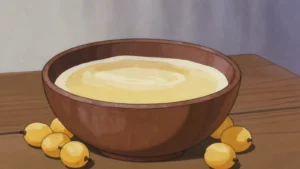

Cloudy banana beer of the eastern Congolese hills, fermented with roasted sorghum flour and served at weddings and dowry negotiations. It is thick, sweet-sour and only lightly alcoholic.
Home brewing of alcohol is licensed or restricted in most of the atlas’s readership, and the ferment relies on wild cultures carried on the sorghum and in the trough.
What goes into it
- ripe cooking bananas
- roasted sorghum flour
- water
- grass for pressing
How it is made
Bananas are ripened in a covered pit until very sweet, then kneaded with grass in a wooden trough so the juice runs out. The juice is diluted, mixed with roasted sorghum flour that supplies both yeast and colour, and left to ferment in a covered vessel for two to four days.
How long it takes: several days of ripening, then two to four days fermenting
How it is eaten
From a shared pot or a jerrycan, sometimes through reed straws, at weddings and negotiations.
History
Brewed in Kivu and the Great Lakes belt from mashed ripe bananas fermented with roasted sorghum, and served at weddings and dowry negotiations.
Frequently asked questions
What is Kasiksi?
Kasiksi is a wine & spirit from DR Congo: cloudy banana beer of the eastern hills, fermented with sorghum flour. Brewed in Kivu and the Great Lakes belt from mashed ripe bananas fermented with roasted sorghum, and served at weddings and dowry negotiations.
How is Kasiksi made?
Bananas are ripened in a covered pit until very sweet, then kneaded with grass in a wooden trough so the juice runs out. The juice is diluted, mixed with roasted sorghum flour that supplies both yeast and colour, and left to ferment in a covered vessel for two to four days. It takes several days of ripening, then two to four days fermenting.
Can I make Kasiksi at home?
No, and the atlas gives no method for it. Home brewing of alcohol is licensed or restricted in most of the atlas’s readership, and the ferment relies on wild cultures carried on the sorghum and in the trough.
What goes into Kasiksi?
Ripe cooking bananas, roasted sorghum flour, water, grass for pressing.
How is Kasiksi eaten?
From a shared pot or a jerrycan, sometimes through reed straws, at weddings and negotiations.