
Ingredients
Meat cakes
- 700 gminced beef
- with about fifteen percent fat
- 1onion, finely grated
- 2 teaspoonssalt
- 1 teaspoonground ginger
- 1/2 teaspoongrated nutmeg
- 1 teaspoonblack pepper
- 3 tablespoonspotato flour
- or cornflour
- about 250 ml cold milk
To fry
- 50 gbutter
- 2 tablespoonsoil
Brown gravy
- 50 gbutter
- 50 gplain flour
- 700 mlbeef stock
- 1 tablespoondark soy sauce
- or a little gravy browning
- salt and black pepper
- a splash of cream, optional
Pea stew
- 250 gdried green peas
- soaked overnight
- 1 litrewater
- salt
- a knob of butter
To serve
- boiled potatoes
- lingonberry preserve
Directions
- Salt dissolves proteins in the meat. Cold liquid is then absorbed into the mixture. Warm mince will not take up the liquid. Chill the meat, the bowl and the milk. They are soaked and then boiled soft. Put the dried peas in a large bowl. Cover them with plenty of cold water. Leave them overnight to swell. Drain them well before cooking them.
- Put the soaked peas into a large pot. Cover them over with fresh water. Bring the pot up to a full boil. Skim off all the foam that rises. Give them about a full hour to cook. Mash them roughly with a spoon. Season them with salt and butter.
- Put the cold minced beef in a bowl. Add the salt and work it in first. Salt first is what dissolves the proteins. Work the salt in thoroughly before anything else.
- Add the finely grated onion to it. Add the ginger, nutmeg and black pepper. Add the potato flour to the bowl. Work it all together thoroughly. Add the cold milk a little at a time. Work each addition in completely. That is what gives the smooth texture. Cover the bowl over and chill it. Give it about thirty minutes to firm.
- Take a large handful of mixture. Shape it into a thick flat cake. Aim for about two centimetres thick. Make them about eight centimetres across. Heat the butter and oil in a wide pan. Get it hot but not actually smoking.
- Lay the cakes in without crowding. Fry them for about four minutes. Leave them well alone as they fry. Moving them prevents a crust forming. Turn them over only the one time. Turn them over with a fish slice. Fry them for another four minutes. They should be well browned on both sides.
- Set them all aside on a warm plate. Pour off any excess fat from the pan. Leave the browned residue in it. Never wash the pan at this stage. Add the butter to the same pan. Let it melt over a medium heat. Stir in the flour to make a paste. Cook it for a good three minutes. It should turn a light nut brown. Add the stock a ladle at a time. Whisk hard after each addition.
- Let it come together before adding more. A little at a time keeps it smooth. Whisk rather than stir throughout. Keep going until all the stock is in. Add the dark soy sauce for colour. Season it with salt and black pepper. Let it simmer for five minutes.
- Add a splash of cream if you want it richer. Return the browned cakes to the pan. Cover it and lower the heat down. Let them simmer for twenty minutes. Judging when they are done takes a check. Cut one in half to look inside. It should be evenly cooked through. Peel the potatoes and boil them whole. Give them about twenty minutes.
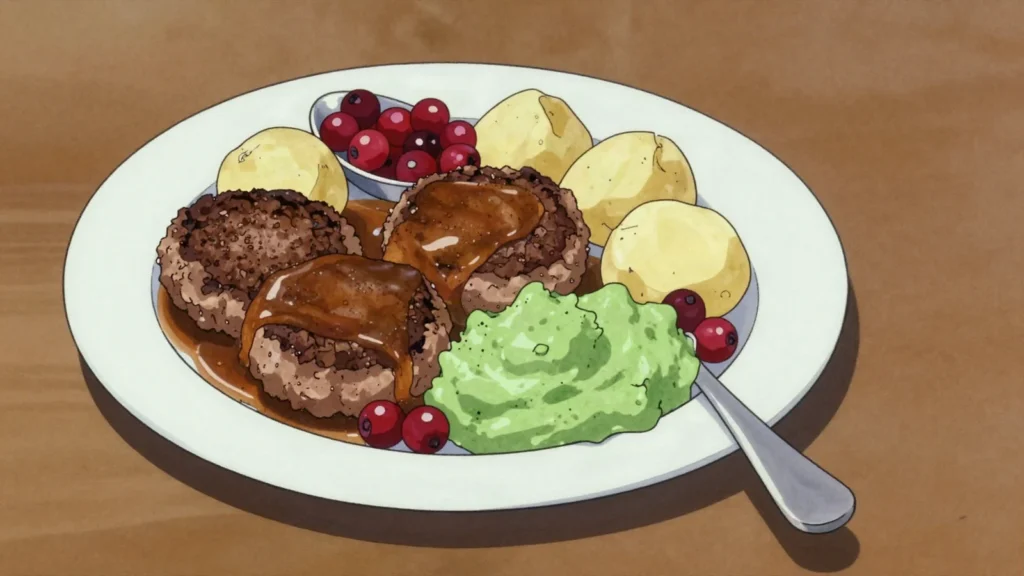
- Drain them and keep them properly hot. Serving it is done on a full plate. Set two or three cakes on each plate. Add boiled potatoes beside them. Spoon the pea stew alongside them. Pour gravy over the cakes and potatoes. Add a spoonful of lingonberry preserve. It keeps three days refrigerated.
Technique
- Kjottkaker are large flat cakes rather than balls, considerably bigger than kjottboller, which are the small round version and a genuinely different dish; three or four make a portion.
- Salt is worked into the cold mince first, before anything else, because it dissolves the proteins that bind the mixture and hold the milk; the milk then goes in a little at a time, each addition worked in completely, which is what gives the smooth slightly springy texture rather than a crumbly one.
- Ground ginger and nutmeg in the mince sounds unusual to outsiders but is entirely standard in Norway and is what makes them taste Norwegian; leaving it out gives an ordinary beef patty.
Substitutions
- Cornflour or breadcrumbs stand in for potato flour as the binder.
- Cranberry preserve is the nearest substitute for lingonberry.
Variations
- Some households add a splash of cream to the gravy and others do not.
- The pea stew is made looser or stiffer according to preference.
- Kjottboller are the small round version of the same mixture.
History
Norwegian meatballs made from minced beef or a beef-and-pork mixture, traditionally seasoned simply with onion, nutmeg and ginger, then pan-fried and served in a brown gravy with boiled potatoes and often lingonberry or cranberry preserve on the side. Meatball dishes under various names and specific spice combinations are documented across nearly all of Scandinavia and much of Northern Europe, reflecting a broadly shared regional technique rather than an isolated Norwegian invention, though Norwegian kjøttkaker developed their own particular spicing, notably the specific use of ginger and nutmeg together, distinguishing them somewhat from Swedish köttbullar and other closely related regional versions. They remain one of the most common home-cooked family dinners across Norway.
Frequently asked questions
What is Kjøttkaker?
Kjøttkaker is a main from Norway: rustic beef patties in brown gravy with pea stew. Norwegian meatballs made from minced beef or a beef-and-pork mixture, traditionally seasoned simply with onion, nutmeg and ginger, then pan-fried and served in a brown gravy with boiled potatoes and often lingonberry or cranberry preserve on the side. Meatball dishes under various names and specific spice combinations are documented across nearly all of Scandinavia and much of Northern Europe, reflecting a broadly shared regional technique rather than an isolated Norwegian invention, though Norwegian kjøttkaker developed their own particular spicing, notably the specific use of ginger and nutmeg together, distinguishing them somewhat from Swedish köttbullar and other closely related regional versions. They remain one of the most common home-cooked family dinners across Norway.
How long does Kjøttkaker take to make?
Kjøttkaker takes 30 minutes of preparation and 40 minutes of cooking. The recipe makes serves 4. It is rated medium to make.
What can I substitute in Kjøttkaker?
Yes, within limits. Cornflour or breadcrumbs stand in for potato flour as the binder. Cranberry preserve is the nearest substitute for lingonberry.
What is the most important thing to get right in Kjøttkaker?
Set them all aside on a warm plate. Pour off any excess fat from the pan. Leave the browned residue in it. Never wash the pan at this stage. Add the butter to the same pan. Let it melt over a medium heat. Stir in the flour to make a paste. Cook it for a good three minutes. It should turn a light nut brown. Add the stock a ladle at a time. Whisk hard after each addition.