
Ingredients
Cure
- 1 kgsalmon fillet, skin on, pin-boned, in one piece
- 80 gcoarse salt
- 80 gcaster sugar
- 2 tbspwhite peppercorns, coarsely crushed
- 2large bunches dill, chopped, stalks and all
- 2 tbspaquavit or vodka, optional
Mustard-dill sauce
- 3 tbspDijon mustard
- 1 tbspsweet mustard
- 2 tbspcaster sugar
- 1 tbspwhite wine vinegar
- 150 mlneutral oil
- 1 bunchdill, chopped
Directions
- Freeze the salmon at −20°C (−4°F) for at least 48 hours before curing, then thaw it in the fridge. Gravlax is raw fish, and freezing is what deals with parasites — the traditional method predates that knowledge and modern food guidance in Norway and across the EU is explicit about it.
- Mix the salt, sugar and crushed peppercorns.
- Lay a large sheet of clingfilm in a dish and scatter a third of the dill on it. Put the salmon skin-side down on the dill, rub the aquavit over the flesh if using, and pack the salt and sugar mixture over the whole surface.
- Pile the remaining dill on top, wrap the fish tightly in the clingfilm, and put it in a dish that will catch the liquid.
- Weight it down with a board and a couple of tins — about 2 kg — and refrigerate for 48 hours, turning the parcel every 12 hours and pouring off the brine that collects.
- The salt draws out water and firms the flesh; the sugar balances it and keeps the texture silky rather than hard. After two days the fish should be firm to the touch throughout, with no soft raw give in the middle.
- Unwrap, scrape off the dill and cure, and pat dry. Slice thinly on a long diagonal, leaving the skin behind.
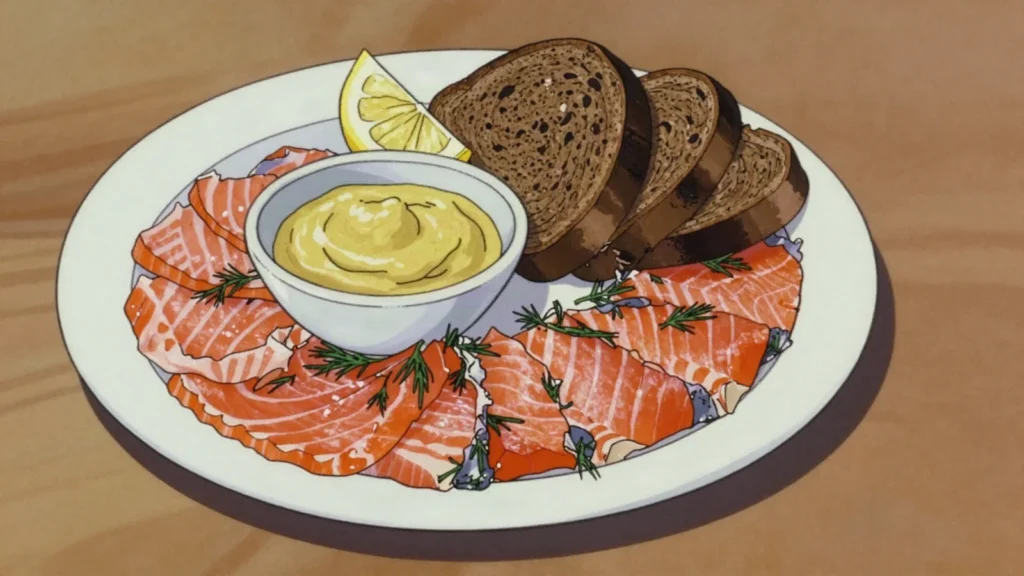
- For the sauce, whisk the mustards, sugar and vinegar, then trickle in the oil while whisking to emulsify, and stir in the dill. Serve with the gravlax and dark bread.
Technique
- Freeze first. This is the one step the traditional recipe does not have and modern practice requires.
- Pour off the brine as it collects. Fish sitting in its own liquid cures unevenly and goes soggy on the underside.
- Two days for a 1 kg fillet. A thin tail piece needs less; a thick loin needs three.
Substitutions
- Trout or Arctic char, both of which cure the same way.
- Beetroot grated into the cure, which colours the outside deep magenta.
- Skip the aquavit; it adds little that the dill does not.
Variations
- The medieval original buried salted fish to ferment it, which is a different and far stronger product — closer to rakfisk than to what is sold as gravlax today.
- A version with gin and juniper in place of aquavit and pepper.
History
Raw salmon cured in a mixture of salt, sugar and dill, its name deriving from an old Nordic practice of literally burying, or ‘graving,’ salted fish in the ground to ferment slightly during curing, a preservation technique documented in Scandinavian coastal fishing communities for centuries before refrigeration existed. Modern gravlax has moved away from actual burial, instead curing the fish under weighted pressure in a refrigerator over a day or two, but the name and the curing principle it describes have remained unchanged even as the specific method of achieving that cure has modernized considerably. It remains closely tied to Norwegian and broader Scandinavian celebratory and holiday cooking, traditionally sliced thin and served with a sweet mustard-and-dill sauce.
Frequently asked questions
What is Gravlax?
Gravlax is a charcuterie & cured from Norway: salmon cured with salt, sugar, dill; mustard-dill sauce. Raw salmon cured in a mixture of salt, sugar and dill, its name deriving from an old Nordic practice of literally burying, or ‘graving,’ salted fish in the ground to ferment slightly during curing, a preservation technique documented in Scandinavian coastal fishing communities for centuries before refrigeration existed. Modern gravlax has moved away from actual burial, instead curing the fish under weighted pressure in a refrigerator over a day or two, but the name and the curing principle it describes have remained unchanged even as the specific method of achieving that cure has modernized considerably. It remains closely tied to Norwegian and broader Scandinavian celebratory and holiday cooking, traditionally sliced thin and served with a sweet mustard-and-dill sauce.
How long does Gravlax take to make?
Gravlax takes 20 min plus 48 hours freezing and 48 hours curing of preparation and no cooking at all. The recipe makes serves 10. It is rated easy to make.
What can I substitute in Gravlax?
Yes, within limits. Trout or Arctic char, both of which cure the same way. Beetroot grated into the cure, which colours the outside deep magenta. Skip the aquavit; it adds little that the dill does not.
What is the most important thing to get right in Gravlax?
Lay a large sheet of clingfilm in a dish and scatter a third of the dill on it. Put the salmon skin-side down on the dill, rub the aquavit over the flesh if using, and pack the salt and sugar mixture over the whole surface.