
Ingredients
The clams
- 2 kgmangrove clams
- scrubbed
- or other hard-shell clams
- salted water, for purging
The pot
- 600 mlthick coconut milk
- 2onions, sliced
- 4garlic cloves, crushed
- 3cm ginger, grated
- 1hot chilli, chopped, optional
- salt and black pepper
Sometimes added
- a handful of greens
- juice of 1 lime
- spring onions, chopped
To serve
- with taro or rice
- in the shell
- with the broth
Directions
- Discard any that stay open when tapped. Discard any with cracked shells. Cooked clams should all open up. Discard any that stay firmly shut. They must be purged before cooking. Use salted water rather than fresh. Dead clams do not purge at all. Taste it before adding any salt. Scrub them with a stiff brush. Rinse them thoroughly afterwards.
- Put the clams in a bowl of salted water. Do not pile them up too deeply. Leave them for at least three hours. Clean water at the end means they are done. Discard every one that does not. Discard them without hesitation. Heat a little oil in a wide heavy pot.
- Add the sliced onions in to it. Cook them for a good six minutes. Add the crushed garlic and grated ginger. Add the chilli if you want heat. Cook them for two more full minutes. Pour in all of the coconut milk.
- Bring it up to a very bare simmer. Coconut milk splits if boiled hard. Keep it at a bare simmer throughout. Small bubbles should barely break the surface. Add the purged clams to the pot. Cover the pot over immediately. Let them steam for about six minutes. Clams open within a few minutes.
- Take them off as soon as they open. Judging them takes a careful look. Lift the lid and check them over. Most of them should be open by then. Discard every single one of them. Do not force any of them open. Stir a handful of greens into the pot.
- Let them wilt in the residual heat. Give them just two minutes only. Taste the broth and adjust the salt. Taste before adding any at all. It may well need none at all added. Squeeze in a little lime juice.
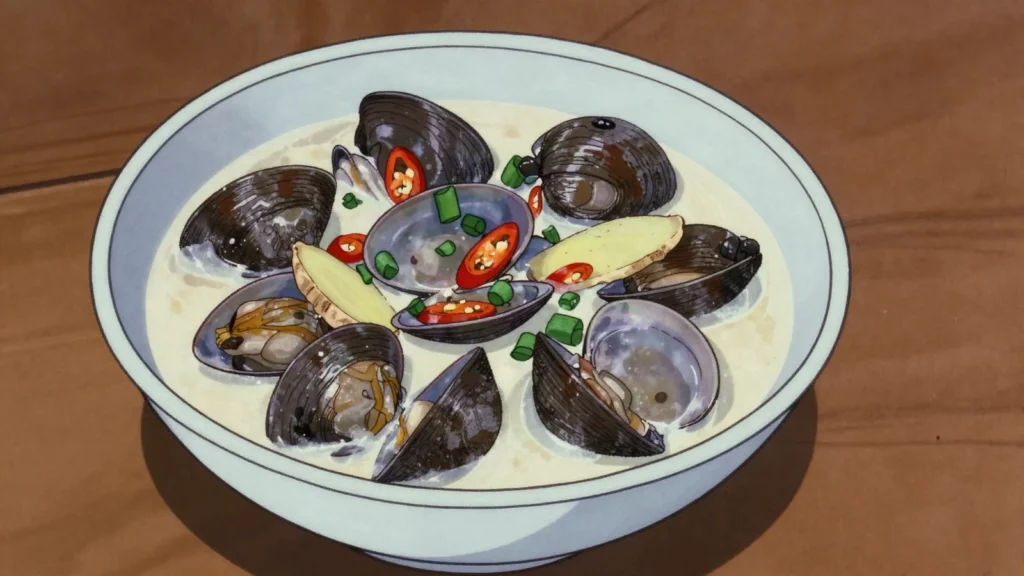
- Scatter chopped spring onions over it. Serving it is always done hot. Ladle the clams and broth into bowls. Serve them in their own shells. Serve taro or plain rice alongside. It does not keep at all well after. Cook and eat them the same day.
Technique
- Clams are filter feeders and concentrate whatever is in the water, so where they are gathered matters enormously — mangrove areas can receive runoff, and local knowledge of clean grounds is the real safeguard. Live clams should be closed or close when tapped; discard any that stay open, any with cracked shells, and after cooking any that stay firmly shut, without forcing them.
- Clams from mud hold grit and must be purged for at least three hours in salted water, changed as it clouds, or the whole dish is gritty. Use salted water rather than fresh, since fresh water kills them quickly and dead clams do not purge at all. Lay them in a single layer rather than piling them, so expelled grit falls clear.
- The clams release their own salty liquor as they open and that seasons the whole pot, so taste before adding any salt at all — it may need none.
Substitutions
- Other hard-shell clams stand in for mangrove clams and are purged the same way.
- Keep the coconut milk at a bare simmer throughout, since it splits if boiled hard.
Variations
- The clams are found by feel in mangrove mud at low tide, which takes real knowledge of the ground and the tide, passed on directly.
- The harvesting is longstandingly associated with women, and that is part of how the food is understood rather than incidental.
- They are served in the shell, and the shells are used to scoop the broth.
History
Mangrove clams are gathered by feel in the mud at low tide and simmered in coconut milk, a food associated with women’s harvesting.
Frequently asked questions
What is Ngduul?
Ngduul is a main from Palau: mangrove clams simmered in coconut milk, esteemed traditional food. Mangrove clams are gathered by feel in the mud at low tide and simmered in coconut milk, a food associated with women’s harvesting.
How long does Ngduul take to make?
Ngduul takes 40 minutes of preparation and 30 minutes of cooking. The recipe makes serves 6. It is rated medium to make.
What can I substitute in Ngduul?
Yes, within limits. Other hard-shell clams stand in for mangrove clams and are purged the same way. Keep the coconut milk at a bare simmer throughout, since it splits if boiled hard.
What is the most important thing to get right in Ngduul?
Discard any that stay open when tapped. Discard any with cracked shells. Cooked clams should all open up. Discard any that stay firmly shut. They must be purged before cooking. Use salted water rather than fresh. Dead clams do not purge at all. Taste it before adding any salt. Scrub them with a stiff brush. Rinse them thoroughly afterwards.