
Ingredients
Dough
- 600 gwhite maize, milled to a coarse-fine corn dough, or 600 g ready-made fermented corn dough
- 200 gfresh cassava dough, grated and pressed
- 1.2 litreswater
- 1 tspfine salt
Fresh pepper sauce (shito nkatie)
- 4kpakpo shito peppers or 2 habaneros, stalks removed
- 2tomatoes (about 200 g), grilled until blistered
- 1small onion (about 80 g), quartered and grilled
- 1 tspfine salt
- 1 tbsppalm oil, optional
To serve
- Okro stew or garden-egg stew
- A bowl of water, for wetting the hands
Directions
- Combine the fermented corn dough and the cassava dough in a ratio of three to one. The cassava is what gives banku its smooth, slightly elastic pull.
- Whisk the doughs with the water and salt in a heavy pot until completely lump-free; a lump left now will still be there at the end.
- Set over medium heat and stir continuously with a strong wooden spatula (banku ta) as it thickens, scraping the base so nothing catches. This is hard work and takes 20–25 minutes of constant motion.
- Add a splash of hot water if it is too tight. Wet a small bowl with cold water, scoop in a portion of the hot banku and swirl it to shape a smooth round ball, then turn it out onto the plate.
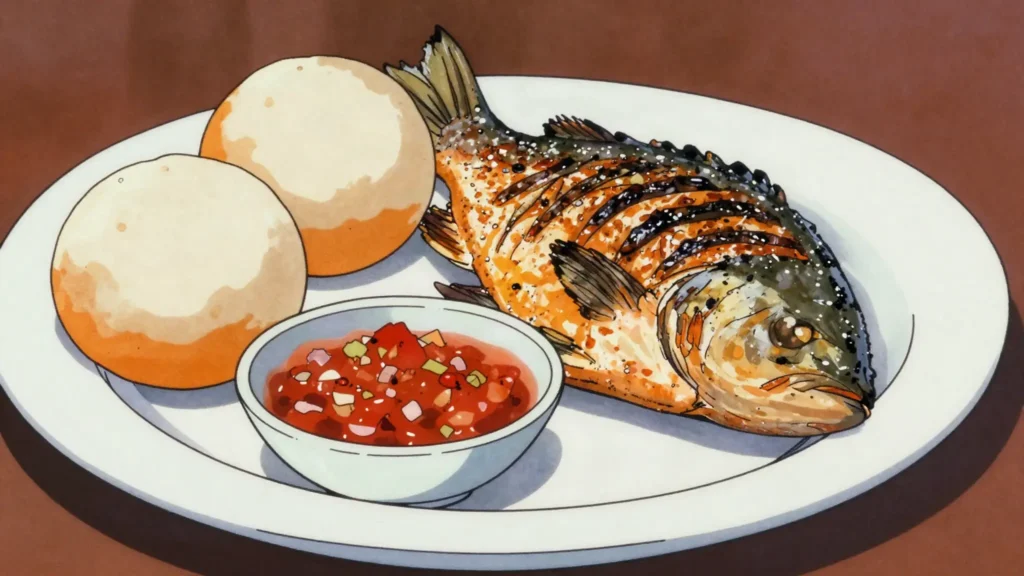
- Serve the balls hot with the pepper sauce and an okro or garden-egg stew, and eat with the right hand, pinching off a piece and dipping.
Technique
- The sourness is the point. Under-fermented dough makes bland, pasty banku; three days at Ghanaian room temperature is normal, longer in a cool kitchen.
- Never stop stirring. Banku left alone for even a minute scorches on the base, and burnt corn taste runs through the whole pot.
- Corn and cassava dough are sold ready-fermented in Ghanaian markets and in African groceries abroad, usually frozen. This is what most households actually buy.
- Banku, kenkey and akple are cousins: same fermented corn, different cooking and wrapping. Akple, the Ewe version, uses a higher share of corn and no cassava.
Substitutions
- No cassava dough: use 150 g of tapioca starch slaked in cold water, which gives a similar stretch but a flatter flavour.
- In a hurry, fine white maize meal plus 150 ml of live plain yoghurt approximates the ferment, though the acidity is one-dimensional.
- Kpakpo shito peppers are fruity and unique; scotch bonnet or habanero is the closest widely available chilli.
Variations
- Banku with okro stew, the classic combination of slippery stew and sour dough.
- Akple, the Ewe version from the Volta region, made with more corn and eaten with fetri detsi.
- Kenkey, the same fermented dough wrapped in corn husks or plantain leaves and steamed.
History
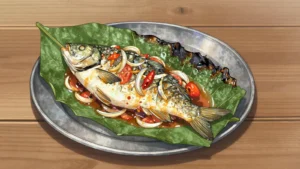
A fermented dough made from a blend of corn and cassava flour, cooked into a smooth, stretchy paste and traditionally eaten by hand alongside soup, stew or grilled fish and pepper sauce, developed in coastal and southern Ghana, particularly among the Ga and Ewe peoples, whose access to fresh fish made banku’s traditional pairing with grilled tilapia a natural and enduring combination. Its fermentation process, letting the corn and cassava mixture sit for a day or more before cooking, both develops the dish’s characteristic mild sourness and reflects a preservation technique common across many West African fermented starch dishes developed before refrigeration existed. Banku is closely related to kenkey, another fermented Ghanaian corn dough, the two differing mainly in fermentation length, added cassava, and final texture.
Frequently asked questions
What is Banku?
Banku is a main from Ghana: fermented corn-cassava dough with grilled tilapia and fresh pepper sauce. A fermented dough made from a blend of corn and cassava flour, cooked into a smooth, stretchy paste and traditionally eaten by hand alongside soup, stew or grilled fish and pepper sauce, developed in coastal and southern Ghana, particularly among the Ga and Ewe peoples, whose access to fresh fish made banku’s traditional pairing with grilled tilapia a natural and enduring combination. Its fermentation process, letting the corn and cassava mixture sit for a day or more before cooking, both develops the dish’s characteristic mild sourness and reflects a preservation technique common across many West African fermented starch dishes developed before refrigeration existed. Banku is closely related to kenkey, another fermented Ghanaian corn dough, the two differing mainly in fermentation length, added cassava, and final texture.
How long does Banku take to make?
Banku takes 20 min of preparation and 30 min, plus 3 days fermenting of cooking. The recipe makes 4 servings. It is rated medium to make.
What can I substitute in Banku?
Yes, within limits. No cassava dough: use 150 g of tapioca starch slaked in cold water, which gives a similar stretch but a flatter flavour. In a hurry, fine white maize meal plus 150 ml of live plain yoghurt approximates the ferment, though the acidity is one-dimensional. Kpakpo shito peppers are fruity and unique; scotch bonnet or habanero is the closest widely available chilli.
What is the most important thing to get right in Banku?
The sourness is the point. Under-fermented dough makes bland, pasty banku; three days at Ghanaian room temperature is normal, longer in a cool kitchen.