
Ingredients
Dough
- 500 gfine semolina
- 200 gbutter or ghee, melted
- 100 mlwarm milk
- 2 tablespoonssugar
- 1 tablespoonorange blossom water
- 1/2 teaspoonsalt
- 1/2 teaspoonbaking powder
Filling
- 300 gpistachios, chopped
- or 300 g walnuts, chopped
- 80 gsugar
- 1 teaspoonground cinnamon
- 1 tablespoonrose water
Natef
- 30 gsoapwort root, halawa root
- 500 mlwater
- 400 gsugar
- 150 mlwater, for the syrup
- 1 tablespoonlemon juice
- 1 teaspoonorange blossom water
Or a modern natef
- 2egg whites
- 300 gsugar
- 100 mlwater
- 1 tablespoonlemon juice
Directions
- Rinse the soapwort root thoroughly. Put it in a pan with the water. Bring the whole pan up to a simmer. Let it simmer for about forty minutes. Judging the extract takes a look. Stir it and it should foam readily. That foaming shows it is ready.
- Strain the extract through a fine cloth. Discard the boiled root entirely. Let the extract cool completely. Put the sugar and water in a pan. Add the lemon juice to the pan.
- Warm it until the sugar dissolves. Boil it down to a thick syrup. Take it to about one hundred and fifteen degrees. Let it cool until it is just warm. Put the cooled extract in a mixer bowl. Whip it on a high speed setting. Then pour the warm syrup in slowly.
- Keep whipping it the whole time. It takes a long time to reach full stiffness. Add the orange blossom water at the end. Whip the egg whites to soft peaks. Boil the sugar, water and lemon to a syrup. Take it to one hundred and eighteen degrees. Pour it slowly onto the whipping whites. Keep whipping until stiff and cool. Chop the pistachios fairly coarsely. Mix them with the sugar and cinnamon.
- Add the rose water and mix it through. Put the semolina in a large bowl. Add the sugar, salt and baking powder. Pour the melted butter over it. Rub it through with your fingers. Keep rubbing until evenly damp.
- Add the warm milk and orange blossom water. Work it all into a soft dough. Cover it over and let it rest. Give it at least one full hour. Take a piece of dough and roll it into a ball. Press your thumb into it to hollow it. Work it into a small deep cup. Spoon nut filling into each cup.
- Roll it smooth between your palms. Press it into the mould firmly. Shape them into smooth domes by hand. Press a pattern in with a fork if you like. Baking them takes little time. Set them out on lined baking trays. Heat the oven to 180C before baking. Bake them for about twenty minutes. Judging them takes a careful look.
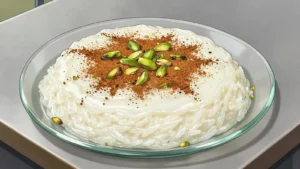
- Let them cool completely on a rack. They are very fragile while warm. Pile the natef into a shallow dish. Swirl it up into a soft mound. Arrange the pastries around it. The pastries keep two weeks in a tin. Whip it again briefly if it settles.
Technique
- Natef is a white foam made from soapwort root rather than a dairy cream: the root is boiled to extract saponins, natural foaming compounds that let water hold air like a meringue, and sugar syrup is whipped into that extract.
- Saponins are irritant in large quantities and can cause stomach upset if overconsumed, though the traditional preparation uses a boiled dilute extract and the quantity in a serving is small; buy root sold as a food ingredient, do not substitute other soapwort species, and an egg white Italian meringue version is widely made and stands in closely.
- The semolina dough must rest at least an hour and preferably two, since semolina is coarse and absorbs slowly; unrested dough is gritty and crumbles.
Substitutions
- An egg white Italian meringue stands in closely for traditional natef.
- Walnuts can replace pistachios in the filling.
Variations
- Traditional wooden tabe moulds give the domed shape, though hand shaping works.
- Some bakers use walnuts and others pistachios, and some mix both.
- The pastries are always served with natef rather than iced.
History
An Aleppo sweet always paired with natef; the pastries are dipped into the whipped cream rather than iced.
Frequently asked questions
What is Karabij Halab?
Karabij Halab is a dessert from Syria: nut-stuffed semolina domes served under a cloud of white soapwort cream. An Aleppo sweet always paired with natef; the pastries are dipped into the whipped cream rather than iced.
How long does Karabij Halab take to make?
Karabij Halab takes 1 hour plus resting of preparation and 25 minutes of cooking. The recipe makes about 30 pastries. It is rated hard to make.
What can I substitute in Karabij Halab?
Yes, within limits. An egg white Italian meringue stands in closely for traditional natef. Walnuts can replace pistachios in the filling.
What is the most important thing to get right in Karabij Halab?
Rinse the soapwort root thoroughly. Put it in a pan with the water. Bring the whole pan up to a simmer. Let it simmer for about forty minutes. Judging the extract takes a look. Stir it and it should foam readily. That foaming shows it is ready.