Sucrose, refined from cane or beet, and the ingredient whose history is inseparable from Atlantic slavery — it was the crop the plantation system was built for.
Where it comes from
Sugarcane was domesticated in New Guinea and spread through Southeast Asia and India, where the technique for crystallising sugar from cane juice was developed. It reached the Mediterranean with Arab agriculture and the Americas with the Spanish and Portuguese.
Cane is labour-intensive to plant, cut and process, and the Caribbean and Brazilian plantations that supplied Europe ran on enslaved African labour on a scale that shaped three continents. Sugar beet was developed in Europe in the nineteenth century partly because of blockade and partly by abolitionists as an alternative supply; it now supplies roughly a fifth of the world’s sugar and is chemically identical.
Sugar does far more in cooking than sweeten. It tenderises, retains moisture, feeds yeast, lowers freezing point, prevents crystallisation in the right forms, and browns.
Varieties
- White granulated — Pure sucrose. Sweetness with no other flavour.
- Caster and icing — The same thing ground finer, for faster dissolving and for smoothness.
- Brown sugars — White sugar with molasses added back, or partly refined. Moisture and a caramel note.
- Muscovado — Very dark, sticky, strongly molassed.
- Jaggery, panela, piloncillo, rapadura — Whole cane juice boiled down, never separated from its molasses. Mineral, smoky, and a different ingredient from brown sugar.
- Palm and coconut sugar — Boiled palm sap. Caramel and butterscotch notes; central to Southeast Asian cooking.
- Demerara and turbinado — Large crystals, partly refined. Texture on top of a bake.
In the kitchen
Caramel is sugar cooked past melting until it browns, and the flavour keeps developing right up to bitter. It is a matter of seconds at the end, and a caramel is judged by colour, not by time.
Sugar lowers the freezing point of a mixture, which is why an ice cream or sorbet with too little sugar freezes rock hard and one with too much never sets.
In bread, sugar feeds yeast up to a point and then starts to inhibit it by drawing water out. Enriched sweet doughs need more yeast and longer, not less.
Dishes with sugar
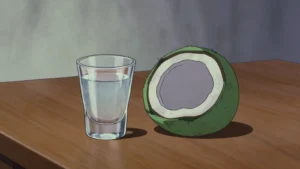 Puncheon rumOverproof white rum at 75 percent, drunk in small shots
 KeteRound pastry filled with sweetened butter-and-flour crumb, cut into wedges.
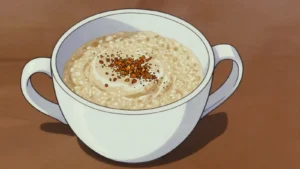 MadidaWarm sweet sorghum or peanut porridge for mornings
 BetonBecherovka lengthened with tonic water over ice
 Nam VanSweet coconut milk with banana, tapioca pearls or jackfruit, served warm or iced
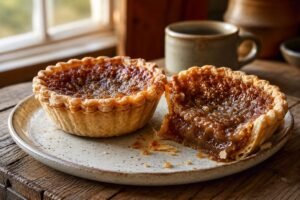 Butter tartGooey butter-sugar filling in flaky pastry, sometimes with raisins
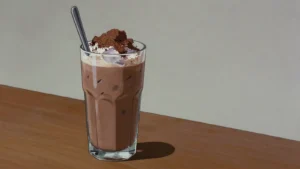 Milo DinosaurIced Milo heaped with extra malt powder, hawker-era invention
 Bubble TeaSweet milk tea shaken with chewy tapioca pearls, invented in Taiwan
Sugar is tagged on 1,325 dishes from 194 countries in the atlas. These notes are written from general knowledge and carry no per-fact citation — see About.