Dense parcels of oil and protein, used across the world as much for body and thickening as for their own flavour — a great many sauces are nuts ground with liquid.
Where it comes from
Most culinary nuts are not botanical nuts. Almonds and walnuts are the seeds of stone fruits, cashews grow attached to a fruit, peanuts are legumes that ripen underground, and pine nuts are conifer seeds. Only hazelnuts and chestnuts qualify strictly, and no cook cares.
Nut-thickened sauces are one of the great convergences in world cooking: Mexican mole, Spanish romesco and picada, Georgian walnut sauces, Persian fesenjan, Indian korma and West African groundnut stew all use the same idea independently.
Varieties
- Almond — Mild and sweet. Ground for marzipan, frangipane, and the body of many Persian and Indian sauces.
- Walnut — Tannic and slightly bitter, especially the skin. Georgian, Levantine and Persian cooking lean on it hard.
- Peanut — A legume. West African and Southeast Asian stews and sauces; roasted, it is far sweeter than raw.
- Cashew — Very high in starch as well as oil, which is why it thickens and goes creamy so readily. Indian sauces, Southeast Asian stir-fries.
- Pistachio — Aromatic, faintly resinous, expensive. Middle Eastern sweets and ice cream.
- Hazelnut — Best toasted, when its flavour changes completely. Confectionery, and Piedmontese cooking.
- Pine nut — Soft and resinous. Pesto, and Levantine rice and meat dishes.
- Chestnut — Starchy rather than oily, and a staple carbohydrate in Corsica, Italy and Japan.
- Coconut — Handled separately in the atlas, but functionally a nut in many sauces.
In the kitchen
Toasting is not optional for most nuts — it converts the flavour rather than just warming it. It also takes seconds to go from toasted to burnt, and burnt nuts taste of nothing but burnt.
Nuts ground with liquid form an emulsion and thicken a sauce; ground dry and long enough they release oil and turn to butter. Which one you get depends entirely on how much liquid is present.
Walnut skins carry the tannins. Blanching and rubbing them off makes a much sweeter sauce.
Choosing and keeping
Nuts are mostly oil and go rancid — quickly at room temperature, slowly in a freezer. Rancid nuts ruin a dish and are the usual reason a cake tastes of paint.
Tree nut and peanut allergies are among the most severe there are, and peanut is a legume so is a separate allergy from tree nuts.
Dishes with nuts
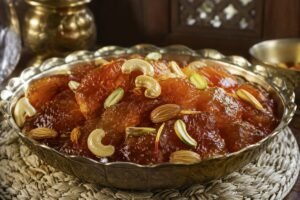 Halwa Bahrainigelatinous saffron-cornstarch sweet with nuts, made since the 1850s
 SatayGrilled skewers with peanut sauce and lontong; countless regional versions
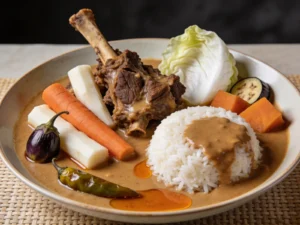 Mafépeanut-butter stew of meat and vegetables served over rice
 SemlaCardamom bun stuffed with almond paste, whipped cream; Lent.
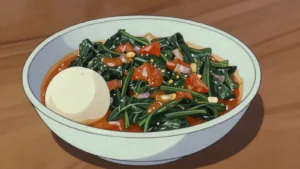 KalembulaSweet potato leaves stewed with tomato, onion and groundnut
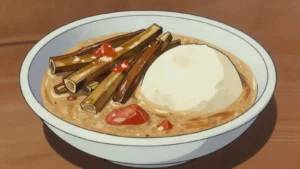 Malewasmoked bamboo shoots stewed in groundnut sauce, Bugisu specialty
 AnushaburSweet porridge of hulled wheat with dried fruit, nuts and cinnamon.
 Vanilicelittle vanilla-walnut cookies sandwiched with jam
Nuts is tagged on 454 dishes from 145 countries in the atlas. These notes are written from general knowledge and carry no per-fact citation — see About.