Ingredients
Halva
- 200 gcoarse semolina
- 150 gbutter
- 100 gwalnuts, chopped, optional
Syrup
- 300 gsugar
- 500 mlwater
- 1strip lemon peel
To serve
- strong coffee
Directions
- Make the syrup first and have it hot and ready long before the semolina is anywhere near done.
- Boil the sugar, water and lemon peel together for 5 minutes and keep it hot at the back of the stove.
- Hot syrup into hot semolina. Cold syrup poured onto hot semolina seizes it into lumps, and the halva never comes smooth after that.
- Melt the butter in a heavy pan over a low heat.
- Add the semolina and start stirring, and do not stop stirring from here on.
- Toast it for 15 to 20 minutes over a low to medium heat, until it turns from pale to deep golden brown and smells strongly of toasted nuts.
- This toasting is the whole dish and it can be neither hurried nor shortened. Under-toasted halva is pale and tastes of raw flour; properly toasted it is nutty and brown, and the colour is the only reliable guide you have.
- Add the walnuts, if you are using them, for the last 2 minutes.
- Take the pan off the heat, stand back, and pour in all the hot syrup at once.
- Stand well back. It erupts violently in a cloud of steam, which is entirely normal and is also how people get burnt.
- Return it to a low heat and stir until it thickens and pulls away from the sides of the pan, about 5 minutes.
- Cover the pan with a cloth and then the lid, and leave it off the heat for 15 minutes to steam and swell.
- The cloth catches the condensation that would otherwise drip back in and make it wet, which is a small step with a real effect on the texture.
- Fluff it up with a fork, press it into a dish, and let it cool.
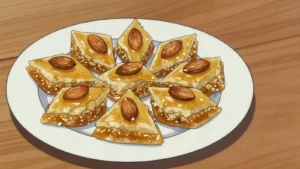
- Cut it into diamonds and serve with strong coffee.
- It came with Ottoman cuisine and is made in Bosnian homes for religious holidays and for funerals alike.
Technique
- Coarse semolina rather than fine, which would give a dense paste instead of a light crumb.
- Tahin halva, the sesame kind, is a different thing altogether and is bought rather than made at home.
- It is eaten warm as readily as cold, and the warm version is softer and better.
Substitutions
- Fine semolina, accepting a smoother, denser result.
- Oil in place of some of the butter, which is common in Lent and in poorer households.
Variations
- Tahin halva, made from sesame paste.
- With raisins stirred through with the walnuts.
- Made with more syrup for a wetter, softer halva.
History
A dense, sweet confection, most commonly made from either sesame paste, tahini, or semolina flour cooked with sugar syrup, documented across a very wide span of the former Ottoman Empire and the broader Middle East, Balkans and South Asia under the same or closely related names, reflecting centuries of Ottoman-era trade and cultural exchange spreading the confection across an enormous geographic area rather than any single country originating it in isolation. Bosnian halva, generally the semolina-based version, reflects that broader Ottoman culinary inheritance carried into Bosnian cooking during centuries of Ottoman rule beginning in the 1400s. It remains a traditional Bosnian sweet, closely associated with religious observances and hospitality, commonly offered to guests and prepared for both Muslim and Christian religious occasions within Bosnia’s multi-faith society.
Frequently asked questions
What is Halva?
Halva is a dessert from Bosnia and Herzegovina: dense semolina or sesame sweet, sliced and eaten with coffee. A dense, sweet confection, most commonly made from either sesame paste, tahini, or semolina flour cooked with sugar syrup, documented across a very wide span of the former Ottoman Empire and the broader Middle East, Balkans and South Asia under the same or closely related names, reflecting centuries of Ottoman-era trade and cultural exchange spreading the confection across an enormous geographic area rather than any single country originating it in isolation. Bosnian halva, generally the semolina-based version, reflects that broader Ottoman culinary inheritance carried into Bosnian cooking during centuries of Ottoman rule beginning in the 1400s. It remains a traditional Bosnian sweet, closely associated with religious observances and hospitality, commonly offered to guests and prepared for both Muslim and Christian religious occasions within Bosnia’s multi-faith society.
How long does Halva take to make?
Halva takes 10 min of preparation and 35 min of cooking. The recipe makes 12 pieces. It is rated medium to make.
What can I substitute in Halva?
Yes, within limits. Fine semolina, accepting a smoother, denser result. Oil in place of some of the butter, which is common in Lent and in poorer households.
What is the most important thing to get right in Halva?
Hot syrup into hot semolina. Cold syrup poured onto hot semolina seizes it into lumps, and the halva never comes smooth after that.