The world’s most grown fruit, and in the kitchen two different things: the sweet orange eaten and juiced, and the bitter Seville orange, too sour to eat, which gives marmalade, curaçao and Moroccan tagines their edge.
Where it comes from
Oranges are hybrids of the mandarin and the pomelo, domesticated in southern China thousands of years ago. The bitter orange came west first, carried by the Arabs to Spain and Sicily by the tenth century, and for five hundred years it was the only orange Europe knew — the orange of Seville’s courtyards and of the orangeries of the rich. The sweet orange arrived from China through Portuguese traders in the sixteenth century and gradually displaced it at the table, though never in the preserving pan.
Portugal’s role is remembered in the fruit’s name across half the world: portokali in Greek, portakal in Turkish, burtuqal in Arabic. The Spanish carried sweet oranges to Florida and the Caribbean; Brazil, now the largest producer, grows them mostly for juice. The zest, like a lemon’s, carries the aromatic oil, and orange flower water — distilled from bitter orange blossom — is a separate ingredient that perfumes pastries from Morocco to Lebanon.
Varieties
- Valencia — The juicing orange: thin-skinned, seedy, very sweet, late-season. Most commercial orange juice.
- Navel — Seedless, thick-skinned, easy to peel, with the small secondary fruit at the base that gives the name. The eating orange; its juice turns bitter within hours.
- Blood orange — Red-fleshed from anthocyanins that develop in cold nights. Sicilian Tarocco, Moro and Sanguinello; raspberry-tinged and less sweet.
- Seville (bitter) orange — Sour, bitter, thick-skinned and full of pectin and seeds. Inedible raw; the orange of marmalade, bigarade sauce, Cointreau and Moroccan cooking. A short winter season.
- Mandarin, clementine, satsuma — Small, loose-skinned, sweet and easy to peel. Mandarin is the parent species; the others are its varieties and crosses.
- Bergamot — A bitter orange hybrid grown almost only in Calabria for its oil — the scent of Earl Grey tea and of some Italian sweets.
In the kitchen
For savoury cooking, bitter orange is the one with character: its juice and zest cut through duck, pork and rich sauces in a way sweet orange cannot. Where Sevilles are out of season, a mix of sweet orange and lemon juice is the usual stand-in.
Sweet orange zest is more useful in the kitchen than its juice, which is mostly sugar and water; a strip of zest in a braise, a tagine or a syrup, or grated into a cake, carries the fruit’s whole perfume. Orange flower water is potent — a teaspoon scents a dish, a tablespoon overwhelms it.
Choosing and keeping
A good orange is firm and heavy with a fine-textured skin; colour is unreliable, since oranges are often dyed or ripen green in warm climates. They keep a week or two at room temperature and longer in the fridge.
Seville oranges appear for a few weeks in January and February and are worth freezing whole for later marmalade. Unwaxed fruit matters more for oranges than for any other citrus, since the zest is so often what is used.
Dishes with orange
 TompouceTwo sheets of puff pastry with cream between and pink icing on top.
 Bouzathick sorghum or hazelnut cream pudding topped with crushed nuts
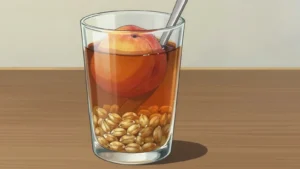 Mote con huesilloSun-dried peach nectar with husked wheat, summer street cooler
 Negroniequal parts gin, sweet vermouth and Campari, stirred over ice
 Znoud el sitfilo rolls filled with ashta cream, fried and dipped in syrup
 Gallina rellenaHen stuffed with pork, capers, olives and vegetables, roasted then sliced
 Chicharrón de polloSmall pieces of marinated chicken floured and fried very crisp
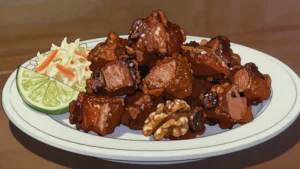 GriotCitrus-marinated pork chunks boiled then fried crisp
Orange is tagged on 341 dishes from 128 countries in the atlas. These notes are written from general knowledge and carry no per-fact citation — see About.