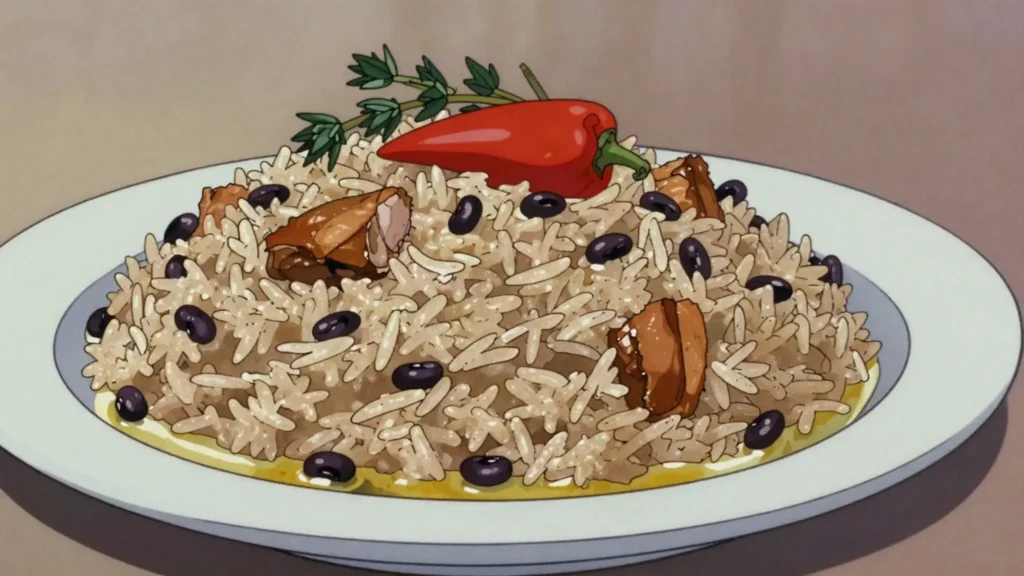

Ingredients
Peas and rice
- 300 gdried black-eyed peas, soaked overnight and drained
- 500 glong-grain rice, rinsed until the water runs clear
- 2dry coconuts, grated and squeezed for 1 litre thick coconut milk, or 800 ml tinned coconut milk plus 400 ml water
Meat
- 600 gchicken pieces, cut small and on the bone
- 300 gsalt beef, soaked overnight and cubed
- 200 gsalted pigtail, soaked overnight and cut into pieces
Seasoning
- 2 tbspbrown sugar and 2 tbsp oil, for browning
- 1onion, chopped
- 4spring onions, chopped
- 6garlic cloves, crushed
- 4 sprigsfresh thyme
- 2wiri wiri peppers, left whole
- 1 tspblack pepper
- 1 tspsalt, added at the end
- 1 tbspGuyanese green seasoning
To serve
- Fried ripe plantain
- Cucumber and tomato salad in lime juice
- Pepper sauce
Directions
- Boil the soaked salt beef and pigtail in fresh water for 20 minutes, drain and taste a piece. If it is still fiercely salty, boil again in fresh water.
- Simmer the black-eyed peas in water for 25–30 minutes until nearly tender but still holding their shape, then drain.
- Heat the oil in a large heavy pot, add the brown sugar and let it bubble and darken to the colour of strong tea, about 2 minutes. This is browning, and it is what gives cook-up its colour.
- Add the chicken and the drained salted meats at once and stir hard to coat them in the caramel, letting them brown for 5–6 minutes.
- Add the onion, spring onion, garlic, thyme and green seasoning and fry 3 minutes until fragrant.
- Pour in the coconut milk, add the cooked peas, the black pepper and the whole wiri wiri peppers, and bring to a rolling boil.
- Stir in the rinsed rice. The liquid should sit about 2 cm above the rice; add hot water if it is short.
- Boil uncovered until the liquid has fallen to the level of the rice and craters appear on the surface, about 10 minutes.
- Cover tightly, drop the heat to its lowest, and steam undisturbed for 25–30 minutes, until every grain is cooked and dry and the pot smells strongly of coconut and thyme.
- Rest 10 minutes off the heat, lift out the whole peppers, then fold gently with a fork from the sides inward so the grains stay separate.
- Serve hot with fried plantain, a sharp salad and pepper sauce on the side.
Technique
- Cook-up is Guyana’s Saturday pot and its Old Year’s Night dish: whatever meat and peas the house holds, cooked down in one pot with rice and coconut milk.
- Coconut milk is not optional and should be thick. Made with water instead of coconut, the dish is just rice and peas, and Guyanese will tell you so.
- Cook the peas separately first. Dried peas thrown in raw will still be hard when the rice has turned to porridge.
- The wiri wiri pepper is a small round Guyanese chilli with a fruity, almost floral aroma. Leave it whole so it scents the pot without shredding heat through it.
Substitutions
- No black-eyed peas: pigeon peas, red kidney beans or split peas are all traditional depending on the household.
- No salt beef or pigtail: use smoked ham hock, or simply more chicken plus an extra half teaspoon of salt, accepting a milder pot.
- No wiri wiri: half a scotch bonnet, left whole, is the nearest widely available substitute.
Variations
- Cook-up with chicken and salt beef, the classic Saturday version.
- Vegetarian cook-up, made with coconut milk, pigeon peas and plenty of thyme and green seasoning.
- Cook-up with dried shrimp or salted fish, common on the coast.
History
Rice cooked together with beans, coconut milk and often meat in one pot, developed in Guyana reflecting the country’s genuinely diverse culinary heritage, blending African, Indian and Indigenous influences carried by the different communities that settled Guyana through colonization, indentured labor and earlier Indigenous presence. Its one-pot cooking method, similar in underlying technique to Caribbean pelau and West African jollof rice, reflects a broader regional pattern of combining rice, legume and protein together during cooking rather than preparing each component separately. Cook-up rice remains a beloved, everyday Guyanese dish, particularly associated with weekend and Sunday family meals, and it is considered one of the clearest culinary expressions of Guyana’s mixed, multicultural national identity.
Frequently asked questions
What is Cook-up rice?
Cook-up rice is a main from Guyana: one-pot rice, black-eyed peas and meats in coconut milk. Rice cooked together with beans, coconut milk and often meat in one pot, developed in Guyana reflecting the country’s genuinely diverse culinary heritage, blending African, Indian and Indigenous influences carried by the different communities that settled Guyana through colonization, indentured labor and earlier Indigenous presence. Its one-pot cooking method, similar in underlying technique to Caribbean pelau and West African jollof rice, reflects a broader regional pattern of combining rice, legume and protein together during cooking rather than preparing each component separately. Cook-up rice remains a beloved, everyday Guyanese dish, particularly associated with weekend and Sunday family meals, and it is considered one of the clearest culinary expressions of Guyana’s mixed, multicultural national identity.
How long does Cook-up rice take to make?
Cook-up rice takes 25 min of preparation and 1 hr 10 min, plus overnight soaking of cooking. The recipe makes 6 servings. It is rated easy to make.
What can I substitute in Cook-up rice?
Yes, within limits. No black-eyed peas: pigeon peas, red kidney beans or split peas are all traditional depending on the household. No salt beef or pigtail: use smoked ham hock, or simply more chicken plus an extra half teaspoon of salt, accepting a milder pot. No wiri wiri: half a scotch bonnet, left whole, is the nearest widely available substitute.
What is the most important thing to get right in Cook-up rice?
Pour in the coconut milk, add the cooked peas, the black pepper and the whole wiri wiri peppers, and bring to a rolling boil.