
Ingredients
What to buy
- Herve, carrying the PDO mark
- piquant, the strong one
- or doux, the milder one
- in its small square box
- see the note on why no method is given
To serve
- sirop de Liège
- the apple and pear syrup
- see the note
- dark rye or raisin bread
- butter
- walnuts
- sliced apple or pear
- radishes
To drink
- a Trappist dubbel
- or a Flemish red ale
- or peket
- or strong coffee
Directions
- Start with doux.
- Keep it sealed, and sealed again.
- Butter, milk and bread all take it up. Within hours.
- Keep it in its box, in a sealed plastic box, in the refrigerator. Do not wrap it tightly in cling film alone.
- Take it out of the refrigerator an hour before eating. Cold soft cheese is chalky and tastes of nothing.
- Use less than you would of another cheese. Advice on soft and raw-milk cheeses in pregnancy varies by country.
- Keep it double-sealed.
Technique
- Keep it sealed, and sealed again — the box inside a sealed plastic box. The smell penetrates everything in a refrigerator, and butter, milk and bread take it up within hours.
- Do not wrap it tightly in cling film alone. A washed-rind cheese needs a little air or it turns ammoniac; waxed paper inside a sealed box is the right answer.
- A faint ammonia smell on an older washed rind is common and often blows off if you unwrap it for half an hour. A strong one means it is past its best and does not.
- Take it out an hour before eating. Cold soft cheese is chalky and tastes of nothing; at room temperature it softens and opens up, and the difference is enormous.
- It tastes far milder than it smells. That is true of washed-rind cheeses generally, and people put off by the smell are usually surprised by the taste.
- Start with doux rather than piquant. Piquant Herve is a great deal to meet without warning, and there is no virtue in starting at the strongest.
- The rind is edible and carries most of the strength. Some people eat it and some cut it away, and both are reasonable.
- Judge it by an orange to reddish, slightly tacky rind, pale cream paste and a gentle give under pressure. A dried cracked rind, blue or green mould, a collapsed box or a strong ammonia smell all mean leave it.
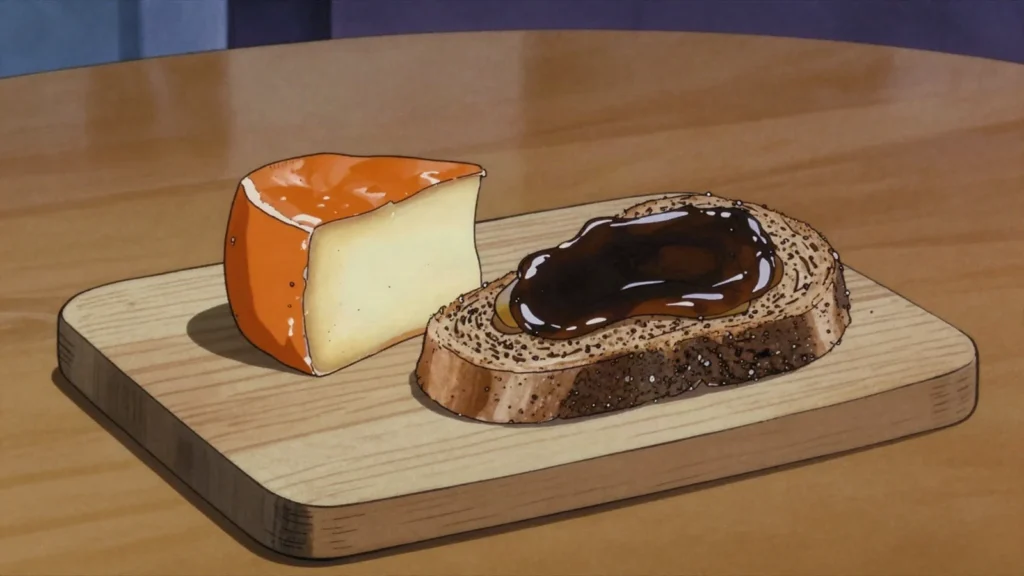
- Sirop de Liège is apples and pears boiled down for hours, traditionally with no sugar added — the sweetness is the fruit reduced, and it tastes closer to a fruit molasses than a jam. Some commercial versions do add sugar or dates, so read the label if it matters. Sweet-sour fruit against a strong salty cheese is the same idea as quince paste with manchego, and it is the standard local pairing rather than an invention.
- It is very strong when heated, so use less than you would of another cheese — and open a window, because the smell fills a house.
- The atlas gives no making method: the rind is washed on a schedule for weeks in a cellar at controlled humidity and temperature, where getting it wrong grows the wrong things; it is a soft high-moisture cheese, which is the class where listeria is a concern; and the name is protected.
- Brevibacterium linens produces both the orange colour and the smell. The same organism is found on human skin, which is genuinely why washed-rind cheeses smell as they do.
- Herve won PDO status in 1996 and is Belgium’s only PDO cheese, which is notable for a country with a great deal of cheese. PDO requires the whole process within the defined area, where PGI ties only one stage to the region.
- It is made from both raw and pasteurised milk, and the label says which — look for lait cru or rauwe melk. Advice on soft and raw-milk cheeses in pregnancy varies by country and concerns listeria; the atlas records that the question exists and leaves it to a doctor or midwife.
- It ripens and strengthens as it sits, keeps two to three weeks refrigerated, and does not freeze — the texture collapses.
Substitutions
- Époisses, Munster, Limburger or Maroilles are the closest washed-rind relatives.
- Limburger is the most widely available substitute.
- Doux replaces piquant for anyone new to it.
- Apple butter or a fruit molasses replaces sirop de Liège.
- Quince paste works in the same role.
- Any dark rye or raisin bread suits it.
Variations
- Piquant is ripened longer and is much stronger.
- Doux is the milder grade.
- Remoudou is the traditional name for a larger, stronger version.
- Herve with sirop de Liège is the standard local serving.
- Melted into a sauce for chicory or potatoes is a regional dish.
- A tart with onion and Herve is made in the Pays de Herve.
History
Made in the Pays de Herve since the Middle Ages and Belgium’s only PDO cheese, protected in 1996; it is eaten with sirop de Liège.
Frequently asked questions
What is Herve cheese?
Herve cheese is a cheese & dairy from Belgium: soft washed-rind cow’s cheese, sticky, orange and very pungent. Made in the Pays de Herve since the Middle Ages and Belgium’s only PDO cheese, protected in 1996; it is eaten with sirop de Liège.
How long does Herve cheese take to make?
Herve cheese takes 10 minutes of preparation and none of cooking. The recipe makes buy 50 g per person. It is rated easy to make.
What can I substitute in Herve cheese?
Yes, within limits. Époisses, Munster, Limburger or Maroilles are the closest washed-rind relatives. Limburger is the most widely available substitute. Doux replaces piquant for anyone new to it. Apple butter or a fruit molasses replaces sirop de Liège. Quince paste works in the same role. Any dark rye or raisin bread suits it.
What is the most important thing to get right in Herve cheese?
Keep it in its box, in a sealed plastic box, in the refrigerator. Do not wrap it tightly in cling film alone.