
Ingredients
The tongue
- 3sheep tongues
- about 1.2 kg total
- or lamb tongues
- well washed
The broth
- 3large onions, sliced
- 3potatoes, cubed
- 2carrots, sliced
- 4 stalkscelery, sliced
- 1whole goat pepper
- or scotch bonnet
- 3bay leaves
- 1 tablespoonallspice berries
- salt and black pepper
The souring
- juice of 8 limes
- about 200 ml
- or more, to taste
- added at the end
To serve
- johnnycake
- hot pepper sauce
- extra lime wedges
- on Saturday morning
Directions
- Boil the tongues first, then peel them while hot. Understanding the handling of hot tongue is worth explaining. Let them cool just enough to handle with a cloth. Hold them in a clean cloth and peel with a small knife. Do not let them go cold before you start peeling.
- Wash the tongues very thoroughly before they go in. Scrub the surface under cold running water first. Discard the first boiling water entirely with its scum. Offal must be cooked right through without exception.
- Keep raw and cooked meat well apart while working. It is genuinely fiercely hot and should be handled with care. Lift it out carefully before it splits in the pot. Wash your hands thoroughly after touching the pepper. Wear gloves if you have any cuts on your hands.
- Rinse it through several changes of cold water. Then trim away any gristle at the thick root end. Put the tongues in a large pot and cover with water. Bring it up to a rolling boil and hold it briefly. A grey scum rises to the surface within minutes. Boil it hard for about five minutes to draw that out. Rinse both the pot and the tongues before continuing.
- Return the tongues to the clean pot with fresh water. Cover them by about five centimetres of cold water. Add the bay leaves and the allspice berries now. Add a good pinch of salt to the water as well. Hold it at a bare simmer rather than a rolling boil.
- Adjust the heat until it sits steadily at that point. Give the tongues about ninety minutes at that simmer. Skim any foam that gathers during the first half hour. Lift it off gently with a spoon and discard it. That keeps the finished broth clear rather than murky.
- Lift the tongues out of the pot with a slotted spoon. Let them cool only until you can just handle them. Hold each one in a clean folded cloth as you work. Slit the thick skin along the length with a small knife. Trim away any remaining gristle from the root end. Discard all of the skin and gristle you remove. The skin grips hard as soon as the tongue goes cold.
- Peel them while they are still genuinely hot to handle. If they cool too far, return them briefly to the pot. Cut the peeled tongues into thick slices or chunks. Slices about one centimetre thick work perfectly well.
- Keep the pieces large enough to hold their shape. Return the sliced tongue to the strained cooking liquid. Strain the broth to remove the bay and allspice. Measure it and top it up with water if it has reduced.
- Add the sliced onion, carrot, celery and potato now. Slice them thickly so they hold together in the broth. Do not reduce that quantity from what is given. Cut it into chunks rather than into small dice. Drop the whole goat pepper into the simmering broth. Leave it completely whole and unbroken as it goes in. A burst pepper makes the whole pot fiercely hot.
- Simmer everything gently until the vegetables are tender. Give it roughly twenty-five to thirty minutes in all. Season the broth generously with salt and black pepper. Souse should taste clearly salty rather than gentle. Taste the broth carefully and adjust it properly.
- Take the pot right off the heat before you add lime. Never let the pot boil again after the lime goes in. Squeeze in the lime juice a little at a time. Taste as you add and stop where it suits your palate. It should be genuinely sharp rather than merely tangy.
- Salt and lime have to be adjusted against each other. Add a little more salt if the lime overwhelms it. Let the pot stand off the heat for a few minutes. Five minutes is quite enough for that to happen.
- Ladle the tongue and vegetables into deep bowls. Divide the meat and vegetables evenly between bowls. Put johnnycake on the table with the bowls of souse. Put hot pepper sauce and lime wedges on the table. It keeps two days refrigerated in a covered bowl. Add a fresh squeeze of lime when you reheat it.
Technique
- The tongue must be peeled after its first cooking, while still genuinely hot to handle: the rough outer skin lifts away in large sheets when hot but grips almost immovably once cold. If they cool too far, return them to the pot for a few minutes and the skin loosens again.
- Boil the tongues hard for five minutes first and discard that water entirely with its scum, blood and off flavours — it gives a far cleaner finished broth for one small step.
- The goat pepper goes in whole and unbroken and must be lifted out before its skin splits, since a burst pepper makes the whole pot fiercely hot. Wash your hands thoroughly after handling it, since the oils transfer easily and burn eyes badly.
Substitutions
- Chicken, pig’s feet, conch and oxtail are all made into souse by exactly the same method and are equally standard; only the meat changes, while the broth and the late souring stay the same.
- Lamb tongues stand in for sheep tongues directly. Scotch bonnet replaces the Bahamian goat pepper, which is its close relative.
Variations
- The lime juice goes in off the heat and the pot must never boil again afterward: boiled lime juice turns dull, flat and slightly bitter, while lime added off the heat stays sharp and clean, and that brightness is what defines proper souse.
- Souse should taste clearly salty as well as sharp, since the lime needs salt behind it to work — an under-salted souse tastes thin and merely sour. Adjust salt and lime against each other rather than separately.
- Souse is widely said to settle the head after drinking; the atlas records that as the traditional local claim without endorsing it as medical fact. It is eaten at breakfast on a Saturday morning across the islands, with johnnycake torn and dipped into the sharp broth.
History
A weekend Bahamian breakfast served with johnnycake; souse of tongue, chicken or pig’s feet is Saturday morning food across the islands.
Frequently asked questions
What is Sheep tongue souse?
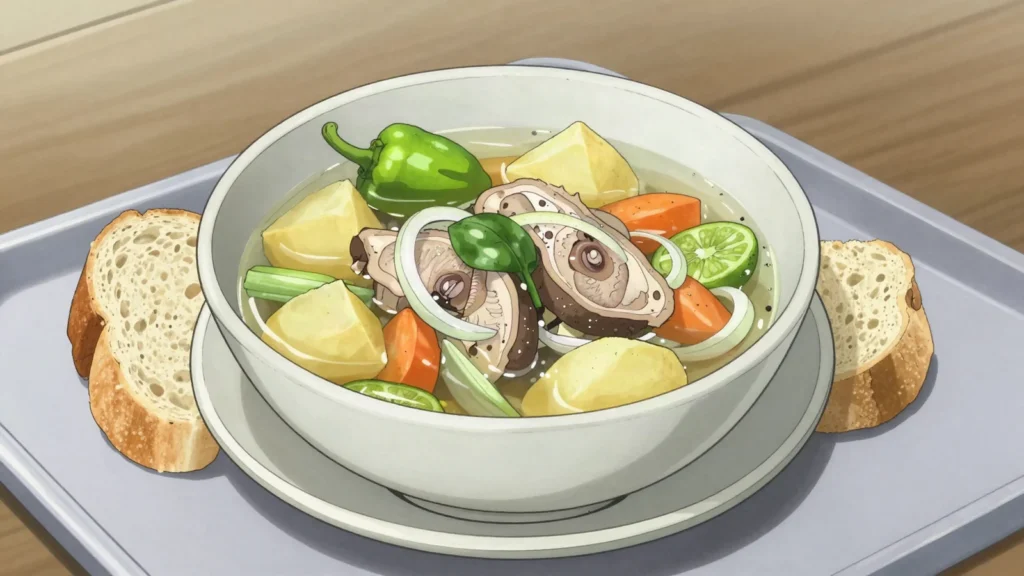
Sheep tongue souse is a soup & stew from Bahamas: sheep tongue simmered in a peppery lime and onion broth. A weekend Bahamian breakfast served with johnnycake; souse of tongue, chicken or pig’s feet is Saturday morning food across the islands.
How long does Sheep tongue souse take to make?
Sheep tongue souse takes 30 minutes of preparation and 2 hours 30 minutes of cooking. The recipe makes serves 6. It is rated medium to make.
What can I substitute in Sheep tongue souse?
Yes, within limits. Chicken, pig’s feet, conch and oxtail are all made into souse by exactly the same method and are equally standard; only the meat changes, while the broth and the late souring stay the same. Lamb tongues stand in for sheep tongues directly. Scotch bonnet replaces the Bahamian goat pepper, which is its close relative.
What is the most important thing to get right in Sheep tongue souse?
Boil the tongues first, then peel them while hot. Understanding the handling of hot tongue is worth explaining. Let them cool just enough to handle with a cloth. Hold them in a clean cloth and peel with a small knife. Do not let them go cold before you start peeling.