
Ingredients
Crab
- 1 kglive freshwater paddy crabs, cua dong
- or 500 g fresh crab meat with 200 g crab shells
- 1.5 litreswater
- 1 teaspoonsalt
Broth
- 500 mlpork or chicken stock
- 3tomatoes, in wedges
- 3shallots, sliced
- 2 tablespoonsfish sauce
- 1 teaspoonsugar
- 2 tablespoonsoil
- 1 tablespoonannatto oil, for colour
Noodles and additions
- 600 gbanh da do, brick-red flat rice noodles
- or 600 g flat rice noodles
- 200 gcha ca, fried fish cake, sliced
- 150 gcha la lot, beef in betel leaf, optional
- 200 gwater spinach, split into strands
- 150 gbean sprouts
To garnish
- spring onions, sliced
- coriander and Vietnamese herbs
- fried shallots
- lime wedges
- chilli and shrimp paste, on the table
Directions
- Rinse them thoroughly in several changes of water. Chill them in the freezer for twenty minutes first. The cold puts them to sleep before handling. Pull off the top shells and set them aside. Discard the gills and the stomach sac. Pound the crab bodies in a heavy mortar. Work through them until they are a rough paste. Mix the paste with the water and the salt.
- Work it hard with your hands for a few minutes. Strain it through a fine sieve into a pot. Press the solids hard to extract everything. Strain it a second time through muslin. Discard the shell fragments entirely. Set the pot of crab liquid over a low heat. Do not stir it at all from this point.
- Bring it very slowly toward a simmer. Soft orange curds gather at the surface. Set them aside carefully in a bowl. Keep the remaining liquid, which is the broth base. Building the broth takes about fifteen minutes.
- Heat the oil in a pan and fry the shallots. Add the reserved crab roe and fry it briefly. Add the tomato wedges and cook them for three minutes. Stir in the annatto oil for colour. Add all of that to the crab liquid. Add the pork or chicken stock. Season with fish sauce and a little sugar. Bring the pot to a gentle simmer.
- Taste it and adjust the fish sauce. The broth should be light, sweet and clearly of crab. Slice the fried fish cake into strips. Blanch the water spinach for one minute only. Soak them in warm water until pliable.
- Drain them well and put them straight in the bowls. Do not cook them in the broth itself. Put a nest of noodles in each deep bowl. Add blanched greens and bean sprouts.
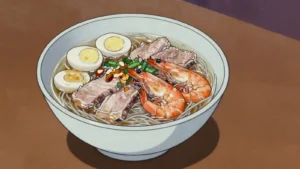
- Lay slices of fish cake over them. Ladle the hot broth over everything. Spoon the crab curds carefully on top. Scatter spring onion, herbs and fried shallots. Serving it is done immediately. Put lime, chilli and shrimp paste on the table. The broth keeps two days refrigerated. Keep the noodles and curds entirely separate.
Technique
- Banh da do, the brick-red flat noodle, is specific to Hai Phong and is dried to that colour rather than dyed after cooking.
- The technique of pounding whole freshwater crabs and setting the strained protein into curds is shared with bun rieu.
Substitutions
- Frozen ground paddy crab is sold in Vietnamese shops and is the most practical option abroad.
- Fresh crab meat bound with beaten egg gives an approximation of the curds, though not the same flavour.
Variations
- Bun rieu uses the same crab technique with round rice noodles.
- Some Hai Phong stalls serve it dry with the broth alongside.
- A version with more fried fish cake and beef in betel leaf is sold as the full bowl.
History
The signature noodle soup of Hai Phong, its noodles coloured with molasses and dried to a deep brown.
Frequently asked questions
What is Banh Da Cua?
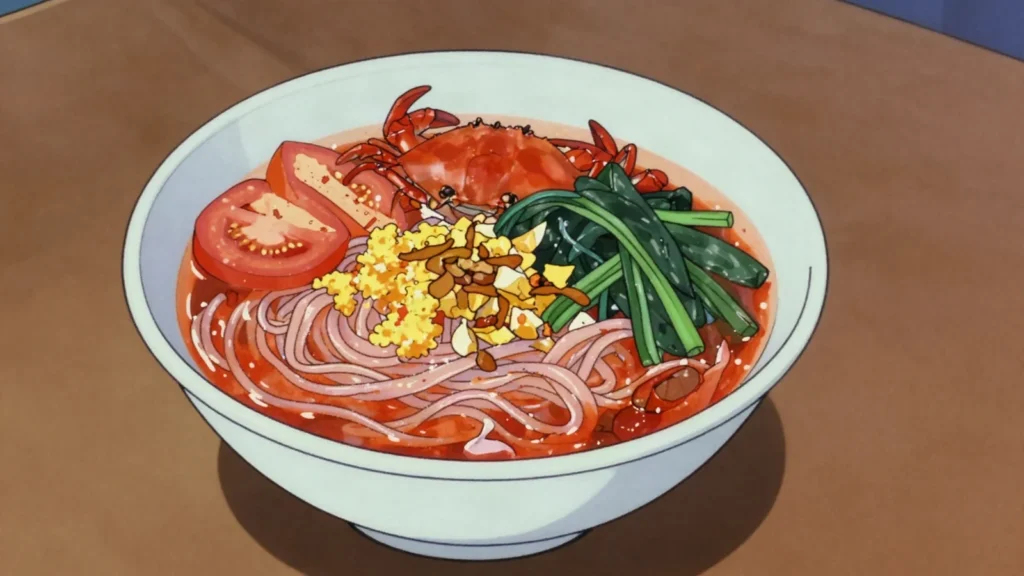
Banh Da Cua is a soup & stew from Vietnam: brick-red flat rice noodles in freshwater crab broth with tomato and greens. The signature noodle soup of Hai Phong, its noodles coloured with molasses and dried to a deep brown.
How long does Banh Da Cua take to make?
Banh Da Cua takes 45 minutes of preparation and 45 minutes of cooking. The recipe makes serves 4. It is rated hard to make.
What can I substitute in Banh Da Cua?
Yes, within limits. Frozen ground paddy crab is sold in Vietnamese shops and is the most practical option abroad. Fresh crab meat bound with beaten egg gives an approximation of the curds, though not the same flavour.
What is the most important thing to get right in Banh Da Cua?
Work it hard with your hands for a few minutes. Strain it through a fine sieve into a pot. Press the solids hard to extract everything. Strain it a second time through muslin. Discard the shell fragments entirely. Set the pot of crab liquid over a low heat. Do not stir it at all from this point.