Sheep meat, and the meat whose flavour varies most with what the animal grazed — salt marsh, mountain herb and hard scrub all show up on the plate.
Where it comes from
Sheep were among the first livestock domesticated in the Fertile Crescent, valued for wool and milk as much as meat. They graze land too poor and steep for cattle, which is why lamb is central from the Atlas mountains to the Caucasus to the Welsh hills and the high Andes.
Lamb is under a year old; hogget is a year or two; mutton is older, stronger and much cheaper, and it is the mutton traditions — slow curries, harira, haggis — that carry most of the flavour in world cooking.
Varieties
- Leg — Lean, roasted pink, or slow-cooked for hours until it falls apart. Both work; the middle does not.
- Shoulder — Fattier and more forgiving than leg. The cut for a long braise, and for most tagines and curries.
- Shank — One muscle, heavy in collagen, made for a two-hour braise.
- Rack and cutlets — The prime fast cut, best served pink.
- Breast and belly — Cheap, fatty, excellent slow-roasted or rolled and stuffed.
- Goat — A different animal but cooked in the same places and ways. Leaner, needs longer and wetter cooking.
In the kitchen
Lamb fat sets hard and tastes waxy when cold, which is why lamb dishes are served hot and why a lamb stew is worth skimming properly after chilling.
The strong flavour people either want or avoid lives largely in the fat. Trimming changes the dish more than any seasoning will.
Dishes with lamb
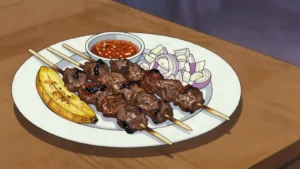 Muchomocharcoal-grilled meat skewers sold at roadside stands
 Cârnați de Pleșcoismoked mutton sausage with chilli and garlic from Buzău
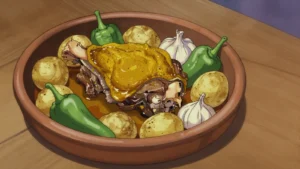 Kouchalamb shoulder baked in a clay dish with potatoes, turmeric and peppers
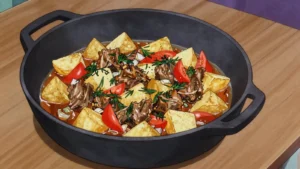 Chekdirmelamb fried with potato, tomato and onion in a deep pot
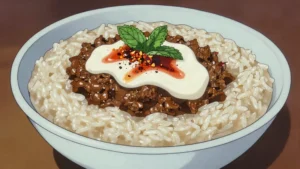 Kichiri QurootMung bean and rice porridge topped with qurut sauce and minced meat
 SviðasultaSheep head meat pressed into a terrine, often soured in whey
 MakhlamaEggs broken over minced lamb, tomato and onion in a hot pan.
 KebabpizzaPizza topped with kebab meat, garlic sauce and pepperoncini
Lamb is tagged on 305 dishes from 97 countries in the atlas. These notes are written from general knowledge and carry no per-fact citation — see About.