
Ingredients
Meat
- 1.5 kgbeef or lamb, in large pieces
- or 2 chickens, jointed
Base
- 200 mloil, or red palm oil
- 4onions, blended
- 6tomatoes, blended
- 4 tbsptomato purée
- 6 clovesgarlic
- 3cm ginger
- 2scotch bonnet peppers
Seasoning
- 3stock cubes
- 2 tspground white pepper
- 1 tbspground néré or soumbala, fermented locust bean
- 2bay leaves
- salt
Vegetables
- 1cabbage, in wedges
- 4carrots
- 2aubergines
- 300 gcassava or sweet potato
Rice
- 1.2 kglong-grain rice
To serve
- the vegetables and meat on top
- a chilli relish
Directions
- Season the meat and brown it hard in the oil, in batches. Lift the meat out and set it aside. Blend the onions, tomatoes, garlic, ginger and peppers into a smooth base. Now fry the tomato purée in the oil for 3 to 4 minutes until it darkens.
- Add the blended base and fry it hard for 20 to 25 minutes, stirring. You are cooking the water out of the tomato and onion until the oil separates and rises to the surface. Add the néré, stock cubes, white pepper and bay. Return the meat with water to cover and simmer for an hour until tender.
- Cook the vegetables in the stock and take them out as each is done, which keeps them whole rather than collapsing. Cabbage and carrot take 15 minutes; aubergine and cassava rather less. Set the cooked vegetables aside alongside the meat. Too much and the rice goes soft and claggy; too little and it stays hard on top.
- Taste the stock and season it hard, because it is the only seasoning the rice gets. It should taste slightly too strong on its own. Wash the rice until the water runs clear, then add it to the boiling stock.
- Stir it once, then let it boil uncovered until the liquid drops to the level of the rice. Now cover it tightly, turn the heat as low as it will go, and cook 25 to 30 minutes.
- Cover it with foil under the lid if it does not seal well, because the rice cooks entirely in trapped steam. Do not lift the lid and do not stir it.
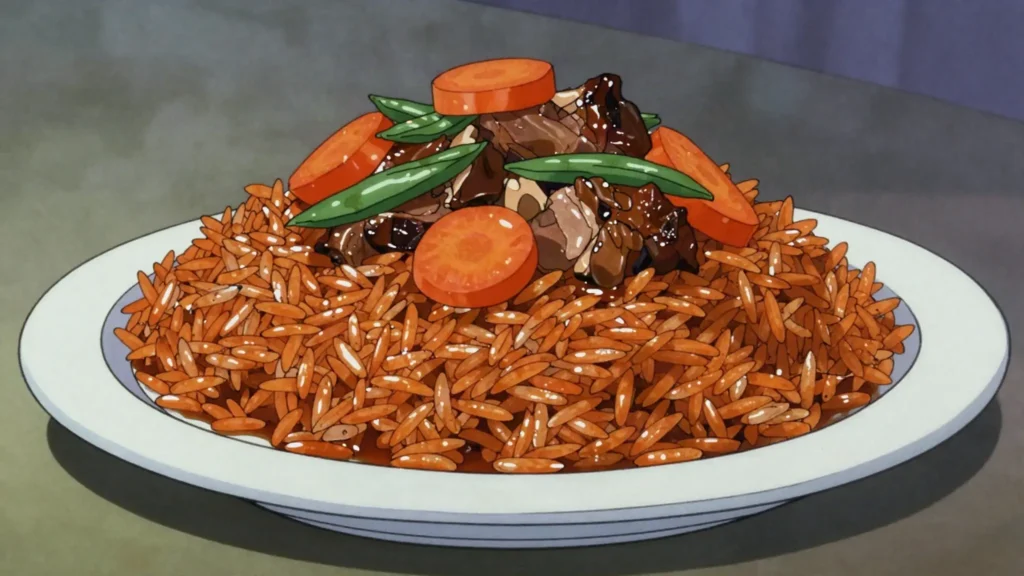
- Rest it 10 minutes, then fork it through gently. Pile the rice on a large platter with the meat and vegetables arranged over it. Serve with a chilli relish, and eat from the shared platter with the right hand.
Technique
- Soumbala is sold dried or in balls in African shops and has a strong fermented smell.
- It reheats well, covered, and the crust can be crisped again.
- Jollof, thieboudienne and riz au gras are cousins and Guineans, Senegalese and Nigerians will each explain the differences at length.
Substitutions
- Any stock cube blend in place of néré.
- Chicken in place of beef, which cooks faster.
Variations
- Made with fish, closer to thieboudienne.
- With red palm oil, which is darker and richer.
- Vegetarian, with vegetable stock and more vegetables.
History
Rice cooked glossy in tomato, oil and meat stock; it is the party dish of Guinean weddings, baptisms and holidays, cooked in vast pots.
Frequently asked questions
What is Riz au gras?
Riz au gras is a main from Guinea: party rice cooked glossy in tomato and oil with meat. Rice cooked glossy in tomato, oil and meat stock; it is the party dish of Guinean weddings, baptisms and holidays, cooked in vast pots.
How long does Riz au gras take to make?
Riz au gras takes 40 min of preparation and 2 hr of cooking. The recipe makes 10 servings. It is rated medium to make.
What can I substitute in Riz au gras?
Yes, within limits. Any stock cube blend in place of néré. Chicken in place of beef, which cooks faster.
What is the most important thing to get right in Riz au gras?
Cook the vegetables in the stock and take them out as each is done, which keeps them whole rather than collapsing. Cabbage and carrot take 15 minutes; aubergine and cassava rather less. Set the cooked vegetables aside alongside the meat. Too much and the rice goes soft and claggy; too little and it stays hard on top.