
Ingredients
The meat and marinade
- 1whole matambre (beef flank membrane), 1.5–1.8 kg, trimmed of thick fat and beaten flat
- 250 mlwhite wine vinegar
- 250 mlwater
- 4garlic cloves, crushed
- 1 tbspdried oregano
- 1 tspblack pepper
- 2 tspsalt
The filling
- 5hard-boiled eggs, peeled and left whole
- 3carrots, cut in long batons and blanched 4 min
- 2red peppers, roasted, peeled and cut in strips
- 100 ggreen olives, pitted
- 2 tbspchopped parsley
- 3garlic cloves, minced
- 1 tbspdried oregano
- 1 tspchilli flakes
- 2 tspsalt
- 150 gspinach leaves, blanched and squeezed dry (optional)
To cook
- Butcher’s string
- 3 litreslight beef stock or salted water
- 2bay leaves
- 1onion, halved
- 1carrot, halved
Directions
- Lay the matambre flat and trim it: remove the thick surface fat and any silverskin, and even out the thickness by butterflying the fat end. It should be a rectangle of even 1 cm thickness.
- Mix the vinegar, water, garlic, oregano, pepper and salt and marinate the meat in it for 4 hours or overnight in the fridge. The acid tenderises what is a tough, sinewy cut.
- Drain and pat dry, then lay the matambre on the bench with the grain running left to right, so you will roll across the grain and every slice cuts cleanly.
- Season the surface, scatter the garlic, parsley, oregano and chilli, then lay the spinach if using as a bed.
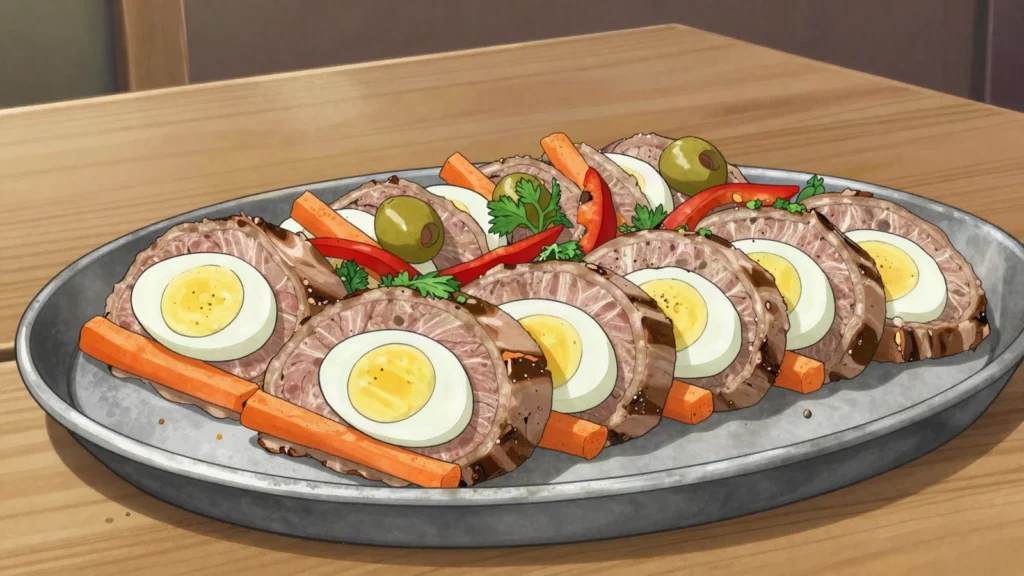
- Arrange the fillings in lines running the length of the roll: carrot batons, pepper strips, olives, and the whole eggs down the centre so every slice shows a circle of yolk.
- Roll tightly from the long side, pressing as you go to force out air, then tie with string at 3 cm intervals and once lengthways. A loose roll falls apart when sliced.
- Lower into the stock with the bay, onion and carrot, bring to a bare simmer and poach, covered, for 1.5 to 2 hours, until a skewer slides through with no resistance.
- Lift out, wrap tightly in cling film or foil, set on a tray, put a board and a couple of tins on top and chill overnight under that weight so it compacts.
- Unwrap, cut off the strings and slice 1 cm thick with a sharp knife. Serve cold as a starter or at a picnic, with bread, and with a little of the marinade sharpened with oil as a dressing.
Technique
- Matambre is the thin sheet of meat between the hide and the ribs. The name is read as mata hambre, hunger killer, and the rolled version is a fixture of Argentine Christmas tables and picnics.
- Rolling across the grain is the single most important step. Roll with the grain and the slices shred instead of holding together.
- The overnight press under weight is what gives the tight mosaic cross-section. Skip it and the roll gapes.
- Poached matambre is the classic; do not boil it hard, which squeezes the meat and toughens it.
Substitutions
- No matambre: a butterflied flank steak or a thin brisket flap, well beaten, will roll the same way, though the texture is meatier and less gelatinous.
- Matambre a la pizza is made from the same cut, grilled and topped with tomato and cheese, if you would rather cook it hot.
- Vinegar can be replaced with lemon juice and water in the same proportion.
Variations
- Matambre arrollado, poached and served cold in slices.
- Matambre al horno, the same roll roasted at 160°C (325°F) for 2 hours and served hot.
- Matambre relleno de verduras, filled only with vegetables and eggs, for a lighter roll.
History
A dish made from a thin, flank-like cut of beef called matambre, rolled around a filling of hard-boiled egg, vegetables and herbs, then poached or braised and sliced into pinwheels, documented across Argentina as a traditional dish particularly associated with celebratory meals and gatherings. Its name, combining the Spanish words for hunger and kill, colloquially understood as describing a cut of meat good enough to satisfy hunger, reflects a longstanding Argentine culinary tradition of using and elevating this specific thin cut of beef, historically considered a lesser cut before matambre arrollado’s development. Matambre arrollado remains a traditional dish across Argentina, particularly popular served cold as part of a holiday spread.
Frequently asked questions
What is Matambre arrollado?
Matambre arrollado is a main from Argentina: flank steak rolled around egg, peppers and olives, sliced cold. A dish made from a thin, flank-like cut of beef called matambre, rolled around a filling of hard-boiled egg, vegetables and herbs, then poached or braised and sliced into pinwheels, documented across Argentina as a traditional dish particularly associated with celebratory meals and gatherings. Its name, combining the Spanish words for hunger and kill, colloquially understood as describing a cut of meat good enough to satisfy hunger, reflects a longstanding Argentine culinary tradition of using and elevating this specific thin cut of beef, historically considered a lesser cut before matambre arrollado’s development. Matambre arrollado remains a traditional dish across Argentina, particularly popular served cold as part of a holiday spread.
How long does Matambre arrollado take to make?
Matambre arrollado takes 50 min of preparation and 2 hr, plus overnight chilling of cooking. The recipe makes 10 servings as a starter. It is rated medium to make.
What can I substitute in Matambre arrollado?
Yes, within limits. No matambre: a butterflied flank steak or a thin brisket flap, well beaten, will roll the same way, though the texture is meatier and less gelatinous. Matambre a la pizza is made from the same cut, grilled and topped with tomato and cheese, if you would rather cook it hot. Vinegar can be replaced with lemon juice and water in the same proportion.
What is the most important thing to get right in Matambre arrollado?
Arrange the fillings in lines running the length of the roll: carrot batons, pepper strips, olives, and the whole eggs down the centre so every slice shows a circle of yolk.