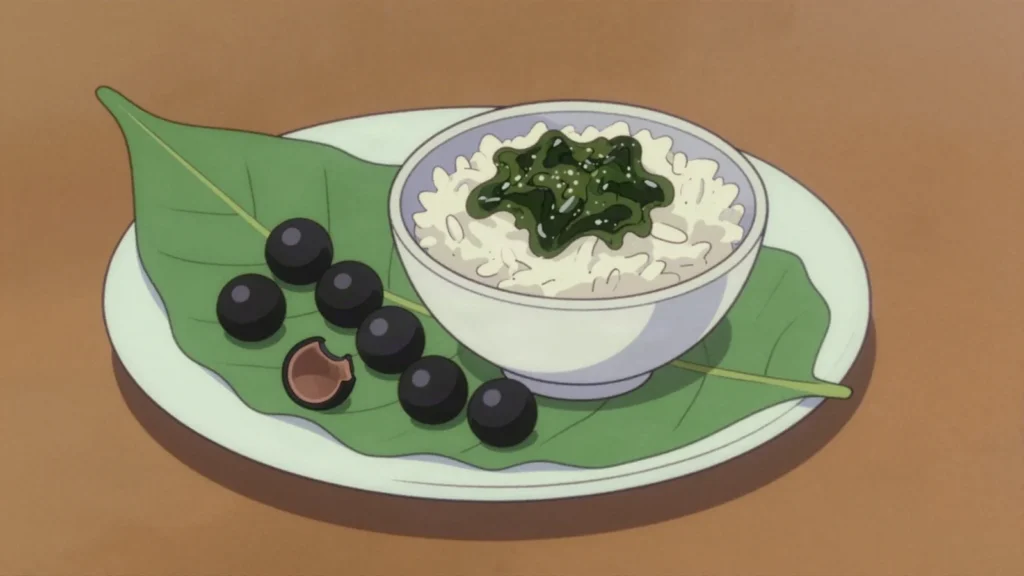

Black fermented locust-bean balls that give northern Ivorian sauces their deep savoury funk. Made from Parkia biglobosa seeds and traded south along Malinké routes, it is the Sahelian counterpart of Nigerian iru.
It is an alkaline Bacillus ferment of a high-protein seed held warm for days without salt, and the traditional leaf-lined basket carries the inoculum; there is no domestic equivalent that reliably grows the right organism.
What goes into it
- African locust bean seeds
- water
- sometimes wood ash for the boil
How it is made
The seeds are boiled for many hours to soften them, dehulled by pounding and washing, then boiled again and packed warm into a covered basket lined with leaves. Over two to four days Bacillus subtilis colonises them, breaking down the proteins into a dark, sticky, ammoniacal mass. The fermented beans are then pounded into balls and sun-dried.
How long it takes: two to four days of fermenting after a day of boiling
How it is eaten
Crumbled into leaf sauces, soups and rice dishes as a savoury base.
History
Made from Parkia biglobosa seeds boiled and fermented for days; the Sahelian equivalent of Nigerian iru, traded south along Malinke routes.
Frequently asked questions
What is Soumbara?
Soumbara is a fermented & pickled from Côte d’Ivoire: black fermented locust-bean balls that give northern sauces their deep savoury funk. Made from Parkia biglobosa seeds boiled and fermented for days; the Sahelian equivalent of Nigerian iru, traded south along Malinke routes.
How is Soumbara made?
The seeds are boiled for many hours to soften them, dehulled by pounding and washing, then boiled again and packed warm into a covered basket lined with leaves. Over two to four days Bacillus subtilis colonises them, breaking down the proteins into a dark, sticky, ammoniacal mass. The fermented beans are then pounded into balls and sun-dried. It takes two to four days of fermenting after a day of boiling.
Can I make Soumbara at home?
No, and the atlas gives no method for it. It is an alkaline Bacillus ferment of a high-protein seed held warm for days without salt, and the traditional leaf-lined basket carries the inoculum; there is no domestic equivalent that reliably grows the right organism.
What goes into Soumbara?
African locust bean seeds, water, sometimes wood ash for the boil.
How is Soumbara eaten?
Crumbled into leaf sauces, soups and rice dishes as a savoury base.