
Ingredients
Eggs
- 20quail eggs, or 12 small chicken eggs
Braising liquid
- 250 mllight soy sauce
- 100 mldark soy sauce
- 100 mlShaoxing rice wine
- 80 grock sugar
- 1.5 litreswater
- 1 tbspsalt
Spices
- 3star anise
- 1cinnamon stick
- 1 tbspSichuan peppercorns
- 4bay leaves
- 1 tbspfennel seeds
- 3dried liquorice slices, if wanted
- 1thumb ginger, sliced
- 4spring onions
Equipment
- an electric fan, or a well-ventilated dry room
Directions
- Bring a pan of water to the boil and lower the eggs in gently. Boil quail eggs for four minutes and small chicken eggs for nine. Drain them and plunge them straight into iced water. Let them cool completely before you attempt to peel them. Crack the shell all over and peel under running water. Quail eggs have a tough membrane and take patience.
- Put all the braising ingredients and spices in a heavy pot. Bring it to the boil and then lower it to a simmer. Simmer it for twenty minutes so the spices infuse. Keep it at the barest simmer, with only occasional bubbles. Simmer them gently for one full hour. Turn the heat off and let them sit in the liquid for another hour.
- Lift them out with a slotted spoon and keep the liquid. Set the eggs on a wire rack with space between them. Put them in front of an electric fan on a low setting. Dry them for six to eight hours, or overnight.
- Keep them covered with a mesh cover if insects are a problem. Refrigerate them if you are stopping for more than a day. Bring the reserved braising liquid back to a simmer. Top it up with water, since it will have reduced. Return the dried eggs and simmer them for another hour.
- Turn off the heat and leave them in the liquid for an hour. Lift them out and dry them again in front of the fan. Repeat this cycle at least four times over three days. Now judging when they are done, which is by look and feel.
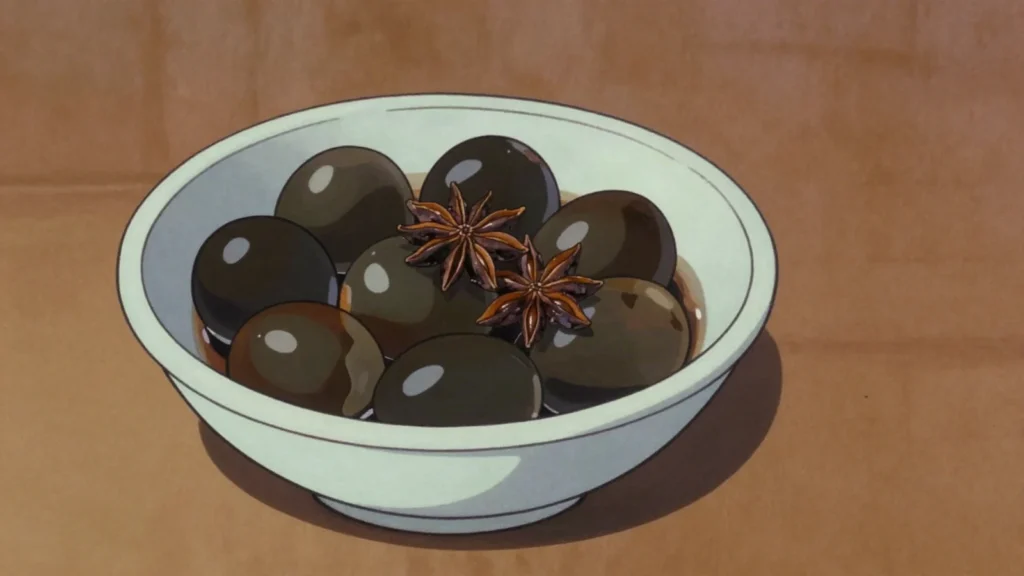
- Cut one open: the inside should be dark throughout with no pale centre. The texture should be chewy and springy rather than crumbly. Keep going for another cycle if any part is still soft. Now storing them, which is straightforward once they are dry.
- Cool them completely and put them in an airtight container. They keep for two weeks in the fridge and freeze well. Serve them at room temperature as a snack, on their own.
Technique
- The drying between simmers is half the process, not an optional step.
- Keep the braise at a bare simmer, since boiling makes the whites rubbery.
- Expect at least four cycles over three days; they are not an afternoon’s work.
Substitutions
- Small chicken eggs in place of quail, with longer boiling.
- A dehydrator on its lowest setting in place of a fan.
Variations
- With extra chilli in the braise for a hot version.
- Made with dried tofu alongside the eggs.
- Simmered fewer times, giving softer eggs closer to ordinary braised ones.
History
Created by accident in Tamsui in the 1960s when a noodle-stall owner kept re-simmering unsold braised eggs on slow days.
Frequently asked questions
What is Iron Eggs?
Iron Eggs is a snack from Taiwan: eggs repeatedly braised and air-dried until dark, chewy and intensely savoury. Created by accident in Tamsui in the 1960s when a noodle-stall owner kept re-simmering unsold braised eggs on slow days.
How long does Iron Eggs take to make?
Iron Eggs takes 30 min of preparation and over 3 days of cooking. The recipe makes 20 eggs. It is rated hard to make.
What can I substitute in Iron Eggs?
Yes, within limits. Small chicken eggs in place of quail, with longer boiling. A dehydrator on its lowest setting in place of a fan.
What is the most important thing to get right in Iron Eggs?
Cut one open: the inside should be dark throughout with no pale centre. The texture should be chewy and springy rather than crumbly. Keep going for another cycle if any part is still soft. Now storing them, which is straightforward once they are dry.