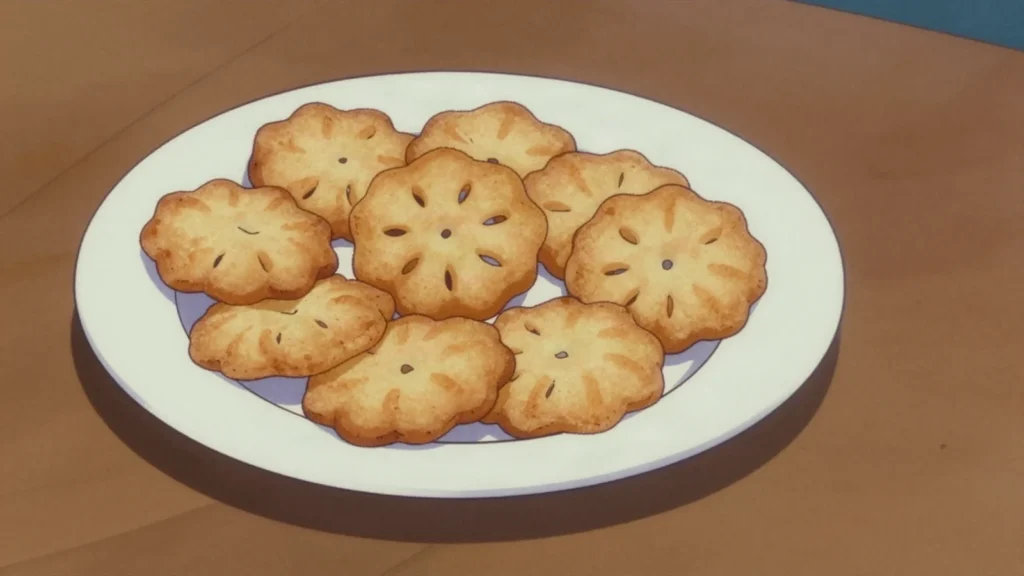

Ingredients
Batter
- 250 grice flour
- 50 gplain flour
- 400 mlthick coconut milk
- 1egg
- 1 tspsalt
- ½ tspturmeric, optional
To fry
- coconut oil, for deep frying
Equipment
- 1kokis iron mould on a long handle
Directions
- Whisk the rice flour, plain flour, coconut milk, egg and salt into a smooth batter about the thickness of single cream.
- Get the consistency right and test it before committing. Too thick and the batter will not release from the mould; too thin and it slides off before it sets.
- Rest the batter 20 minutes, then whisk again.
- Heat the coconut oil in a deep pan to about 180°C (355°F).
- Now the critical part: heat the mould in the oil first, for a full minute, until it is as hot as the oil itself.
- The mould must be genuinely hot before it touches the batter. A cold mould gives batter that clings and will not let go, and this is the single reason first attempts fail.
- Lift the hot mould out, shake off the oil, and dip it into the batter.
- Dip it only about three quarters of the way up the mould, never over the top.
- Leave the top of the mould dry. If batter covers the upper face it seals the kokis on and it will never release.
- Lower the batter-coated mould straight back into the hot oil.
- The batter sets around the iron within a few seconds and then begins to loosen on its own.
- Shake the mould gently, or nudge the kokis with a fork, and it should slide off into the oil.
- Fry it for a further minute, turning once, until pale gold and crisp.
- Take them out pale rather than brown, because they darken as they drain and browned kokis tastes bitter.
- Return the mould to the oil to reheat before every single dip.
- Reheating between each one is not optional and it is why making a batch takes as long as it does.
- Drain on a rack and cool completely.
- They keep two weeks in an airtight tin, which is why they are made in quantity.
- They are made for Sinhala and Tamil New Year in April and set out on the sweet table alongside kavum.
Technique
- The moulds come in flower, star and rosette shapes and are sold in every Sri Lankan hardware shop.
- The technique came in with the Dutch, and the same iron-mould rosette exists across their old trading world.
- Turmeric is for colour only and is often left out.
Substitutions
- A Scandinavian rosette iron, which is the same tool under another name.
- Any neutral oil in place of coconut, at some cost to the flavour.
Variations
- Savoury, with cumin and chilli in the batter.
- With a little sugar, for a sweet version.
- Made with a mix of rice flour and semolina, for extra crunch.
History
A Dutch koekje adopted into Sri Lankan new-year sweet tables, the moulds handed down through families.
Frequently asked questions
What is Kokis?
Kokis is a snack from Sri Lanka: crisp fried rosettes of rice flour and coconut milk, pressed from an iron mould. A Dutch koekje adopted into Sri Lankan new-year sweet tables, the moulds handed down through families.
How long does Kokis take to make?
Kokis takes 20 min of preparation and 40 min of cooking. The recipe makes about 30. It is rated hard to make.
What can I substitute in Kokis?
Yes, within limits. A Scandinavian rosette iron, which is the same tool under another name. Any neutral oil in place of coconut, at some cost to the flavour.
What is the most important thing to get right in Kokis?
The mould must be genuinely hot before it touches the batter. A cold mould gives batter that clings and will not let go, and this is the single reason first attempts fail.