The eight-pointed woody seed pod of a Chinese evergreen — sweet, warm and strongly of liquorice — the spice behind Chinese braised pork, Vietnamese pho and five-spice powder, and a cheaper source of the flavour of anise.
Where it comes from
Star anise comes from a small tree of southern China and northern Vietnam and has been used in Chinese cooking for millennia; it reached Europe in the sixteenth century by way of an English sailor and was quickly taken up by liqueur-makers. Its flavour compound, anethole, is the same one in aniseed, fennel and liquorice, and star anise supplies most of the anethole used in the world’s anise-flavoured drinks and sweets, because it is far cheaper to grow than aniseed.
In the kitchen it is a braising spice. A pod or two in a pot of soy-braised pork, a beef pho broth, a Chinese red-cooked chicken or a poaching syrup for fruit gives a warm, sweet depth without any obvious liquorice taste; ground, it is one of the five in five-spice powder. Aniseed — the small ridged seed of a Mediterranean plant — tastes similar but is used in baking and drinks rather than braising, and fennel seed carries the same note more gently.
Varieties
- Whole star anise — Rust-brown eight-pointed pods with a glossy seed in each point. Used whole and removed; the flavour is in the pod more than the seed.
- Ground star anise — Strong and quick to fade; in five-spice and some Vietnamese and Indian blends.
- Aniseed (anise) — The small oval seed of Pimpinella anisum; sweeter, more delicate. In biscuits, breads and liqueurs — ouzo, raki, sambuca, pastis.
- Fennel seed — Milder, greener anethole flavour. In Italian sausage, Indian panch phoron and Chinese five-spice.
In the kitchen
One or two whole pods for a pot. Add them at the start of a braise, a stock or a syrup and take them out before serving; they are woody and inedible. Toasted briefly in dry oil they release more aroma. Star anise pairs with soy, ginger, cinnamon and orange peel — the palette of Chinese braising — and with pears, plums and rhubarb in a poaching syrup.
It is potent: a broken pod’s worth is often enough, and a dish that tastes of liquorice has had too much. Ground, it dominates a blend; five-spice is the balance of star anise against cinnamon, clove, Sichuan pepper and fennel.
Choosing and keeping
Buy whole pods, unbroken, deep rust in colour and fragrant. They keep a year or more sealed; broken bits and dust have lost most of their oil.
Chinese star anise is the culinary one. Japanese star anise, a look-alike, is toxic and is not sold as food, but adulteration has occurred in herbal teas — buy from a reputable food source.
Dishes with star anise
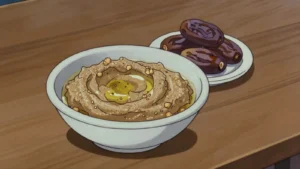 BsissaRoasted barley and chickpea flour with fennel and coriander, mixed with oil
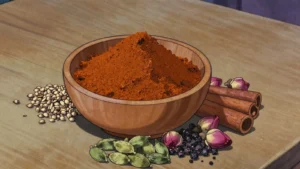 Ras el hanoutthe spice merchant's top-of-the-shop blend, sometimes thirty spices, for tagines
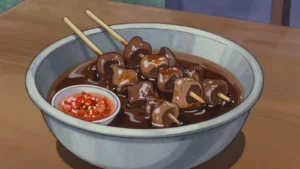 Wet Tha Dote HtoePork offal skewers simmered in soy broth, picked from the pot and dipped
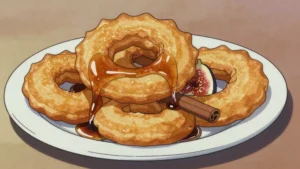 PristiñosRibbon-edged fried dough rings soaked in panela and fig syrup
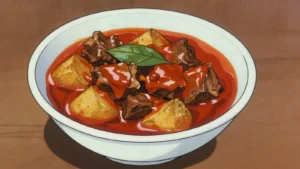 Durban curryBlazing red mutton or bean curry, oil-slicked and served with rice or bread
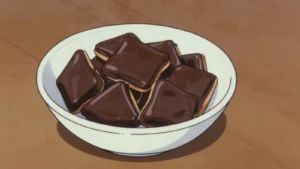 MagenbrotChocolate-glazed spiced gingerbread pieces sold by the bag at fairs
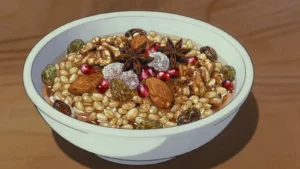 BurbaraBoiled wheat berries sweetened with sugar, cinnamon, raisins, nuts and pomegranate.
 LebkuchenSpiced honey gingerbread from Nuremberg's Christmas markets.
Star anise is tagged on 151 dishes from 88 countries in the atlas. These notes are written from general knowledge and carry no per-fact citation — see About.