Soybeans and wheat fermented with salt for months into a dark, salty, savoury liquid — the seasoning of China, Japan, Korea and Southeast Asia, in a spectrum from thin light soy to thick sweet kecap manis, and the source of umami in kitchens far from Asia.
Where it comes from
Soy sauce descends from the fermented soybean pastes of ancient China — jiang, two thousand years old — whose liquid was drawn off and used as a seasoning; the sauce travelled with Buddhism to Japan, where by the seventeenth century it had become shoyu, brewed with roughly equal soy and wheat, and to Korea as ganjang, the liquid of doenjang paste. Dutch traders carried Japanese soy to Europe in the same century. China’s tradition split into light soy — thin, salty, the everyday seasoning — and dark soy, aged longer with molasses or caramel, thick and less salty, for colour.
The Southeast Asian sauces are sweeter: Indonesian kecap manis is soy sauce reduced with palm sugar to a syrup, the sauce of nasi goreng and satay; Filipino toyo is thin and sharp for adobo. Naturally brewed soy sauce takes six months to several years; chemically hydrolysed soy sauce takes days and tastes of it. Tamari is Japanese soy made with little or no wheat, from the liquid of miso making; white soy (shiro) is wheat-heavy and pale, for dishes that must not darken.
Varieties
- Chinese light soy (sheng chou) — Thin, salty, light brown; the seasoning soy for stir-fries, marinades and dips.
- Chinese dark soy (lao chou) — Aged, with molasses or caramel; thick, less salty, for colour in braises and red-cooked dishes.
- Japanese shoyu (koikuchi) — The all-purpose Japanese soy, balanced between salt and sweetness; for everything from dipping to simmering.
- Tamari and shiro — Tamari: rich, wheat-free or nearly, for dipping and gluten-free cooking. Shiro: pale white soy for delicate dishes.
- Korean ganjang (guk-ganjang, jin-ganjang) — Soup soy — light, salty, fermented with doenjang — and the everyday darker jin-ganjang.
- Kecap manis — Indonesian sweet soy; thick, syrupy, palm-sugar dark. For nasi goreng, satay and marinades.
In the kitchen
Light soy seasons — it goes in like salt, in stir-fries, marinades and dressings, and a dish with soy needs less or no salt. Dark soy colours and rounds — a spoonful in a braise or a fried rice for a mahogany gloss. Add soy at the end of a stir-fry so it does not scorch; in a braise, at the start so it penetrates. Dilute it with rice vinegar, sugar and ginger for a dipping sauce.
Japanese cooking combines shoyu with mirin, sake and dashi in fixed ratios: teriyaki glaze, ponzu with citrus, the simmering liquid for fish and vegetables. Kecap manis is the base of Indonesian marinades and the sweetness in nasi goreng. Beyond Asia, a teaspoon of soy deepens a gravy, a stew or a tomato sauce the way anchovy does, without announcing itself.
Choosing and keeping
Soy sauce keeps a year or more once opened, better in the fridge, and slowly darkens and loses aroma. Buy naturally brewed — the label should say ‘naturally brewed’ or list only soybeans, wheat, salt and water; hydrolysed soy protein and caramel colour mark the chemical kind.
Japanese and Chinese soy sauces are not interchangeable in flavour but both season; keep a light Chinese soy and a Japanese shoyu at least, and a dark soy for braising. Kecap manis and tamari are distinct enough to buy separately if the cooking calls for them.
Dishes with soy sauce
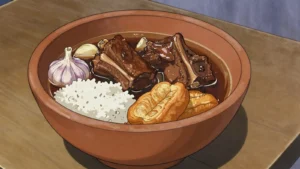 Bak Kut TehPork ribs simmered in dark herbal broth, Klang specialty
 Yangzhou Fried RiceWok-fried rice with shrimp, ham, egg and peas
 Kampot Pepper CrabKep specialty: crab wok-tossed with fresh green Kampot peppercorns
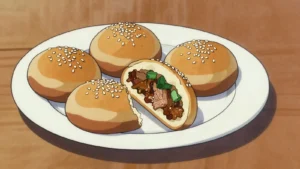 Pepper BunPeppery pork and spring onion bun slapped onto a clay-oven wall and baked crisp
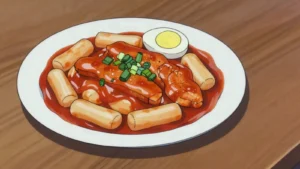 TteokbokkiChewy rice cakes simmered in sweet-spicy gochujang sauce with fish cakes
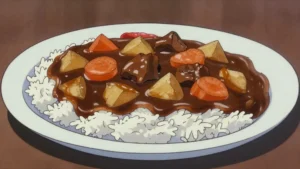 Japanese Curry RiceThick mild curry with potatoes, carrots and meat over rice
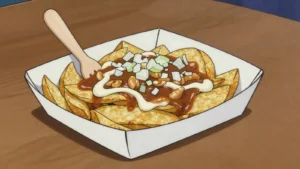 Patatje oorlogChips with mayonnaise, satay peanut sauce and raw onion
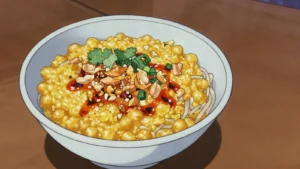 Hto Hpu NweWarm chickpea-flour tofu porridge topped with rice noodles, chilli oil and crisps
Soy sauce is tagged on 214 dishes from 47 countries in the atlas. These notes are written from general knowledge and carry no per-fact citation — see About.