
Ingredients
Dough
- 600 gplain flour
- about 400 ml warm water
- 120 gsugar
- 10 gdried yeast
- 1 teaspoonsalt
- 1/2 teaspoongrated nutmeg
- 1egg, optional
- 1 teaspoonvanilla, optional
To fry
- oil, for deep frying
To serve
- sugar, for dusting, optional
- coffee or tea
- paper or newspaper
Directions
- Warm the water to just above body temperature. It should feel barely warm to a clean finger. Stir the yeast and a spoon of sugar into it. Let it stand five minutes until it foams. Combining it takes only a moment.
- Put the flour, sugar and salt in a bowl. Add the grated nutmeg to the flour. Whisk them together thoroughly. Add the yeasted water gradually. Beat it hard with a wooden spoon.
- Add the egg and vanilla if using them. It should be thick and sticky. Add water or flour a little at a time. Beat it hard for a good five minutes. Rising it takes at least an hour. Cover the bowl over with a cloth. Leave it somewhere warm to rise. Give it at least one full hour.
- Pour oil into a deep pan to ten centimetres. Never fill a pan more than halfway with oil. Heat the oil to about 170C for frying. They need depth to float and turn. Squeeze it so a ball comes out at the thumb.
- Scoop it off with a spoon into the oil. Or else simply use two wet spoons. Drop them carefully into the oil. Do not crowd the pan at any point. Turn any that do not with a spoon.
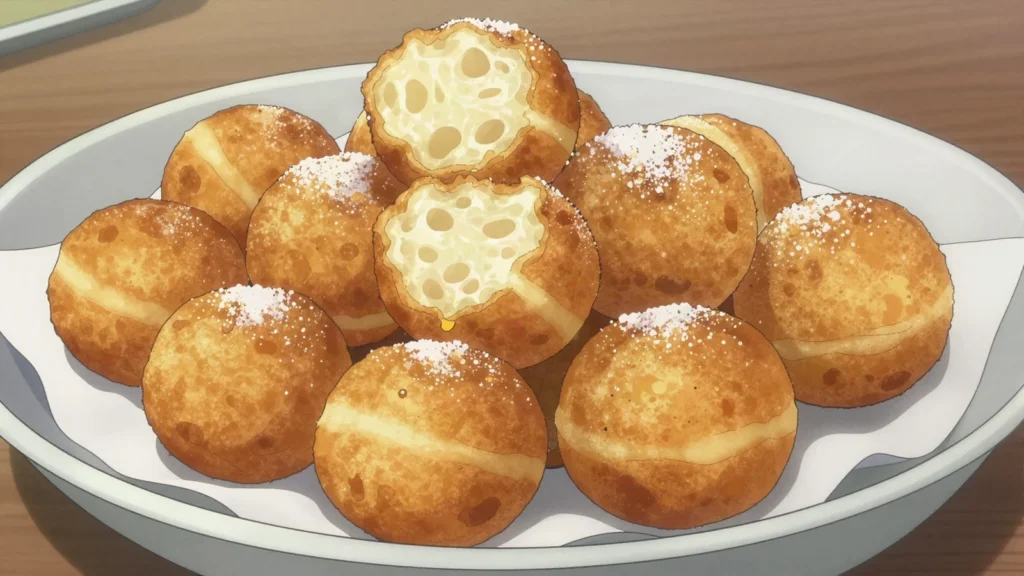
- Fry them for about five minutes. Judging them takes a look and a test. Break one open from the first batch. The inside should be airy and cooked.
- Check the temperature between batches. Lift them onto a wire rack or paper. Let all the excess oil drain off. Dust them with sugar if you like. Many vendors do not sugar them at all.
Technique
- The same fritter is sold across West and Central Africa as puff-puff in Nigeria, bofrot or togbei in Ghana, mikate in the Congo, kala in Sierra Leone and Liberia and beignet in the francophone countries.
- The mixture is a thick sticky batter rather than a dough, and that wetness is what makes the balls hollow and airy inside; a stiff dough gives a heavy dense ball.
- They need deep oil to float and turn themselves, since a shallow pan gives flat one-sided balls.
Substitutions
- The egg and vanilla can both be left out entirely.
- Nutmeg is the usual spice, though some cooks use none at all.
Variations
- Some vendors dust them with sugar and others sell them plain.
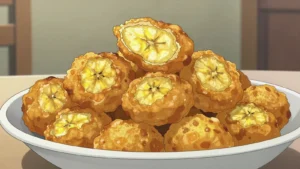
- A version with banana mashed into the batter is also fried.
- Puff-puff, bofrot, mikate and beignet are the same thing elsewhere.
History
The Ivorian name for the West African fried yeast-dough ball sold from Dakar to Douala, a staple of school-gate and market trade.
Frequently asked questions
What is Gbofloto?
Gbofloto is a snack from Côte d’Ivoire: puffy deep-fried dough balls sold warm from roadside basins. The Ivorian name for the West African fried yeast-dough ball sold from Dakar to Douala, a staple of school-gate and market trade.
How long does Gbofloto take to make?
Gbofloto takes 20 minutes plus rising of preparation and 25 minutes of cooking. The recipe makes about 30 balls. It is rated easy to make.
What can I substitute in Gbofloto?
Yes, within limits. The egg and vanilla can both be left out entirely. Nutmeg is the usual spice, though some cooks use none at all.
What is the most important thing to get right in Gbofloto?
Pour oil into a deep pan to ten centimetres. Never fill a pan more than halfway with oil. Heat the oil to about 170C for frying. They need depth to float and turn. Squeeze it so a ball comes out at the thumb.