
Ingredients
Batter
- 150 gplain flour
- 50 grice flour
- or 50 g potato starch
- 1egg
- 250 mlice-cold water
- 1 teaspoonsalt
- 1/2 teaspoonsugar
Spring onions
- 2large bunches spring onions
- or 300 g small spring onions
- left whole and trimmed
Seafood
- 150 gsquid, in strips
- 150 gprawns, chopped
- 100 gclams or mussels, shelled
- or 400 g mixed seafood
To finish
- 2eggs, beaten
- oil, for frying
- a little sesame oil
Dipping sauce
- 3 tablespoonssoy sauce
- 2 tablespoonsrice vinegar
- 1 teaspoonsesame oil
- 1 teaspoonsesame seeds
- 1spring onion, sliced
- 1/2 teaspoongochugaru
Directions
- Use only very fresh seafood here. Live clams and mussels must close when tapped. Discard any one that stays open. Discard any with cracked shells. Seafood must be cooked right through here. Use far more spring onion than seems sensible. The pancake must be crisp, not soft.
- Warm water gives a chewy bready result. Use water with ice cubes in it. Mix the batter at the last moment. Preparing the spring onions takes a moment. Trim off the roots and any tired tops. Wash all of the spring onions thoroughly. Dry them off completely afterwards.
- Leave them whole if they are small. Halve any thick ones lengthways. Cut them all down to fit your pan. Peel and chop up the raw prawns. Chop everything up fairly small. Pat everything completely dry.
- Mix the flour and the rice flour. Add the salt and the sugar to it. Add the beaten egg to the bowl. Pour in all the ice-cold water. Whisk it just until it combines. Do not overwork the batter at all. Add more cold water if it is thick. Mix the soy sauce and vinegar. Add the sesame oil and the seeds.
- Add the sliced spring onion and gochugaru. Heat a wide pan over a medium high heat. Add a generous amount of oil to it. The pancake shallow fries rather than dry cooks.
- Pour a thin layer of batter into the pan. Lay the spring onions across it in one direction. Line them up neatly and closely. Scatter the seafood over them. Pour a little more batter over the top. Use only enough batter to bind it. Cooking the first side takes patience. Let it cook for about five minutes. Do not move it or press it at all.
- Press it only lightly with a spatula. The base should be deep golden and crisp. Lift an edge of it up to check. Pour the beaten egg over the top. Let it run between the spring onions. Give it one minute to set slightly.
- Set another plate over it and flip it. Slide it back into the hot pan. Add more oil around the edge first. Give it about four full minutes. Press it down gently just once. It should be golden and crisp. Let it sizzle for thirty seconds. Judging when it is done matters.
- Cut into the middle of it to check. Prawns should be opaque and pink. Cut it into squares with scissors. Serve the dipping sauce alongside. It softens within about ten minutes.
Technique
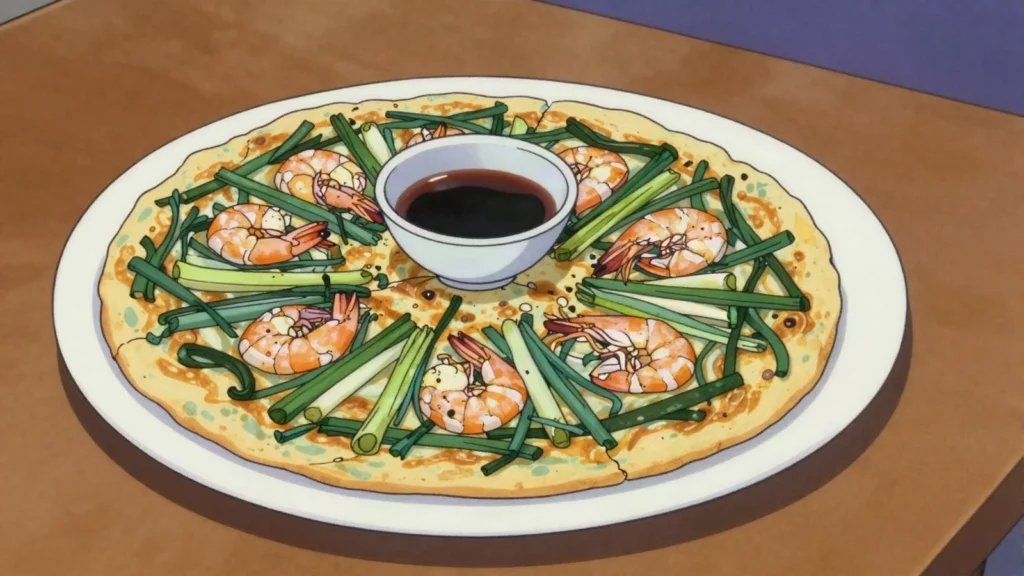
- Pa means spring onion and jeon a pan-fried battered dish, so pajeon is a Scallion pancake and haemul pajeon the seafood version; the spring onions are the main ingredient and the batter only binds them.
- Crispness depends on three things together: ice-cold water in the batter to slow gluten development, a starch alongside the flour, and plenty of hot oil, since the pancake shallow fries rather than dry cooks.
- Pajeon and makgeolli are a fixed pairing and are particularly eaten on rainy days, with the explanation often given that the sizzle sounds like rain, which is traditional rather than documented.
Substitutions
- Potato starch stands in for rice flour and crisps the batter the same way.
- Any mixed seafood works, chopped small enough to turn easily.
Variations
- The Dongnae version is thicker and uses more egg and seafood.
- Kimchi jeon uses chopped kimchi in place of the seafood.
- A plain pajeon with only spring onions is equally common.
History
A savory pancake made from a wheat flour batter combined with spring onion and a variety of seafood including squid, shrimp and mussel, then pan-fried until crisp at the edges, documented across South Korea as a popular traditional dish, particularly associated with rainy days, when the sound of the pancake sizzling in the pan is said within Korean popular culture to resemble the sound of falling rain. Its combination of a simple flour-based batter with fresh seafood reflects South Korea’s significant coastal geography and its correspondingly strong tradition of incorporating fresh seafood into everyday cooking. Haemul pajeon remains a beloved traditional dish across South Korea, commonly paired with makgeolli, a traditional Korean rice wine, as a particularly well-established pairing.
Frequently asked questions
What is Haemul Pajeon?
Haemul Pajeon is a snack from South Korea: crisp spring onion-seafood pancake dipped in soy vinegar, classic makgeolli partner. A savory pancake made from a wheat flour batter combined with spring onion and a variety of seafood including squid, shrimp and mussel, then pan-fried until crisp at the edges, documented across South Korea as a popular traditional dish, particularly associated with rainy days, when the sound of the pancake sizzling in the pan is said within Korean popular culture to resemble the sound of falling rain. Its combination of a simple flour-based batter with fresh seafood reflects South Korea’s significant coastal geography and its correspondingly strong tradition of incorporating fresh seafood into everyday cooking. Haemul pajeon remains a beloved traditional dish across South Korea, commonly paired with makgeolli, a traditional Korean rice wine, as a particularly well-established pairing.
How long does Haemul Pajeon take to make?
Haemul Pajeon takes 30 minutes of preparation and 20 minutes of cooking. The recipe makes 2 large pancakes. It is rated medium to make.
What can I substitute in Haemul Pajeon?
Yes, within limits. Potato starch stands in for rice flour and crisps the batter the same way. Any mixed seafood works, chopped small enough to turn easily.
What is the most important thing to get right in Haemul Pajeon?
Use only very fresh seafood here. Live clams and mussels must close when tapped. Discard any one that stays open. Discard any with cracked shells. Seafood must be cooked right through here. Use far more spring onion than seems sensible. The pancake must be crisp, not soft.