Rice ground to a fine, soft, gluten-free flour — and the noodles, papers and cakes made from it — the second starch of Asia after the grain itself: the base of Japanese mochi, Thai and Vietnamese noodles, Indian dosa and idli, Filipino and Chinese steamed cakes, and a hundred sweets.
Where it comes from
Wherever rice is the staple it is also milled to flour, and because rice has no gluten the results are unlike anything wheat makes: rice flour batters fry crisp and light (tempura, dosa), rice flour doughs steam into tender cakes (puto, idli, banh bo), and glutinous rice flour — from sticky rice — makes the chewy, stretchy sweets of East and Southeast Asia: mochi, tangyuan, tteok, onde-onde. Rice noodles are rice flour and water made into a batter, steamed in sheets and cut, or extruded and dried.
Two flours must be distinguished. Ordinary rice flour, from long- or medium-grain rice, is neutral, slightly gritty, and sets firm — for noodles, papers, batters and crisp coatings. Glutinous (sweet) rice flour, from sticky rice, is soft, sticky and chewy when cooked, and is the flour of mochi, Chinese new year cake and Thai and Filipino kakanin sweets. They are not interchangeable. Rice paper — for Vietnamese summer rolls — is a thin dried sheet of rice starch softened in water.
Varieties
- Rice flour (plain) — From regular rice; fine and neutral. For noodles, rice paper, crisp batters, dosa, idli, puto and thickening.
- Glutinous rice flour (mochiko, sweet rice flour) — From sticky rice; makes chewy, stretchy doughs. For mochi, tangyuan, tteok, kuih and Thai sweets.
- Rice noodles (bánh phở, rice sticks, vermicelli) — Dried or fresh; flat for pho and pad thai, round thin vermicelli for bún and salads.
- Rice paper (bánh tráng) — Thin brittle sheets, softened in water for summer rolls or fried.
- Rice cakes (tteok, mochi, nian gao) — Pounded or steamed glutinous rice cakes; Korean tteokbokki, Japanese mochi, Chinese new year cake.
- Ground rice and idli rava — Coarser rice grinds for Indian idli, dosa and the South Asian puddings.
In the kitchen
Rice flour needs no proving and no gluten development — mix, rest and cook. Batters of rice flour and water fry crisper than wheat; a spoonful in a tempura or a pakora batter lightens it. Dosa and idli batters are ground rice and lentils fermented overnight. Steamed rice cakes are batter poured into moulds and steamed twenty minutes.
Glutinous rice flour and water kneaded to a soft dough, shaped around a filling and boiled or steamed makes tangyuan, mochi, onde-onde and their cousins; the same dough fried makes sesame balls. Sweet rice flour thickens a sauce to a glossy, slightly stretchy texture and does not weep when frozen, which is why it is used in commercial ice cream and pie fillings. Rice papers are dipped in warm water for seconds until pliable, then rolled at once.
Choosing and keeping
Both flours keep a year or more in a sealed container. Buy from Asian grocers, where the distinction between rice flour and glutinous rice flour is clearly labelled — mochiko and ‘sweet rice flour’ are glutinous; ‘rice flour’ alone is not.
Dried rice noodles and rice paper keep indefinitely. Fresh rice noodles and rice cakes should be used within a day or two, or frozen; refrigerated, they harden and need steaming to soften.
Dishes with rice flour
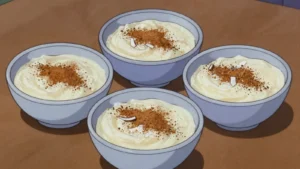 BienmesabeThick sweet of milk, rice flour and sugar cooked slowly and spooned cold
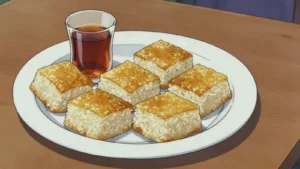 MacsharoGround rice and coconut batter baked into a soft sweet cake
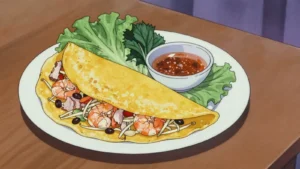 Banh XeoSizzling turmeric crepe with shrimp and beansprouts, wrapped in greens
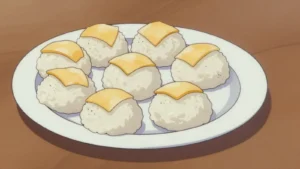 PutoFluffy steamed rice cakes, classic partner to dinuguan
 PhoBeef or chicken rice-noodle soup in star-anise scented broth
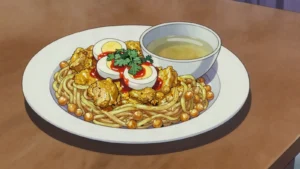 Nangyi ThokeThick rice noodles hand-mixed with chicken, chickpea flour and chili oil
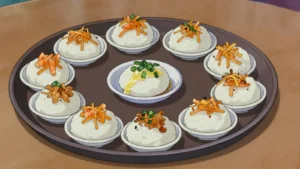 Banh BeoHue steamed rice discs topped with dried shrimp and spring onion oil
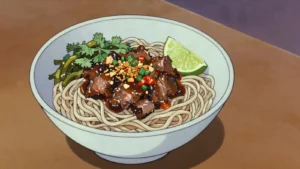 Mandalay Mee ShayRice noodles with braised pork, fermented bean sauce and pickled greens
Rice flour and rice products is tagged on 180 dishes from 63 countries in the atlas. These notes are written from general knowledge and carry no per-fact citation — see About.