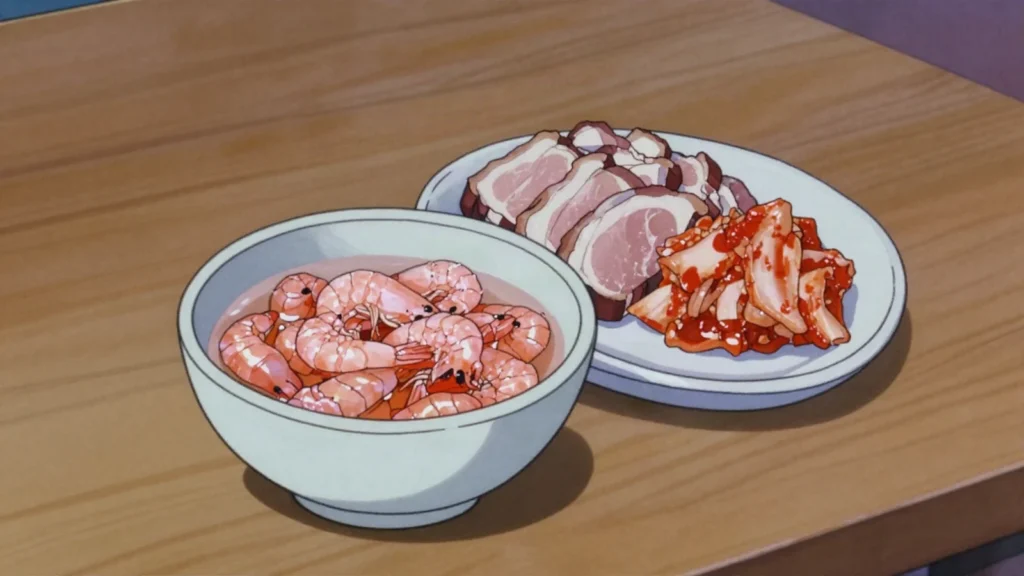

Salted fermented shrimp, anchovy or oyster, spooned into kimchi or eaten as a banchan. Salted seafood appears in Korea’s earliest food records, and shrimp jeot from the west coast is what makes kimchi taste like kimchi.
It is a months-long low-acid ferment of raw seafood in a sealed crock, kept safe only by a salt ratio measured against the catch — and shellfish additionally concentrate marine biotoxins that fermenting does not destroy.
What goes into it
- tiny shrimp, anchovy, oyster or pollock roe
- coarse salt, at 20 to 30 percent of the weight
How it is made
The seafood is mixed with a very heavy dose of salt — up to a third of its weight — and packed into sealed crocks, then left in a cool place for months while its own enzymes break the flesh down. The liquid that separates out is used as a seasoning; the solids are eaten as a banchan or stirred into kimchi paste.
How long it takes: three months to two years
How it is eaten
A spoonful into kimchi paste, or as a banchan with rice and pork.
History
Salted seafood appears in Korea’s earliest food records; shrimp jeot from the west coast became indispensable for seasoning kimchi.
Frequently asked questions
What is Jeotgal?
Jeotgal is a fermented & pickled from South Korea: salted fermented shrimp, anchovy or oyster, spooned into kimchi or eaten as banchan. Salted seafood appears in Korea’s earliest food records; shrimp jeot from the west coast became indispensable for seasoning kimchi.
How is Jeotgal made?
The seafood is mixed with a very heavy dose of salt — up to a third of its weight — and packed into sealed crocks, then left in a cool place for months while its own enzymes break the flesh down. The liquid that separates out is used as a seasoning; the solids are eaten as a banchan or stirred into kimchi paste. It takes three months to two years.
Can I make Jeotgal at home?
No, and the atlas gives no method for it. It is a months-long low-acid ferment of raw seafood in a sealed crock, kept safe only by a salt ratio measured against the catch — and shellfish additionally concentrate marine biotoxins that fermenting does not destroy.
What goes into Jeotgal?
Tiny shrimp, anchovy, oyster or pollock roe, coarse salt, at 20 to 30 percent of the weight.
How is Jeotgal eaten?
A spoonful into kimchi paste, or as a banchan with rice and pork.