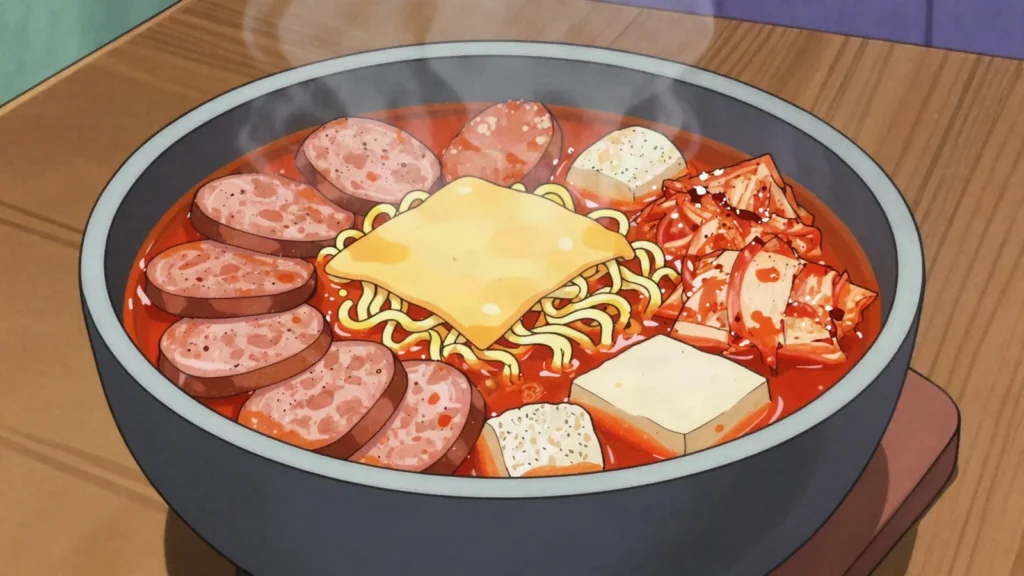

Ingredients
Meats
- 200 gspam or luncheon meat, sliced
- 4hot dogs, sliced
- 150 gbacon or minced pork
- 100 gsliced ham
Base
- 300 gwell-fermented kimchi, chopped
- 1onion, sliced
- 1courgette, sliced
- 150 grice cakes, tteok, optional
- 200 gtofu, sliced
- 150 genoki or button mushrooms
Sauce
- 3 tbspgochugaru
- 2 tbspgochujang
- 2 tbspsoy sauce
- 1 tbspsugar
- 6 clovesgarlic, minced
- 1 tbspfish sauce
- black pepper
Broth
- 1 litreanchovy and kelp stock
- or chicken stock
To finish
- 1 packetinstant ramen noodles
- 1 sliceprocessed cheese
- 2spring onions
- 1egg, optional
To serve
- bubbling at the table, with rice
Directions
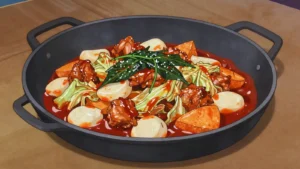
- Use a mixture of spam, hot dogs and ham, which gives more variety than any one alone. Now the kimchi, which must be old. Use well-fermented, sour kimchi rather than fresh. Fresh kimchi is crunchy and mild and gives none of the sourness the stew needs.
- Add some of the kimchi juice too, which carries a great deal of flavour. Simmer dried anchovies and a piece of kelp for fifteen minutes and strain it.
- Remove the kelp before the water boils, since boiled kelp turns the stock slimy and bitter. Combine the gochugaru, gochujang, soy sauce, sugar, garlic and fish sauce into a paste. Arrange everything neatly in the pot in sections before any heat is applied: meats in one area, kimchi in another, vegetables and tofu in their own.
- Pour the stock over, spoon the sauce paste into the middle, and bring it to a boil at the table or on the stove. Boil it hard rather than simmering gently, which is unusual and correct for a jjigae.
- Cook for ten to fifteen minutes until the vegetables have softened and the broth has reduced slightly. Add the instant ramen noodles only in the last three or four minutes.
- Add them at the end, since they turn to mush within minutes and they absorb an enormous amount of broth. Use only the noodle block and not the seasoning sachet, since the stew is already heavily seasoned.
- Lay a slice of processed cheese on top in the last minute and let it melt into the broth. More stock is added as it reduces, and the pot keeps going through the meal. Taste it: it should be salty, sour, hot and deeply savoury. It needs almost no additional salt, since the processed meat brings a great deal. Add more gochugaru for heat or a little sugar to round it.
Technique
- It came from post-war scarcity around American bases in Uijeongbu.
- Spam is the defining ingredient rather than a substitute for something better.
- Well-fermented sour kimchi is what balances the salt and fat.
Substitutions
- Any tinned luncheon meat in place of spam.
- Chicken stock in place of anchovy stock.
Variations
- With baked beans added, which some restaurants do.
- Made without cheese, which some prefer.
- Made hotter, with more gochugaru.
History
A spicy stew combining Korean ingredients, including kimchi and gochujang chili paste, with American processed foods, most notably Spam, hot dogs and sometimes instant ramen noodles, developed in the years immediately following the Korean War in the early 1950s, when widespread food scarcity across a devastated South Korea led people living near American military bases to obtain surplus American processed meats, sometimes through informal or black-market channels, and incorporate them into traditional Korean stew cooking out of necessity. Its name directly translates to army base stew, explicitly referencing that wartime and postwar origin near American military installations. What began specifically as a product of scarcity and improvisation became, over subsequent decades, a genuinely popular and widely eaten dish across South Korea regardless of proximity to any military base, no longer tied to hardship.
Frequently asked questions
What is Budae Jjigae?
Budae Jjigae is a soup & stew from South Korea: army-base stew of spam, hot dogs, kimchi and instant noodles in red broth. A spicy stew combining Korean ingredients, including kimchi and gochujang chili paste, with American processed foods, most notably Spam, hot dogs and sometimes instant ramen noodles, developed in the years immediately following the Korean War in the early 1950s, when widespread food scarcity across a devastated South Korea led people living near American military bases to obtain surplus American processed meats, sometimes through informal or black-market channels, and incorporate them into traditional Korean stew cooking out of necessity. Its name directly translates to army base stew, explicitly referencing that wartime and postwar origin near American military installations. What began specifically as a product of scarcity and improvisation became, over subsequent decades, a genuinely popular and widely eaten dish across South Korea regardless of proximity to any military base, no longer tied to hardship.
How long does Budae Jjigae take to make?
Budae Jjigae takes 20 min of preparation and 25 min of cooking. The recipe makes 4 servings. It is rated easy to make.
What can I substitute in Budae Jjigae?
Yes, within limits. Any tinned luncheon meat in place of spam. Chicken stock in place of anchovy stock.
What is the most important thing to get right in Budae Jjigae?
Use a mixture of spam, hot dogs and ham, which gives more variety than any one alone. Now the kimchi, which must be old. Use well-fermented, sour kimchi rather than fresh. Fresh kimchi is crunchy and mild and gives none of the sourness the stew needs.