
Ingredients
The blood
- 500 mlfresh pig blood
- from a butcher, ordered ahead
- strained and kept cold
- see the safety notes carefully
- or 400 g frozen blood, thawed
The grain
- 300 gpearl barley
- cooked and cooled
- or 250 g barley flour
- or 200 g rye flour
- or a mixture
The fat and seasoning
- 250 gpork back fat
- or fatty bacon, diced small
- 2large onions, finely chopped
- 2 teaspoonssalt
- 1 teaspoonblack pepper
- half a teaspoon ground allspice
- half a teaspoon marjoram
- optional
For cooking
- a large pot of water
- a pinch of salt
- lard or butter, to fry
- 150 gbacon, to fry alongside
To serve
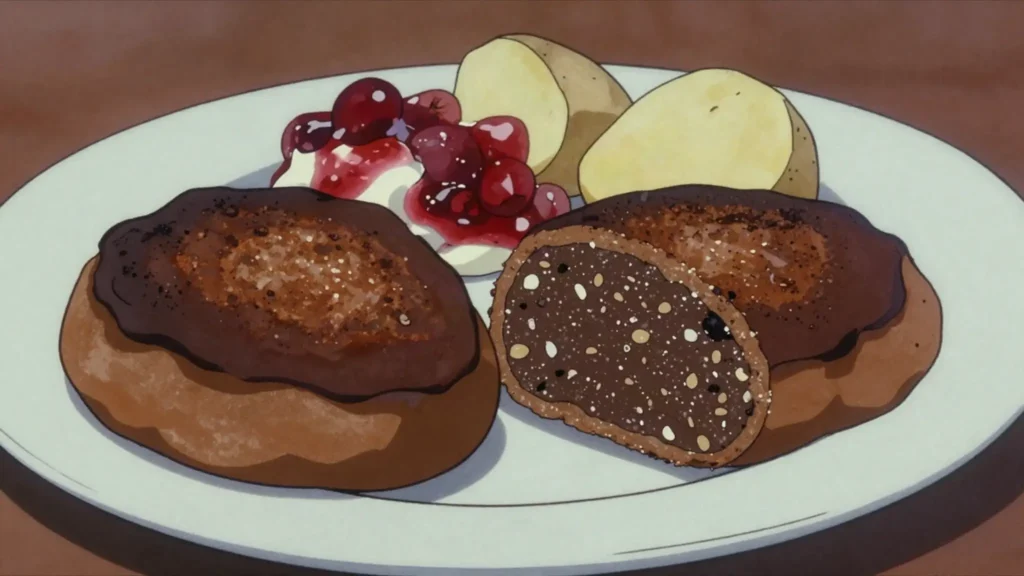
- lingonberry jam
- or cranberry sauce
- soured cream
- boiled potatoes
- sauerkraut or pickled cucumber
Directions
- Check what applies where you are. Never collect blood from an uninspected animal. Use it immediately once it has thawed. Never refreeze blood that has thawed. Salt is added to slow the clotting. Strain it before use through a fine sieve.
- Work quickly and keep everything cold. Wash boards, bowls and hands thoroughly. Keep it away from anything ready to eat. Wash equipment in cold water first. Hot water sets the protein onto the surface.
- Cook the barley first until tender. Simmer it in water for about forty minutes. Drain it and let it cool completely. Warm barley would start to cook the blood. Fry the diced pork fat until it renders. Add the chopped onion to the same pan. Cook it until soft and golden. That softening takes about ten minutes.
- Let it cool completely before mixing. Hot fat added to blood cooks it instantly. Put the strained blood in the bowl. Add the cooled barley and the fat mixture.
- Add the salt, pepper and allspice. Add marjoram if you are using it. Mix it all thoroughly but gently. The mixture should be thick and spoonable. Add more flour if it is too loose. Add a splash of stock if it is too stiff. Cook it right through and taste that.
- Adjust the salt and pepper accordingly. Blood mixtures need more salt than expected. Take a handful of the mixture. Shape it into a flattened round cake. About the size of a large scone is right.
- Keep them all at a similar size. Bring a large pot of salted water to the boil. Do not crowd the pot at any point. Cook only three or four at a time. Simmer them for about twenty-five minutes. They will firm up considerably as they cook.
- Lift them out with a slotted spoon. Let them cool and firm up further. Cut them into thick slices if you prefer. Or fry them whole as thick rounds. Heat lard or butter in a heavy frying pan. Fry the diced bacon alongside them. Fry the dumplings for about four minutes a side. They should be dark and crisp outside. Serve them hot straight from the pan. Leftovers keep three days refrigerated.
Technique
- Fresh blood spoils faster than almost any other food. It must be kept cold from collection, used within a day at the outside, and traditionally was used within hours. Buy it from a licensed butcher, ordered ahead, and never take it from an uninspected animal. In some countries the sale of blood is restricted or prohibited — check what applies where you are.
- Frozen pig blood from an Eastern European or Asian grocer is the practical route for most cooks. Thaw it in the fridge, never at room temperature, use it immediately, and never refreeze it.
- Strain the blood before use. It clots very quickly, and clots left in give a lumpy dumpling.
- Let the fried fat and onion cool completely before mixing. Hot fat added to blood cooks it on contact and gives a grainy curdled texture — the same is true of warm barley.
- You cannot taste the raw mixture, so fry a small spoonful, cook it through and taste that before seasoning the batch. Blood mixtures need more salt than you expect.
- Simmer gently, never boil. A rolling boil breaks the dumplings apart. They rise when set; give them five minutes more, then cut one open — the inside must be firm and dark with no wet or liquid centre.
- Wash equipment in cold water first. Hot water sets blood protein hard onto surfaces, which is a genuinely useful practical point.
- The frying is not optional. Boiled alone these are soft and dull; fried until dark and crisp outside they are a completely different thing.
- Blood dishes exist because blood cannot be stored and had to be used within hours of the slaughter. They are a way of wasting nothing, not a delicacy in origin — and blood is genuinely high in iron, which mattered in a poor rural diet.
Substitutions
- Frozen pig blood replaces fresh and is far easier to obtain.
- Barley flour or rye flour replace cooked pearl barley, giving a smoother and denser dumpling.
- Fatty bacon replaces pork back fat.
- Cranberry sauce replaces lingonberry jam closely; the sharp sweetness is what matters.
- Marjoram is the characteristic herb; some households use only allspice and pepper.
- A little stock loosens a mixture that has come out too stiff.
Variations
- Verivorst, the blood sausage stuffed into casings, is the Estonian Christmas classic and is made from a very similar mixture.
- Blood pancakes, veriohukainen, are made from a thinner batter and fried on a griddle.
- A version with rye flour rather than barley is denser and darker.
- Related blood dumplings and sausages are made across Finland, Latvia, Lithuania and the Nordic countries.
- Some cooks add dried marjoram generously, which is the most characteristic Baltic seasoning for blood dishes.
- A version baked in a dish rather than boiled and fried is made in some households.
History
Made at Estonian farm slaughter alongside verivorst, using blood, flour and pork fat.
Frequently asked questions
What is Verikäkk?
Verikäkk is a main from Estonia: blood and barley dumpling boiled then fried in fat. Made at Estonian farm slaughter alongside verivorst, using blood, flour and pork fat.
How long does Verikäkk take to make?
Verikäkk takes 30 minutes of preparation and 1 hour of cooking. The recipe makes serves 6. It is rated medium to make.
What can I substitute in Verikäkk?
Yes, within limits. Frozen pig blood replaces fresh and is far easier to obtain. Barley flour or rye flour replace cooked pearl barley, giving a smoother and denser dumpling. Fatty bacon replaces pork back fat. Cranberry sauce replaces lingonberry jam closely; the sharp sweetness is what matters. Marjoram is the characteristic herb; some households use only allspice and pepper. A little stock loosens a mixture that has come out too stiff.
What is the most important thing to get right in Verikäkk?
Check what applies where you are. Never collect blood from an uninspected animal. Use it immediately once it has thawed. Never refreeze blood that has thawed. Salt is added to slow the clotting. Strain it before use through a fine sieve.