
Ingredients
Chicken and marinade
- 1 kgboneless chicken thigh, in large chunks
- 4 tbspgochujang
- 2 tbspgochugaru
- 2 tbspsoy sauce
- 2 tbspmirin
- 2 tbspsugar or rice syrup
- 1 tbspginger and garlic paste
- 1 tbspsesame oil
- 1 tspcurry powder
- black pepper
Stir-fry
- ½cabbage, in large pieces
- 1sweet potato, sliced
- 1onion, sliced
- 2spring onions
- 200 gtteok rice cakes, soaked
- 10perilla leaves
- 3 tbspoil
To finish
- 150 gmozzarella, optional
- 2bowls cooked rice
- 2 tbspcrumbled gim
- 1 tbspsesame oil
Directions
- Marinate the chicken for at least 2 hours, and overnight if you can manage it.
- Soak the rice cakes in warm water for 20 minutes if they are dried or have been refrigerated, or they stay hard in the middle.
- Heat a wide shallow pan with the oil, traditionally a large flat iron pan set on a burner at the table.
- Add the chicken with all its marinade and cook over a high heat for 5 minutes without moving it much, so it takes some colour.
- Add the cabbage, sweet potato and onion and stir-fry for 10 minutes.
- Do not add water at any point. The cabbage releases a great deal of liquid as it collapses and that is the sauce; adding water leaves you with a thin stew instead of a stir-fry.
- Add the rice cakes and cook for 5 minutes more, until they soften and swell.
- Add the perilla leaves and spring onion at the end, and heap the mozzarella on one side of the pan if you want it.
- Once the chicken is eaten, scrape the pan clean, add the cooked rice, crumbled gim and sesame oil to whatever sauce is left, and fry it into bokkeumbap.
- That fried rice is not an afterthought. It is the second half of the meal and half the reason people order dakgalbi at all.
- It was born in Chuncheon in the 1960s as cheap grilled chicken for soldiers and students, which earned it the nickname university-student galbi.
Technique
- Thigh rather than breast. It survives a fierce stir-fry in a sweet chilli paste, and breast dries out well before the cabbage collapses.
- Perilla leaves are not shiso and taste noticeably different, though shiso will do at a pinch.
- The pan wants to be wide and shallow so everything makes contact with the heat. A deep wok steams it.
Substitutions
- Shiso or a handful of mint if perilla is unavailable.
- Sliced Korean rice cake sticks in place of the cylinder shape, which cook faster.
Variations
- With a ring of melted cheese around the edge, which is the Chuncheon speciality now.
- Sut-bul dakgalbi, grilled over charcoal on skewers rather than stir-fried.
- With ramyeon noodles added in place of the rice cakes.
History
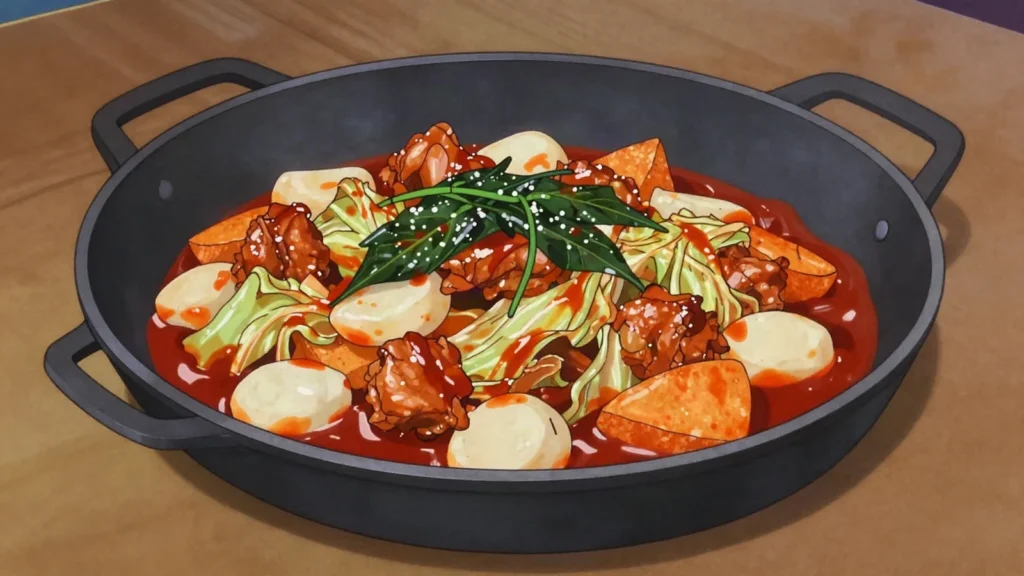
Chicken, stir-fried at the table with a spicy gochujang-based marinade along with cabbage, sweet potato, rice cake and spring onion, documented across South Korea, particularly associated with the city of Chuncheon, where this specific dish is understood to have developed during the 1960s as an affordable alternative to pork-based galbi, or grilled short ribs, at a time when pork prices had risen significantly. Its communal, at-table cooking format, similar in social spirit to samgyeopsal, reflects a broader Korean dining tradition favoring shared, interactive meals, and dakgalbi’s specific combination of chicken with rice cake and cabbage in a spicy sauce distinguishes it clearly from other Korean grilled or stir-fried meat dishes. Dakgalbi remains closely associated with Chuncheon specifically, now popular across South Korea more broadly.
Frequently asked questions
What is Dakgalbi?
Dakgalbi is a main from South Korea: chuncheon stir-fry of chicken, cabbage and rice cakes in gochujang. Chicken, stir-fried at the table with a spicy gochujang-based marinade along with cabbage, sweet potato, rice cake and spring onion, documented across South Korea, particularly associated with the city of Chuncheon, where this specific dish is understood to have developed during the 1960s as an affordable alternative to pork-based galbi, or grilled short ribs, at a time when pork prices had risen significantly. Its communal, at-table cooking format, similar in social spirit to samgyeopsal, reflects a broader Korean dining tradition favoring shared, interactive meals, and dakgalbi’s specific combination of chicken with rice cake and cabbage in a spicy sauce distinguishes it clearly from other Korean grilled or stir-fried meat dishes. Dakgalbi remains closely associated with Chuncheon specifically, now popular across South Korea more broadly.
How long does Dakgalbi take to make?
Dakgalbi takes 20 min plus 2 hr marinating of preparation and 30 min of cooking. The recipe makes 4 servings. It is rated easy to make.
What can I substitute in Dakgalbi?
Yes, within limits. Shiso or a handful of mint if perilla is unavailable. Sliced Korean rice cake sticks in place of the cylinder shape, which cook faster.
What is the most important thing to get right in Dakgalbi?
Soak the rice cakes in warm water for 20 minutes if they are dried or have been refrigerated, or they stay hard in the middle.