
Ingredients
The rubies
- 250 gwater chestnuts
- fresh, or tinned and drained
- diced small, about 8 mm
- red food colouring
- or 3 tablespoons red syrup
- or beetroot or pomegranate juice
- see the note
- 150 gtapioca starch
- for coating
The syrup
- 150 gsugar
- 300 mlwater
- 2pandan leaves
- bruised and knotted
- optional
The coconut
- 400 mlcoconut milk
- or thick coconut cream
- 3 tablespoonssugar
- a pinch of salt
- 2pandan leaves
- optional
To serve
- plenty of crushed ice
- a few strips of young jackfruit
- optional
- chopped water chestnut, extra
Directions
- Peel it off with a small knife. Trim the top and bottom flat first. Work carefully with a small sharp knife. Drain and rinse them. Cut them into small dice. About eight millimetres.
- Toss the diced water chestnuts with colouring or syrup. Let them stand ten minutes. Drain off any excess. Wear gloves if that concerns you. Put the tapioca starch in a bowl. Add the coloured pieces.
- Toss them until every piece is coated. Tip them into a sieve and shake off the loose starch. Shake them thoroughly. Only the starch clinging to the wet surface should remain. Dip them briefly in water and coat again. Bring a large pot of water to a rolling boil.
- Use plenty of water. Plenty of water keeps the pieces separate. Add the coated pieces in batches. Stir gently as they go in. That takes about two or three minutes. Lift them straight into iced water. That stops the cooking immediately.
- Leave them in the iced water until you assemble. Drain them just before serving. Boil the sugar and water together. Add pandan leaves if using. Simmer it five minutes. Cool it completely. Remove them before serving.
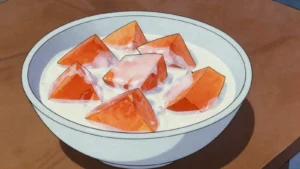
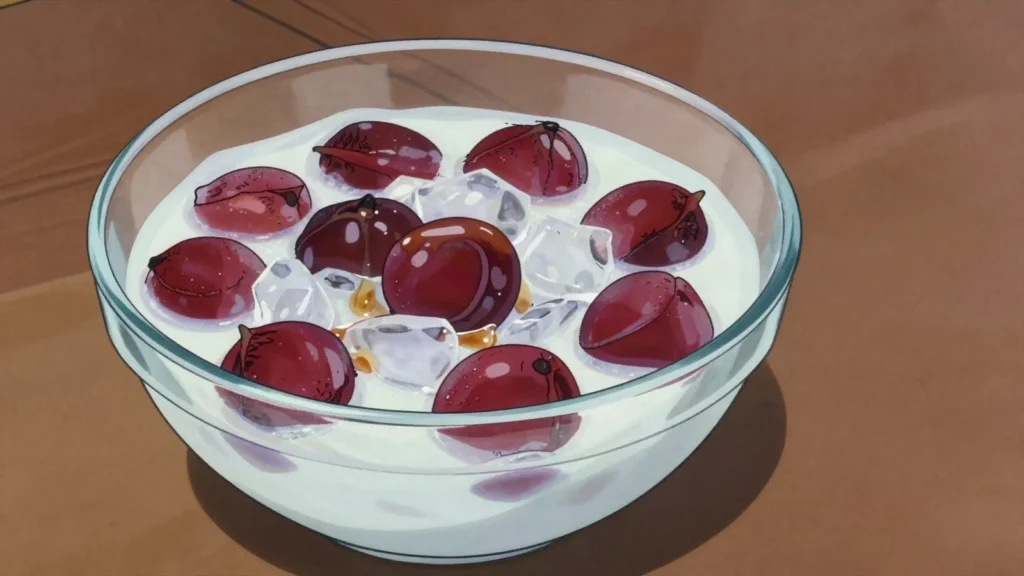
- Warm the coconut milk gently. Add the sugar and salt. Add pandan if using. Do not let it boil. Warm it only until the sugar dissolves. Cool the coconut milk completely. Put drained rubies in each bowl. Add crushed ice. Pour cold sweetened coconut milk over.
- Add a spoonful of syrup. This is a hot-weather dessert. Serve it immediately. Check the tapioca starch has not been milled with wheat. The rubies keep a day in water refrigerated.
Technique
- Shake the excess tapioca starch off in a sieve before boiling. Loose starch clouds the water, makes the pieces stick together and gives a gluey coating instead of a clean one — the commonest failure with this dish. Only the starch clinging to the wet surface should remain.
- Have iced water ready before you start boiling, and lift the pieces straight into it. That stops the cooking, firms the coating and — most importantly — stops them fusing into a solid mass. There is no time to prepare it afterwards.
- Boil in plenty of water and add the pieces in batches. A small pot clouds and cools quickly, and adding everything at once makes them clump.
- The coating is done when it turns from white to translucent and you can see the red through it. Give them a minute after they float and no more — overcooked coating goes gluey and falls off.
- Never let the coconut milk boil. It splits into grainy oil — warm it only until the sugar dissolves.
- The pinch of salt in the coconut milk is not a mistake. A slightly salty coconut topping against a sweet base is a pattern that runs through Thai desserts and it makes the sweetness taste more.
- Dice the water chestnuts to about eight millimetres — pomegranate-seed size. Larger looks wrong and eats awkwardly, smaller and the coating dominates.
- Water chestnuts stay crunchy however long they are cooked, which is a genuinely rare property and exactly why they are used here. They are corms of a sedge, not nuts, and carry no nut allergens despite the name.
- Fresh water chestnuts are sweeter and crunchier than tinned and worth seeking out, though tinned work perfectly well. Peel fresh ones carefully — they are slippery once the skin is off.
- Most versions, commercial and home, use red food colouring for the vivid ruby colour. Beetroot gives a duller red and pomegranate a softer pink, and none of the natural options matches it. The dish is partly defined by that colour, and the atlas says so rather than pretending otherwise.
- Sweet ripe jackfruit in syrup and green jackfruit in brine are entirely different products. The savoury green one, used as a meat substitute, does not belong here.
- Crushed ice is essential rather than a garnish. This is a hot-weather dessert meant to be genuinely cold, and it must be served the moment it is assembled.
Substitutions
- Tinned water chestnuts replace fresh and are already peeled.
- Beetroot or pomegranate juice replace food colouring, giving a duller natural red.
- Jackfruit, young coconut or sweetcorn can be added alongside the rubies.
- Coconut cream in place of coconut milk gives a richer result.
- Pandan is optional, though it is characteristic of Thai sweets.
- Jicama is used in place of water chestnut in some versions and stays similarly crunchy.
Variations
- Lot chong, the green pandan noodles in coconut milk, is served at the same stalls.
- Bua loi floats rice flour balls in warm coconut milk instead.
- Nam kaeng sai is the broader Thai shaved ice dessert with many toppings.
- Che in Vietnam covers a large family of similar iced sweet soups.
- Es campur in Indonesia is the shaved ice equivalent.
- A version with jackfruit and young coconut alongside the rubies is common.
Frequently asked questions
What is Tub Tim Krob?
Tub Tim Krob is a dessert from Thailand: ‘Crispy rubies’ of water chestnut in coconut milk and ice.
How long does Tub Tim Krob take to make?
Tub Tim Krob takes 30 minutes plus chilling of preparation and 20 minutes of cooking. The recipe makes serves 6. It is rated medium to make.
What can I substitute in Tub Tim Krob?
Yes, within limits. Tinned water chestnuts replace fresh and are already peeled. Beetroot or pomegranate juice replace food colouring, giving a duller natural red. Jackfruit, young coconut or sweetcorn can be added alongside the rubies. Coconut cream in place of coconut milk gives a richer result. Pandan is optional, though it is characteristic of Thai sweets. Jicama is used in place of water chestnut in some versions and stays similarly crunchy.
What is the most important thing to get right in Tub Tim Krob?
Warm the coconut milk gently. Add the sugar and salt. Add pandan if using. Do not let it boil. Warm it only until the sugar dissolves. Cool the coconut milk completely. Put drained rubies in each bowl. Add crushed ice. Pour cold sweetened coconut milk over.